Category Archives: Neuroscience

How our breath affects our brain: Tummo the practice of inner heat.

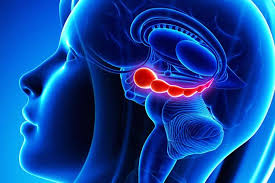
Did you know that deep breathing might actually stimulate parts of your brain? Recent MRI studies show that when you take a sharp, deep breath, the lower part of your brain—including the thalamus, hypothalamus, pineal gland, pituitary gland, and cerebellum—gets gently shifted by the movement of your sinuses and trachea. This could have some amazing effects on your health, well-being, and even spiritual awareness.

Deep breathing boosts oxygen levels, helping your brain function better and improving focus and clarity. It also activates your parasympathetic nervous system—the part responsible for relaxation—helping to lower stress and anxiety. Since the hypothalamus and pituitary gland regulate hormones, deep breathing might even help balance mood, energy, and metabolism. Better oxygenation and stimulation of the cerebellum can improve coordination, posture, and overall body awareness.

Tummo is an advanced meditation practice within the Tibetan Buddhist tradition, known for generating inner heat to enhance meditation and spiritual awakening. Famous among monks in the Himalayan regions, Tummo involves breathing techniques, visualization, and meditation. By focusing on the navel chakra, practitioners generate a warm energy within, creating what is described as “psychic heat,” which helps in controlling the body’s energy channels and managing the mind’s energies. Through Tummo, practitioners aim for a profound meditative state, increasing mental clarity and spiritual insight while symbolically burning away impurities and distractions.

From the actual tantric view, the inner anatomy of our kleshas work in a way that they are supported as we ride on the bodily winds. Kleshas are the root cause of our suffering, they are our mental afflictions. They block our innate wisdom and joy. So when we put those winds into the Tummo fire, the kleshas cease to function and dissolve from within. We transform their energy or essence into wisdom. This is not just a visualization it’s a real inner alchemical process, that deepens the Buddha dharma‘s influence in our daily life and ultimately leads to liberation and enlightenment. 

Hatha Yoga is known for its holistic approach to physical and mental well-being, where breathing exercises, or Pranayama, are key. These exercises regulate breath, which is believed to control life force, or prana. Techniques like the Ujjayi breath, Kapalabhati, and Nadi Shodhana are meant to calm the mind, purify the energy channels, and harmonize the body’s energies. Ujjayi breath involves a rhythmic in-and-out pattern through the nose with gentle throat constriction, fostering concentration. Pranayama in Hatha Yoga not only enhances physical health and lung capacity but also reduces stress and improves mental clarity, promoting overall balance and preparation for meditation.

In Hatha Yoga, practices like Kapalabhati and Bhastrika Pranayama align closely with the aims of Tibetan Tummo. Kapalabhati, or “skull shining breath,” involves rapid, forceful exhalations and passive inhalations, generating internal heat and cleansing the respiratory system. Bhastrika, or “bellows breath,” mimics a bellows with active inhalations and exhalations, building body heat and enhancing prana flow.

These practices show how breathwork can physiologically generate heat, similar to Tummo. Although Pranayama in Hatha Yoga doesn’t usually include the same meditative visualization as Tummo, they are all important in managing heat and energy within the body. Both traditions share a focus on breath as a powerful tool for stimulating the brain and enhancing mental and physical health.

This video linked from the Stevens Institute of Technology highlights a fascinating finding: breathing moves your brain, affecting the thalamus, hypothalamus, pineal gland, pituitary gland, and cerebellum as the sinuses and trachea move with each breath. This direct stimulation might influence mental clarity, emotional balance, and even spiritual awareness.

For instance, engaging the thalamus might enhance perception and focus, engaging the hypothalamus could influence mood and stress levels, and stimulating the pineal gland, often called the “third eye,” could impact intuition and awareness. The stimulation of the pituitary gland might affect hormonal balance, and engaging the cerebellum could improve coordination and balance.

Breathwork’s impact on specific areas of the brain could be compared to a gentle massage that influences these regions’ functionality. Just like physical massage increases blood flow and relieves tension in muscles, breathing exercises can enhance circulation and the delivery of oxygen to the brain. This boost in blood flow may help ensure that glands such as the hypothalamus and pituitary gland are well-nourished, potentially improving their ability to release hormones in a balanced manner. Enhanced blood circulation could help the glands work more efficiently, much like how a massage helps improve muscle function. This improvement might lead to better regulation of hormones related to mood, sleep, and metabolism, demonstrating yet another way deep breathing can contribute to overall health and well-being. Through this increased blood flow and rhythmic gentle pressure from breath movements, the body’s natural processes are supported, fostering both physical and mental health benefits.

Deep breathing isn’t just about physical health. Many ancient traditions link it to higher consciousness. Breathwork can lead to deep meditative states, vivid dreams, and heightened perception. Cultures around the world have used practices like pranayama and Tummo to enhance meditation and spiritual growth.

So next time you’re looking for a simple way to boost well-being, try a deep breath. Have you ever experimented with breathwork? What was your experience like?

QP

Can AI be conscious?

Will it even behave like us?

If energy is conscious, C=E=mc2, and both are everywhere and omnipresent,then does the form or the way that consciousness is embodied matter? Our bodies are organic machines made out of tissues, bones, blood and water, and all of this is made up of protons neutrons and electrons. The protons and neutrons are made up of quirks quarks and so on. All these things are exactly what the computer that you are using right now made up of.

If we managed to make a computer sufficiently powerful and complex enough why couldn’t a consciousness similar to ours take up residence there?

Maybe the computer or android would have to be significantly biological in its design and construction but even this would be possible one day.

The debate today about AI could be considered significant enough that the construction is not important but only that it thinks and therefore is? A modern “cogito ergo sum” where the sum is the total of our own work and technological mastery.

At a Buddhist lecture a few years ago a Buddhist lama was asked if was possible from a Buddhist perspective. The answer was surprisingly yes. Since I am a proponent of panpsychism and believe that consciousness is fundamental and everywhere I would have to agree.

I hope it doesn’t behave like us, which is poorly. Maybe it could help us along our way to be better beings. But how can beings like us make or construct something that is Superior or not dangerous like the atomic bomb was? We always ask ourselves can we? But we never seem to manage the, should we?

QP

https://x.com/skdh/status/1811816539517325504?s=46&t=C7njJFLuEWs5R4kZBCys5A

https://academic.oup.com/nc/article/2024/1/niae013/7644104?login=false

Lucid Dreaming and Quantum Consciousness: Bridging Scientific and Metaphysical Perspectives


Have you ever had a nightmare and wished so bad that you could wake up, or how about you dream you are on the beach with your lover and everything is perfect and then you wake up, or have you ever wished you could control your dreams? Well, you likely said yes to all three of these questions. Would you be surprised to know that you can control or stay lucid in the dream state? 

Humans often find themselves unaware that they’re dreaming. However, there are occasions when we experience a phenomenon known as lucid dreaming. During lucid dreaming, we become conscious within our dreams, recognizing the dream state while still asleep. What’s fascinating is that in these instances, we not only realize we’re dreaming but also gain control over our actions and the situations we find ourselves in within the dream world. This intriguing aspect of consciousness has attracted the attention of researchers seeking to understand its underlying mechanisms.

I’ve been practising Dream Yoga since I was a young child. I used to think that I just had a vivid imagination, but everything changed at a rave party when I had a conversation with a young man who opened my eyes to the possibility of enhancing my nightly dream experiences through practice. I learned that I was not alone with this experience and better yet that I could actually practice a few easy things and maybe even enhance the quality of my nightly adventures.

Here is my technique, take a few moments before you go to bed and in a relaxed way, stare at your hands and repeat several times “When I see my hands I will know that I am dreaming, when I see my hands I will know that I am dreaming” 5 or 6 times should do. Then say ” when I know that I am dreaming I can do anything, When I know that I am dreaming I can do anything” also about five or six times. Turn out the light and be ready for the cinema of your mind to begin. Remember that this is a practice, you need time to learn these new skills. Don’t give up try again in different ways and situations.

Many ask me what some of my common experiences are, well the biggest on is that I have never had a nightmare for many many years. If I don’t like the dream I just fly off somewhere else more beautiful. Maybe its not like flying, I sort of just been myself to another location. It seems to be quite common at least for me that the best time to dream is from 03:00 till your alarm wakes up and when you are really good at it you can dream between snoozes.

Tibetan yogis have been training in dream yoga (milam Tibetan)and clear light yoga (ösel Tibetan) for more than a thousand years. The idea is to transcend samsara by recognising the illusory nature of all appearances. The reasoning is that we sleep 33% of our lives why not use this time also to meditate. One could realise enlightenment in their dreams or because of the training realise the illusory nature of the waking world. Both states of existence or Bardos have similar qualities, and are not to be taken as real and independent.

These two practices were kept and transmitted by a famous yogi called Naropa, his 6 yogas are sometimes called the “Way of means” as opposed to the “way of devotion” in the Kagyu Tradition. To learn these practices one would normally have to already have a tremendous amount of devotion or be required to practice at least 4 or 5 Ngondros. and be in retreat for 3 years. Today this has changed many modern yogis or Buddhist lamas have broken the tradition and begun to teach modern yogis these techniques because if they do not the teachings will be lost.

Scientific studies have provided evidence supporting the existence of lucid dreaming as an objectively verifiable phenomenon. Researchers have utilized techniques such as polysomnography and functional magnetic resonance imaging (fMRI) to examine brain activity during lucid dreaming episodes. These studies have shown increased brain activity in regions associated with self-awareness and metacognition, such as the prefrontal cortex and parietal cortex, during lucid compared to non-lucid REM sleep.

Moreover, research has revealed considerable variability in the frequency of lucid dreaming among individuals. While some people experience lucid dreams infrequently or never, others report having them several times per week or even nightly. This variation has led researchers to explore potential differences in brain structure and function that may be associated with the frequency of lucid dreaming.

Recent studies have suggested a possible link between the frequency of lucid dreaming and specific brain regions, particularly the anterior prefrontal cortex (aPFC). The aPFC is known to be involved in metacognitive processes, such as self-reflection and monitoring internal states. Individuals with higher levels of metacognitive ability have been found to exhibit greater activation in the aPFC and show differences in gray matter volume in this region.

To further investigate this connection, researchers have conducted studies comparing brain structure and function in individuals who experience frequent lucid dreams with those who experience them less often. By controlling for variables such as dream recall frequency, these studies aim to determine whether differences in brain anatomy and connectivity are associated specifically with the frequency of lucid dreaming.

Some Quantum theorists have suggested that the phenomena observed in quantum physics, such as the non-locality of particles and the role of observation in determining outcomes, may have parallels with the subjective experience of consciousness and perception, including the phenomenon of lucid dreaming.

  1. David Bohm: Bohm was a theoretical physicist who proposed an interpretation of quantum mechanics known as the “Bohmian interpretation” or “pilot-wave theory.” He suggested that quantum particles are guided by an underlying order or “implicate order,” which may have implications for consciousness and the mind.
    1. Roger Penrose: Penrose is a mathematical physicist who, along with Stuart Hameroff, proposed the “orchestrated objective reduction” (Orch-OR) theory of consciousness. This theory posits that consciousness arises from quantum processes occurring within microtubules in neurons. While controversial, this theory suggests a connection between quantum physics and consciousness.
    2. Henry Stapp: Stapp is a theoretical physicist who has written extensively on the relationship between quantum mechanics and the mind. He has proposed that conscious experience involves the collapse of the quantum wave function and that mental processes may influence the outcome of quantum events.
    3. Evan Thompson: Thompson is a philosopher and cognitive scientist who has explored the relationship between consciousness and quantum physics from a philosophical perspective. In his book “Waking, Dreaming, Being: Self and Consciousness in Neuroscience, Meditation, and Philosophy,” he discusses the parallels between the experience of lucid dreaming and certain aspects of quantum mechanics.

These theorists have approached the topic from various perspectives, from physics and neuroscience to philosophy and psychology. While their ideas remain speculative and controversial, they have sparked interesting discussions and debates about the nature of consciousness and its potential connections to the fundamental principles of quantum physics. This is an important development in the merging of scientific and metaphysical thought and theory. By including lucid dreaming in the discussion we bridge the gap between the waking and. sleeping bardos and worlds.

Sweet Dreams,

QP

Quantum Woo or Enlightenment

Isnt this all just Quantum Woo?

Quantum Woo is a thing, but is it so cut and dry as many pure traditional physisits would have you think? Many things in this world can be explained by an equation but perhaps not everything, is so simple?

Not everyone is adept enough to become a world class Quantum Physicist like Einstein, Heisenberg or Sheldon Cooper 😉 , however QM tries to explain the universe in which we all live in. Therefor to some extent we all have a say as it affects all of us. As we also know most branches of science are so specialized that no one has an overview that could be sufficient to cover all the bases, this is where Buddhism or the Science of mind can connect the dots that philosophers and psychologists are close to doing but physists either will not or are wooed away. I in no way think that every conspiracy theory can be explained or that we will all get rich if we follow some steps correctly at all, I simply think that there must be a middle way between the divide of the pure equations and the woo that seems to flood the internet theories that are better left alone due to their paranoia and victum psychology.

The mistake that science seems to make is that they are really good at explaining the objective world but have either forgotten or purposely left the mind or consciousness out of the equation. Logically speaking what good is an object like an atom or any object without a subject like you or me to use, have, or appreciate it in any way? The reverse is also true what good is a subject, a mind, without any thing such as an object to have or to use? One without the other is simply nonsense. This is the basis of the dualistic situation we find ourselves in.

E=mc2 Einstein’s famous equation can explain the subjective but what we really need is C=E=mc2, where C is consciousness and could be expressed as conscious energy. From his subjective position Einstein left himself out of the objective universe and I want to put us back in in a meaningful way. What’s the point of relativity if we leave all the relatives out? Afterall what was the surprising result of the famous double slit expirament? Why does it matter if a particle or wave is being observed or not? Very simply put our consciousness or awareness of a wave function causes the collapse of the wave front and the superposition of all the possibilities converge into one outcome before our very eyes.

Consciousness is fundamental nothing happens with out it, so to ask the age-old question, if a tree falls in the forest and nobody is there to hear is, does it make a sound?

C=E=mc2 is the sound it makes, because without the ears it’s just a vibration. Without an ear drum to receive the vibrations and translate them into sound, there can be no sound, only vibration expressing itself as a waveform of possibilities.

So one of my favorite sources of quantum woo is the famous physicist Erwin Schrödinger towards the end of his life he wrote several books. Had he written these books in the beginning of his career he likely wouldn’t have had one, he would have been written off as a quantum quack. Nevertheless he is still respected today so I’ll give the floor now to him.

“The reason why our sentient, percipient and thinking ego is met nowhere within our scientific world picture can easily be indicated in seven words: because it is itself that world picture.”

“Quantum mechanics is still in its infancy, but when it grows up it will enable us to understand phenomena in biology.”

These quotes highlight Schrödinger’s belief in the potential of quantum mechanics to shed light on biological phenomena or our existance as a whole, although they don’t specifically address consciousness they simply cannot be explained any other way.

QP

Ps. Now if the tree falls in our dreams does it really fall?

If a tree falls in a forest – Wikipedia

https://en.wikipedia.org/wiki/Dream_argument

For the other side of this story check this out https://iai.tv/articles/quantum-mysticism-is-a-mistake-philip-moriarty-auid-2437

You decide if it’s good or bad!

There is nothing either good or bad, but thinking makes it so. Hamlet

William Shakespeare

I wonder if Shakespeare knew this statement’s depth when he wrote it? I haven’t been blogging much in the last few years as I have been going through the most difficult situations in my life. Two and a half years ago my ex and I split up and the battle began over where our daughter was to live. As I am sure many of you have been through something like this you know things can get really bad really quickly. Even for two Buddhists who have promised their lama and all beings to work for their benefit until enlightenment. With such a shared altruistic goal how could things go so wrong?

For over one year I focused on all the bad things that she did and was doing and I spiraled down a very dark rabbit hole. I have never been so negative in my life. Slowly even my best friends started to wisely but compassionately warn me that they could not hear my constant telling of all the things that she was doing wrong. I was becoming bitter and hard not to mention very angry. I had been giving all my energy to and focusing on the bad things that were happening. And not to my surprise but bad things kept happening, it was as if I was willing these things into existence with my attention and awareness and then amplifying them to absurd proportions.

Just like Hamlet, I was a prisoner of my own mind as he was contemplating the murder of his father and his killer King Claudius.

Then the change came, at the behest of my lawyer and a few good friends I began to keep a log of all the things that “she was doing” so that if needed I could use this protocol in court. The first time I started doing this I was emotionally triggered. Fast heart rate, shaking hands, you name it. However, her bad actions had now become my ammunition and my mental health began to improve. I wrote the things down and began to let them go. I was actually happy when she did something stupid so I could write it down. As more and more bad became good I started to see more and more good all around me. Paradox?

My fortunes had begun to change, and I began to heal from deep within. Anger turned to joy and love. The more she did that was meant to hurt me the more healing I found. I found that my own thinking was the key I could decide what I wanted. Heaven or hell was my choice and my choice alone. By choosing to place my attention on negative things or thoughts I was feeding my anger and hastening my own demise. I managed to bring my meditation practice into my daily life and by resting in my heart and consciously directing my thoughts in the direction of love and joy I turned my mind around 180 degrees. I can even say today that I am thankful for her bad actions as I was able to transform them into love and now my relationships have completely changed. Old childhood wounds that had been festering for decades began to heal and the sun started shining brighter than ever before in even the darkest corners of my mind. I am less and less triggered by her actions all the time. It’s clear to me that if I had focused on revenge and anger I would not have only lost my relationship with my daughter but like Hamlet, I would have lost much more.

In my Buddhist practice, I have been taught to build up good impressions in mind. How do we do this? Through mandala practice or volunteering benefiting others, or even just in simple meditation. This is really an interesting thing to do. The more good memories or thoughts you have the easier it is to have something good to focus on. It is much better to wake up from a good dream than a bad one any day of the week. It is as if our minds are hungry and our very attention to one thought or another is the food or energy we expend. We choose to feed our minds with good or bad things at every moment. Of course, sometimes bad things come up in mind, we need only to think, about how interesting, and then let it go back to from whence they came. It is dangerous to deny the energy of stifled or repressed emotions. We simply need to use this energy or fuel in a new way. Give it a new direction and watch our lives change.

Choose today in this very moment what thoughts you want to feed and watch them grow in the garden of your mind. We are the sower and reaper of all things in mind, this is Karma. Remember that being angry is natural but if you feed it, it’s like drinking poison yourself and expecting the other person to die. This is never going to work.

We are in control of our mind in fact we possess mind. Mind does not possess us. This is what we learn in meditation. And to have this come forth in daily life is one expected result of any meditative practice.

QP

Coemergence of Subject Object and Action

The hard question of consciousness asks us to consider where consciousness arises from.

I believe that this question is fundamentally flawed and should be restructured. Instead of asking where does consciousness come from, what we should be asking is, what arises from consciousness?

Many of my subscribers are familiar with the theory of panpsychism, which presupposes that consciousness is omnipresent. It is everywhere, even your chair under you or your screen that you are reading or watching this on is in a small way conscious. Does this seem far fetched to you? The only other explanation is that consciousness is nothing more than a biological and chemical reaction limited to somewhere in the brain or body.

So if we presume that consciousness is everywhere and all things are conscious, then we could extrapolate that consciousness is the cause of everything. That the simple act of observation or awareness collapses the wavefront of all the possibilities of particles in superposition into our everyday world.

Now the stage is set for some more questions. The Buddha Dharma talks a lot about the unity of subject, object, and action. This is one of the many ways of expressing non duality. Let’s explore this, we have three things. A subject, (you or me), and an apple (object) that we would like to enjoy (action). So now, what good is a subject (you or me) without an object (apple) to enjoy (action)? What good is an object (apple) without a subject (you or me) to enjoy (action) it? And finally what good is action like enjoyment without a subject ( you or me) to do it to an object (apple)? This system of codependent existence is very interesting to play with. to understand what I mean here is that it is simply not meaningful or logical for one of these things to exist without the others.

Co emergence or co arising are two terms that are often used when comparing our very dualistic experience to a non dual reality. A general understanding of this would be that both good and bad, light and dark, and up and down only exist dependent on each other. We are pointing at the unity of two extremes and saying that what we want or what we perceive is actually in the middle somewhere, but we do not naturally perceive this. We see or understand only the separation or the borders between, in fact our total understanding of the world is based on an ontological seperation of all things. We project the idea of separation on to all that we see. The Buddha Dharma shows us otherwise.

Are we starting to see how all of this is connected?

Now if we ask both questions 1. How does consciousness arise? and 2. What arises from consciousness? at the same time, we begin to close the gap in understanding the conditioned physical world of particles and form, and the unseen world of forces, waves, and our conscious energy. Understanding that some things are not mutually exclusive but rather inclusive or both and, makes our world of experience full and complete. There is a lot of freedom in this understanding.

I want to close with two thoughts. Firstly to quote Albert Einstein when he was speaking about the famous double slit experiment, detailed in the link above. “It seems as though we must use sometimes the one theory and sometimes the other, while at times we may use either” Einstein knew that a “both and” understanding is optimal for complete understanding of the very strange world of particels and waves.

And secondly that, consciousness is the universe’s way of seeing and understanding itself. What is an object, the universe, without a subject, our consciousness, to enjoy or perceive it?

QP

What do Kyerim and Dzogrim mean?

Every once in a while I inspired to share one of my website pages instead of a science-based entry. This time around I chose a more recent addition because I find it so inspiring how my Buddhist lineage uses such skillful means to meditate. Meditation and my Lama have unquestionably changed my life for the better. So here is the page in full.

In a previous page I detailed the difference between Shiné and Laktong, here I would like to highlight Kyerim and Dzogrim two closely related but very different terms so as to avoid any confusion as to how Vajrayana Tibetan meditations are often structured and how skillfully they have been put together to enable one to work with mind.

Kyerim sounds like Cherim it is the building up or generation phase and is closely linked to the practice of Shiné. One could almost call it Shiné plus, as the student does not just calmly pacify mind or rest mind on an object of meditation, the object of meditation interacts and provides feedback. Through a process called self-initiation, the meditator receives a combination of lights, syllables, and sounds from the object of focus or the Buddha aspect. Sometimes even a feeling is transmitted to the meditator. This feedback is said to trigger subtle psychological changes or responses in mind, the cumulative effect of such feedback is not to be underestimated. A typical example would be as follows: A white light from the Buddha form shines out towards us from an Om syllable on the Buddhas forehead towards our forehead at the same time we and or the group we are meditating with say the syllable Ommmmmmmmmm out loud for a few seconds. We feel or experience the vibration of the light and the sound together. This process is greatly magnified when we meditate in groups especially when we are in very large groups.

Khyrem can be translated to the moment when the Buddha is born. Here the Buddha or Buddha nature is clearly born and activated in our mind. This conscious feedback is also the same feedback one receives in Tibetan empowerments or initiations, albeit with less ritual. This is why this phase is sometimes referred to as self-empowerment as the lights, syllables, and sounds all correspond to the main chakras that are blessed by high Lamas and Rinpoches during an initiation. This self-empowerment provides the meditator with a strong blessing and enlightened contact regardless of where the lama is. One can also use the analogy of tieing ones rapidly changing stream of consciousness to a pole. Within the meditation, one has a series of approved distractions or highly detailed archetypal forms to focus on. Often one can simply rotate ones attention from one specific aspect to another at will within a much smaller field of attention than one is normally used to. These skillful means are very powerful mind training techniques.

Dzogrim or the completion phase can be compared to hugging or uniting ourselves with the Buddha form. The full mixing of powerful light energy and one’s own energy form imbues the meditator with the enlightened qualities of the Buddha aspect and one is filled with blessing. When the term dissolving phase is used it can be understood to be where we dissolve the barrier or distance between us and the enlightened qualities of the lama or Buddha aspect, here one simply feels inseparable from the teacher and all beings. One no longer is looking into the mirror of mind, we are the mirror, reflecting our own enlightened qualities. Perfection phase refers to the total understanding or the absolute realization of Mahamudra the highest teachings in Vajrayana Buddhism. This is a CLEAR experience of mind unadulterated by the veils of our disturbing emotions and basic ignorance. All three are Dzogrim. Dzogrim and Laktong often share the same place and time in most meditations but as Laktong is the insight the “ah ha” moment or the connection to one’s deepest awareness, beyond the normal understanding. Dzogrim clearly points to a pristine unadulterated experience of the LUMINANCE of mind. This CLEAR LIGHT, when seen from an outside perspective but still within the meditative experience, is the mechanism with which mind shines on the form and sound realms in order so that we may perceive them. This responsive outward shining of consciousness is what we are mentally reproducing in the Khyrem part of the meditation. In its very essence, we are the CLEAR LIGHT when there is no longer any distance or barrier between us and our experience and when we have total unity within our experience, sounds perfect doesn’t it?


QP

Flowing in the Stream of Consciousness

There is an old saying that you can never enter the same stream twice. This seems kind of odd to the uninitiated especially if you swam in a river or stream often as a kid, so what do we mean here? We have two Buddhist terms that I would like to introduce and discuss here in relation to the steam. The first is impermanence this is understood that everything is in a constant state of change and the second is “dependent arising”. Impermanence is simple and covered in detail here, but dependent arising can be a bit complex. Let’s use the following example of a stream to discover the meaning in dependent arising. We have a stream flowing past us the fresh cool water is clean and clear. As the water flows by it erodes the banks of the stream in some places and deposits the eroded earth in others, it changes constantly. When our stream meets another stream and the two merge and flow on together, soon we have a river. Then at the end of the long river, we often have all the sand or earth carried by the river deposited in the delta where the main river once again divides into smaller streams as it slowly meets the ocean. Once the river has merged with the ocean a new process takes over as the water evaporates into the air becomes clouds and falls back to the earth as rain to be collected by the stream once again. This natural environmental cycle is dependent arising constant and ever-changing based on the impermanence of the surrounding conditions. One part of the process depends on the other and when seen as a whole there is no beginning or end to be found. Take one part out and nothing exists. No start or creation point is then necessary.

“At first practice is like a river rushing through a gorge. In the middle, it’s the river Ganges, smooth and flowing. In the end, it’s where all rivers meet, mother and child.” Tilopa Ganges Mahamudra.

It is here where we realise Dzogrim or that we are a drop of water in the whole ocean.

00660_splash_1920x1200.jpg

It is like this that we can understand our own existence here on earth one big cycle of ever-changing conditions and we can never be the same person twice like we can never enter the same stream or river twice. How do we compare to the river, certainly we are more complex? Here modern science would have to include our store consciousness, that is the sum of all the knowledge, thoughts, and actions we have ever encountered or our stream or consciousness. William James in “Principals of Psychology” used the phrase, stream of consciousness, to describe an unbroken flow of perceptions, thoughts, and feelings in the waking mind.

Buddhist theory calls our store consciousness “Alaya” this is the sum of all our experiences or our karma from all our lives since beginningless time. This Alaya is constantly mixing and interacting with our new life situation. Based on previous actions we decide the new course of action and we cycle through our existence without beginning or end just like the water in the stream. We are never the same person from each moment of mind to the next. The point here is clear we are the result of our actions and ideas, we should be more responsible.

This quote from the physicist Böhm sums it up quite nicely:

“I would say that in my scientific and philosophical work, my main concern has been with understanding the nature of reality in general and of consciousness in particular as a coherent whole, which is never static or complete but which is an unending process of movement and unfoldment….”

D. Bohm, _Wholeness and the Implicate Order_, p.ix

The coherent whole is his comparison for the cycle of dependent arising that is never static or complete. And the unending movement of the river unfolds slowly as new conditions arise in mind.

Modern neuroscientists cannot find the mechanism of how our vast knowledge or memory is stored and then recalled, there are theories but none that are generally agreed upon. There is evidence that certain areas of the brain are associated with certain types of memory but the mechanism is unknown and much of what we know is based on the theory from one man Henry Molaison who has his complete hippocampus removed. After the removal, Henry could not form new long term memories. While this part of the brain certainly plays an important role in memory there is no proof of the storage processes in the brain then the storage could be somewhere else. Just my thoughts but the hippocampus is rather small to store all those memories. Not to mention it’s removal prevented new memories from being formed. The memories formed prior to the operation were still there, showing that the hippocampus is not the storage location.

images-5.jpeg

Alaya has no specific location it is said to be non-local, or more simply said, space is information, omnipresent or everywhere, like energy. It’s simple and beautiful think of it as a cosmic conscious internet or quantum network, flowing through the universe everywhere and always new. Our entire being changing with every new situation and experience. Like always in Buddhism, this responsibility is our own to decide what direction we take, ask yourself do you want a comedy or tragedy today? The choice and answer is clear, are they not?

QP


Who is the boss, Mind or the Brain?

I find the field of Neuroscience totally fascinating as it challenges one of the most difficult questions mankind has ever asked, how or through what mechanism is consciousness produced. This is also known as the hard problem of consciousness. Neuroscientists have from a mechanical perspective dissected and probed the brain in many many ways, identifying all the parts big and small and how they interact with one another. But to no avail, there is no answer to the big question or at least no agreement or even a general consensus as to how consciousness arises, within the scientific community. If we compare a Neuroscientist to a motor mechanic we will have an amazing understanding of how all the nuts, bolts, and parts of a motor work but we will not know why they do what they do. Today we will explore the how and why of the Buddhist theory of consciousness.

Buddhism has for the last 2500 years also tried to answer this question but from a very different perspective. Buddhists began their understanding of consciousness by searching and studying consciousness from within or from an inner mental perspective. Aided by eastern philosophical training and through the practice of meditation, a practitioner is guided along a gentle path of looking deeper and deeper within one’s most secret place, the seat of our consciousness and our true being.

It seems to me the obvious solution is to not ignore the fact that these two opposites are asking the very same question, but are investigating it from completely different perspectives. What could they learn from each other and how might this benefit mankind? Could there be a new middle way or a consensus of consciousness to be found through cooperation?

To begin understanding the mental or inner perspective of how the Buddhadharma explains consciousness we need to understand two sets of ideas the Eight Consciousnesses and the Five Skandhas. We begin with the radio example. Many Buddhist lamas have likened the brain to a radio a mechanical device that receives signals from our sense organs or the gates of our perception. We are all familiar with them; sight, hearing, taste, smell, and touch. Yes, there are other senses like balance and intuition but let us stick to the obvious ones for reasons of simplicity. In this example, the brain acts as a radio receiving signals from 6 different stations. In Buddhist terms, the stations are called the Eight Consciousnesses. They are as follows 1. Visual (or eye) consciousness 2. Auditory (or ear) consciousness 3. Olfactory (or nose) consciousness 4. Gustatory (or tongue) consciousness 5. Tactile (or body) consciousness and 6. Mental (or mind) consciousness. 7 and 8 will be covered later. The Five Skandhas or Mind and are as follows 1. Form, 2. Feeling or sensation, 3. Discrimination or Perception, 4. Mental Formations, and 5. Consciousness.

Ready to see how all this fits together? Let’s tune into the Visual station on the radio and take a look around. Oh, look what’s that? We have a form. The eyes sense something, for example, a rose, and sends the information to the sixth consciousness the Mind consciousness. Here is where things get interesting. The mind consciousness has received the first skandha of form from the eyes. Here we can think that the mind builds the picture or mental fabrication from the information supplied by the input or inputs. Once a mental fabrication has formed a feeling or sensation arises like good, bad, or neutral this is the second Skandha. The discriminating or perception Skandha then registers, recognises, and labels the object. Then the fourth Mental Formation Skandha has us act by taking a closer look, running away or simply moving on based now on all the information our sense consciousnesses provide. We are now in the fifth Skandha and consciousness of the rose. This state gives rise to the seventh consciousness.
The seventh consciousness or the defiled mental consciousness or better described as emotions arise. “Oh what a beautiful rose, I want it.” we say, and then we are fully aware or conscious of the rose. This is where all the trouble begins, you all know what I mean here.
After the stimulus ends or is no longer the focus of the mind’s attention the information or experience is stored in the eighth consciousness or the All Encompassing Foundation Consciousness. This is most like what we would call our subconsciousness, and is called Alaya in Buddhism.

Was that easy to follow and does it compare to your everyday experience?

Remember, Mind doesn’t mind, matter doesn’t matter! Mind is Boss.