Dzogchen and Mahamudra: Insights from Meditation Masters
Dzogchen and Mahamudra are profound meditation practices rooted in Tibetan Buddhism offers insights into the nature of mind and reality. Similarly, quantum physics, a branch of modern science, explores the fundamental principles governing the universe. In this blog entry, we delve into the intriguing parallels between these disciplines, drawing upon quotes from meditation masters and physicists alike to illuminate shared insights and perspectives, particularly focusing on the concept of light. Can we shine some light on light itself?
In Dzogchen, practitioners seek to realize the grand luminosity of primordial awareness, which is described as an unbounded expanse of light beyond conceptual elaboration. The Dzogchen master Longchenpa elucidates:
“In the unborn expanse, the nature of phenomena, there is neither object nor subject, neither confusion nor enlightenment. The grand luminosity of primordial awareness illuminates all, like the radiant light of the sun.”
Mahamudra teachings similarly emphasize the nature of mind as light, transcending dualistic concepts of darkness and illumination. As the Mahamudra master Gampopa advises:
“When mind recognizes mind, the train of discursive and conceptual thought comes to a halt, and the space-like nature of mind dawns. This luminous clarity is the essence of Mahamudra.”
Also the 3rd Karmapa Rangjung Dorje wrote “Observing phenomena none is found, one sees mind. Looking at mind no mind is seen, it is empty in essence. Through looking at both, one’s clinging to duality naturally dissolves. May we realize minds nature, which is clear light.”
Quantum Physics: Insights from Physicists
Quantum physics offers insights into the nature of light as both a particle and a wave, revealing its dual nature. Einstein’s famous equation, E=mc^2, illustrates the equivalence of mass and energy, highlighting the profound relationship between matter and light. In the words of Einstein:
“Mass and energy are two sides of the same coin, interconnected by the speed of light squared. In the realm of quantum physics, matter dissolves into pure energy, and light emerges as the fundamental essence of existence.” In our essence as material beings, we are light, inseparable from the particles that make up our bodies and the light that makes up our mind and consciousness.
Furthermore, quantum theory describes photons, the particles of light, as carriers of electromagnetic force and information. The wave-particle duality of light challenges our classical understanding of reality, suggesting that light exists simultaneously as both a wave and a particle.
Nikola Tesla is quoted as saying “I am part of a light, and it is the music. The Light fills my six senses: I see it, hear, feel, smell, touch and think. Thinking of it means my sixth sense. Particles of Light are written note. A bolt of lightning can be an entire sonata. A thousand balls of lightening is a concert.. For this concert I have created a Ball Lightning, which can be heard on the icy peaks of the Himalayas.”
In exploring the convergence of Dzogchen, Mahamudra, and quantum physics, we uncover profound insights into the nature of light and consciousness. Both contemplative traditions and scientific inquiry point to the luminous nature of mind and the interconnectedness of all phenomena. As we navigate the mysteries of existence, may we draw upon the wisdom of meditation masters and physicists alike, illuminating the path to deeper understanding and awakening in the radiant light of the grand luminosity.
If energy is conscious, C=E=mc2, and both are everywhere and omnipresent,then does the form or the way that consciousness is embodied matter? Our bodies are organic machines made out of tissues, bones, blood and water, and all of this is made up of protons neutrons and electrons. The protons and neutrons are made up of quirks quarks and so on. All these things are exactly what the computer that you are using right now made up of.
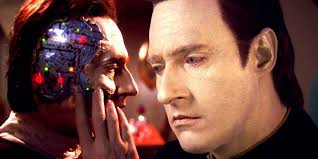
If we managed to make a computer sufficiently powerful and complex enough why couldn’t a consciousness similar to ours take up residence there?
Maybe the computer or android would have to be significantly biological in its design and construction but even this would be possible one day.
At a Buddhist lecture a few years ago a Buddhist lama was asked if was possible from a Buddhist perspective. The answer was surprisingly yes. Since I am a proponent of panpsychism and believe that consciousness is fundamental and everywhere I would have to agree.
I hope it doesn’t behave like us, which is poorly. Maybe it could help us along our way to be better beings. But how can beings like us make or construct something that is Superior or not dangerous like the atomic bomb was? We always ask ourselves can we? But we never seem to manage the, should we?
In Shakespeare’s “Hamlet,” the famous soliloquy “To be, or not to be: that is the question” delves into profound existential questions that resonates with the principles of Quantum Metaphysics. While it’s commonly interpreted as Hamlet contemplating suicide, a deeper analysis suggests he might be pondering the dissolution of his ego, akin to the concept of ego death.
To be, or not to be, that is the question: Whether ’tis nobler in the mind to suffer The slings and arrows of outrageous fortune, Or to take arms against a sea of troubles, And by opposing end them?
Hamlet’s concern about the consequences of his actions extends beyond mere mortality. His apprehension about the afterlife and karma hints at a deeper understanding of existence and consciousness, reminiscent of Buddhist philosophy. It begs the question as to how one might end suffering.
In Buddhism, suicide is considered karmically detrimental as it cuts short a precious human life, potentially leading to rebirth in lower realms. Hamlet’s hesitation to end his life aligns with Buddhist principles that emphasize the value of human existence and the importance of non-harm towards oneself. “at the moment of death, your state of mind is of utmost importance. A calm and peaceful mind can lead to liberation, but a mind filled with anger, fear, or attachment can bind you to the cycles of suffering.” The Tibetan Book of the Dead.
Furthermore, Hamlet’s reference to the dream realm underscores a nuanced understanding of the transitional states between waking and dreaming, life and the afterlife. ‘To die, to sleep – to sleep – perchance to dream: ay, there’s the rub, for in that sleep of death what dreams may come when we have shuffled off this mortal coil, must give us pause.’ And not to forget, ‘A dream itself is but a shadow.’ shows that he recognises the depth and duality of his existence. This points directly at his pain and suffering coupled with the will to move past this difficulty.
Hamlets words parallel Smetham’s Tetralema, based on Nagarjuna’s negation of reality, which posits that existence is neither absolute nor non-existent, but a unity of opposites.
Drawing from Quantum Physics, the concept of electron/particle superposition wave or particle duality offers insights into the nature of existence. Just as an electron exists in a state of superposition, simultaneously being and not being in a state of pure energy, so too does our awareness encompass the unity of experience in the present moment. This “both-and” view of existence that quantum mechanics puts forth may have saved Hamlet’s life, if he had a physics professor. Nevertheless, the lesson is not lost on us, in our journey of understanding here we really have the chance move beyond ourselves and closer to our true nature of compassion and wisdom.
By synthesizing Shakespeare’s timeless literature with insights from Buddhist philosophy and Quantum Metaphysics, we gain a deeper appreciation of the interconnectedness of existence and consciousness, inviting contemplation on the nature of reality and the human experience.
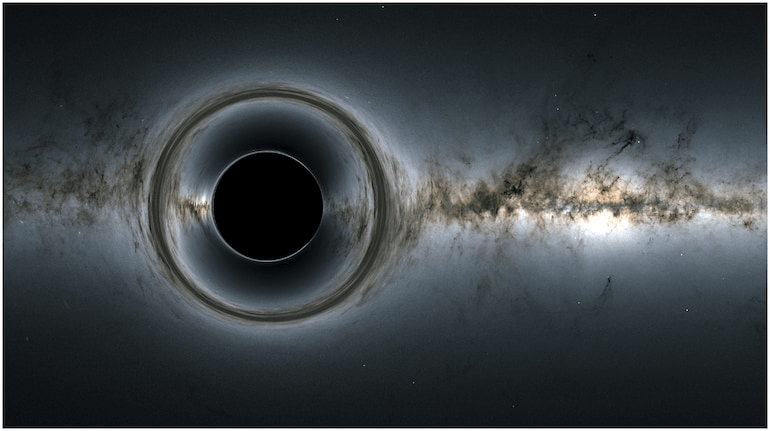
Of course, flying into a black hole is a journey beyond the limits of physical survival and one we would never take. Your ship and body would be torn apart by tidal forces, a process called spaghettification. But what about consciousness? Can we spaghettificate our consciousness?
From a Vajrayana Buddhist perspective, consciousness transcends physical form. It is seen as a continuum, not bound by the body or material space or time. Because it is not made or composed of anything it cannot be reduced or taken apart. Entering a black hole might be akin to entering a bardo, or transitional state, where the mind could experience vast, non-ordinary perceptions as it confronts the ultimate dissolution of matter. Other bardo’s in the karma Kagyu tradition include awaking and dreaming, living and death, as well as the bardo of luminosity. Here the bardo of luminosity is the most interesting. The luminosity of our true nature. Our consciousness is is compared to light, note it is not light but like it, not nothing but no thing. Is this what is pushed out on the other side of the black hole, out the theorized white hole?
Modern physics, rooted in ideas dating back to John Michell in 1783, suggests black holes obliterate physical information at the singularity. Quantum theories like the holographic principle, however, propose that all information—possibly including consciousness—might persist on the black hole’s event horizon. Several well known lamas have compared their consciousness to a holographic experience. Maybe black holes are the universe’s recycling depot where everything is stored and somehow reconstructed in the singularity. Many theories even include so called Einstein Rosen bridges or wormholes. They exit at what might be a white hole somewhere else like the other side of the galaxy, the universe, or even in another realm.
In this view, your consciousness might experience a paradoxical duality: disintegration in the singularity yet preservation as a “hologram” on the edge of existence. Black holes, then, challenge the boundary between annihilation and continuity—much like the nature of consciousness itself. This would be sort of a “both and “ an ultimate transition to quantum enlightenment or even a journey to the singularity that might even be consciousness or enlightenment itself.
In a rare form of transpersonal experience, consciousness expands to include the Earth in its totality. People who have these experiences are deeply moved by the notion of our planet as a cosmic unity. ~Stan Grof[^1]
When we stop seeing ourselves as separate entities in the universe and we become more and more connected with culture, language, art, love, and people, we begin to notice all the other beings around us. Our pets, wild animals, even insects; simply all creatures big and small on land and sea. We look further and see that even the plant life and environment around us are so filled with life and vibrant beauty that we no longer see any division amongst the diversity of the species we share our earth with. And maybe, if we have just a little more openness, we see this earth as not just the source of life or the place we live but as life itself, a living Gaia if you will.
We struggle with the idea that there might be life on other planets in other solar systems and in other universes. How big of a jump is it to include a living universe that our earth is a small part of? Think of the sun without which most if not all life on Earth would cease. Can something that gives us life be life as well? How can you give what you do not have? If we include our sun then we include all other suns. If we include all suns then all planets in the infinite universe as well. All the energy in the universe is conscious, C=E=mc2.
This transpersonal connection we all share is not unique, it’s not a one-off, not by a long shot. It’s all the energy we all have and share with the space around us. It points us towards the possibility that we are not our bodies, that we have more in common with each other and with all living things than is commonly thought and taught in the West.
The real beauty here is that when it comes to how we understand the conscious energy that we share with others and our environment, we begin to change the quality of our experience in beautiful and profound ways. It is hard to imagine how one could hurt another or damage something in anger when we are so intrinsically connected with all that is. It would simply hurt too much to hurt another and ourselves at the same time. Professor Grof gives us the solution to our problems old and new, whether it’s poverty, the polluted environment, or the wars that have plagued our earth for millennia. We simply cannot afford to be so destructive any longer as the danger of irreparable harm to our planet or complete annihilation grows.
To become a transpersonal initiate we have several options. As anyone who knows Professor Stan Grof and his studies and experience with LSD, it’s not surprising that he has this view, as he has in the quote above. He took Albert Hofmann’s experiment to a whole new level. “If I am the father of LSD, Stan is the godfather. Nobody has contributed as much as Stan for the development of my problem child.”[^2] Professor Grof is however not the only one who has posited such a transpersonal idea. The Buddha taught that all living beings have the Buddha nature and that even subject, object, and actions are one and the same. This view that we all share the same qualities and that even the physical and subjective worlds are one is mind altering. He then prescribed different forms of meditation to his followers and in doing so founded the world’s most peaceful and fun way of life.
So what is it about the LSD experience and a meditation practice that can change us so profoundly?
Professor Grof says, “If integrated wisely into society, psychedelics could play a crucial role in addressing some of our most pressing issues by promoting mental health, fostering creativity, and encouraging a deeper sense of ecological and social responsibility.”[^3] If you want to know more about his personal research on this matter, I highly recommend reading “Gateway to the Numinous” for a more comprehensive and detailed account. Actually, it’s mind-blowing. It seems that an LSD expiernce can connect us to the numinous that is within us all as it is outside as well. This powerful tool shows us that we are one with everything, I know it sounds a little 60’s and flower power but it really does have this effect most who have used it.
I, however, believe that meditation is far superior to the experiences that LSD can give. Primarily because we need to be productive and functional in everyday life all the time and meditation supports this on a daily basis and in every part of the world without breaking any laws. “Turn on, tune in, and drop out” as Timothy Leary suggests is not the way to a better world.
A good friend who had lots of experience with both meditation and LSD once told me, “LSD can show you the door to mind if you don’t know where it is. But only meditation and the dharma can take you through the door to a more meaningful and fulfilling life.” The effects of LSD can be temporary but meditation and the dharma is lasting. An altruistic lifestyle needn’t be obtained in a synthetic or artificial way; a natural way is always better. Meditation requires only a small amount of daily time and our awareness in and of our experiences. Working for others as a Bhodisattva is the real key here. They are many and I am one.
In the laboratory of meditation, we apply the science of mind to our inner experience. We begin to see how karma and impermanence affect our interpersonal experiences. We learn to see that we create our world with our thoughts, then our intentions, and finally our actions. The impressions or memories we have in our mind leave lasting connections between ourselves and everything we interact with. Because of this, we need to live more in touch with others and the environment around us. In short, if our life is full of weeds it’s because we planted them and we need to take responsibility for them before they overtake the garden. Let’s plant beautiful flowers and edible healing plants for all to enjoy instead.
The Buddha Dharma offers us a simple and holistic approach to everyone no matter our age or situation. Let’s not just be individuals going about our own lives, let’s be inclusive and compassionate with all life around us big and small, simple and complex. Let’s reacquaint ourselves with our inborn cosmic unity. Above all let’s bring meaningful behavior back into style.
QP
[^1]: Stanislav Grof, A Holotropic Mind. [^2]: Stanislav Grof, Realms of the Human Unconscious: Observations from LSD Research. [^3]: Stanislav Grof, Psychology of the Future: Lessons from Modern Consciousness Research.
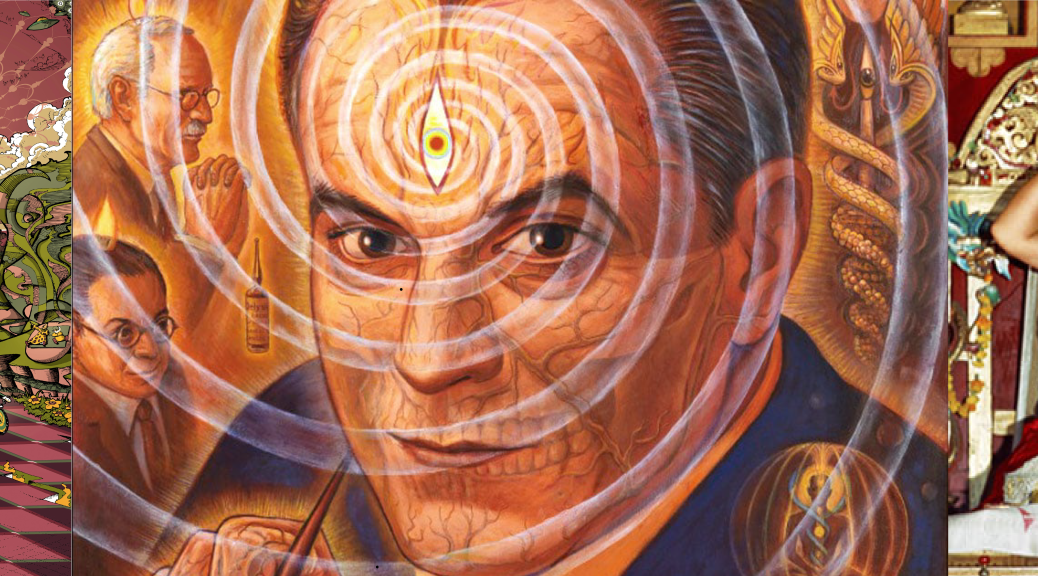
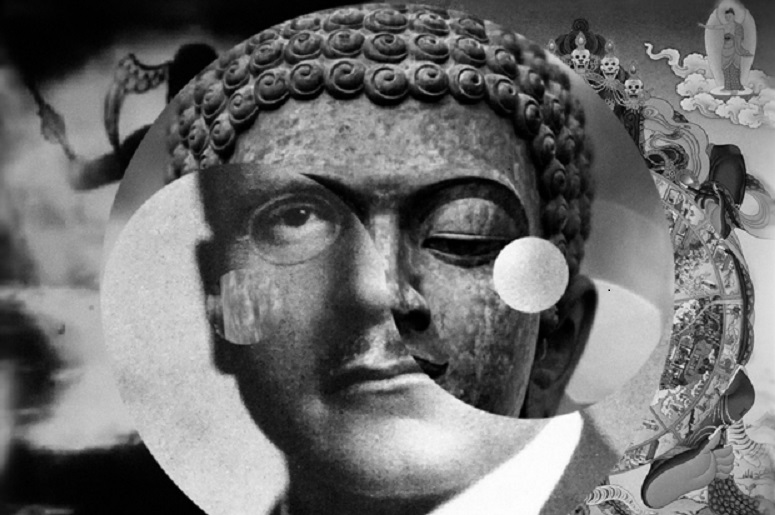
In the vast landscape of psychological, philosophical, and spiritual thought, the teachings of Carl Jung and the Buddha stand out as beacons of wisdom, offering profound insights into the human condition. While their backgrounds and contexts may differ, there are striking similarities in their messages, particularly when it comes to the exploration of the inner self and the pursuit of inner peace.
Carl Jung, a pioneering figure in psychology, emphasized the importance of delving into the depths of one’s own consciousness. Jung is quoted, “Your vision will become clear only when you look into your heart. Who looks outside, dreams, who looks inside, awakes,” encapsulates the idea that true clarity and understanding can only be found through introspection and meditation. By turning our attention inward, we awaken to the truths that lie beneath the surface of our everyday existence. Jung believed that by confronting our innermost thoughts, feelings, and fears, we can achieve a deeper sense of self-awareness and ultimately, a more meaningful life. I can certainly agree with him completely.
Jung surpassed Freuds work on ego and surmised that looking within would be the best path to inner strength and freedom. Freud choose to look outwards for the cause of psychological problems, as Jung chose to engage man’s darkest shadow.
Similarly, the teachings of the Buddha resonate with the importance of inner exploration and self-discovery. The Buddha’s timeless wisdom, encapsulated in the quote “Peace comes from within. Do not seek it without,” emphasizes the inherent capacity for peace that resides within everyone. Albeit at different depths. Instead of seeking external sources of happiness or fulfillment, the Buddha’s teachings encourage us to turn inward and cultivate a sense of inner tranquility as we learn to touch our mind our innate or timeless source. True peace, according to the Buddha, is not dependent on external circumstances, but rather, it arises from a deep sense of acceptance and contentment with the present moment. This can only be achieved through meditation and complete awareness in every moment and situation we experience. Here one learns to balance or surf on the waters of aversion and attraction.
Both Jung and Buddha recognize the transformative power of inner work. Jung’s insight that “Until you make the unconscious conscious, it will direct your life and you will call it fate,” mirrors the Buddha’s teachings on the importance of mindfulness and self-awareness. By shining a light on the unconscious aspects of our psyche, we gain greater control over our thoughts, emotions, and actions. Instead of being at the mercy of unconscious patterns and impulses, we become active participants in our own lives, capable of consciously steering our own destiny. We learn to create good Karma and cease the cycle of pain and suffering we know as samsara.
The simple essence of the teachings of Carl Jung and the Buddha converge on the fundamental truth that true wisdom and peace are found within. Whether through introspective analysis or mindfull meditation practice, both paths lead to a deeper understanding of the self and the world around us. By embracing the journey of inner exploration, we unlock the potential for profound transformation and lasting fulfillment in our lives. We become the owners of the cinema instead of just a patron, we identify with the light of the projector instead of the projector or the screen. Or more simply said we bring our shadow into the light.
Quantum Woo is a thing, but is it so cut and dry as many pure traditional physisits would have you think? Many things in this world can be explained by an equation but perhaps not everything, is so simple?
Not everyone is adept enough to become a world class Quantum Physicist like Einstein, Heisenberg or Sheldon Cooper 😉 , however QM tries to explain the universe in which we all live in. Therefor to some extent we all have a say as it affects all of us. As we also know most branches of science are so specialized that no one has an overview that could be sufficient to cover all the bases, this is where Buddhism or the Science of mind can connect the dots that philosophers and psychologists are close to doing but physists either will not or are wooed away. I in no way think that every conspiracy theory can be explained or that we will all get rich if we follow some steps correctly at all, I simply think that there must be a middle way between the divide of the pure equations and the woo that seems to flood the internet theories that are better left alone due to their paranoia and victum psychology.
The mistake that science seems to make is that they are really good at explaining the objective world but have either forgotten or purposely left the mind or consciousness out of the equation. Logically speaking what good is an object like an atom or any object without a subject like you or me to use, have, or appreciate it in any way? The reverse is also true what good is a subject, a mind, without any thing such as an object to have or to use? One without the other is simply nonsense. This is the basis of the dualistic situation we find ourselves in.
E=mc2 Einstein’s famous equation can explain the subjective but what we really need is C=E=mc2, where C is consciousness and could be expressed as conscious energy. From his subjective position Einstein left himself out of the objective universe and I want to put us back in in a meaningful way. What’s the point of relativity if we leave all the relatives out? Afterall what was the surprising result of the famous double slit expirament? Why does it matter if a particle or wave is being observed or not? Very simply put our consciousness or awareness of a wave function causes the collapse of the wave front and the superposition of all the possibilities converge into one outcome before our very eyes.
Consciousness is fundamental nothing happens with out it, so to ask the age-old question, if a tree falls in the forest and nobody is there to hear is, does it make a sound?
C=E=mc2 is the sound it makes, because without the ears it’s just a vibration. Without an ear drum to receive the vibrations and translate them into sound, there can be no sound, only vibration expressing itself as a waveform of possibilities.
So one of my favorite sources of quantum woo is the famous physicist Erwin Schrödinger towards the end of his life he wrote several books. Had he written these books in the beginning of his career he likely wouldn’t have had one, he would have been written off as a quantum quack. Nevertheless he is still respected today so I’ll give the floor now to him.
“The reason why our sentient, percipient and thinking ego is met nowhere within our scientific world picture can easily be indicated in seven words: because it is itself that world picture.”
“Quantum mechanics is still in its infancy, but when it grows up it will enable us to understand phenomena in biology.”
These quotes highlight Schrödinger’s belief in the potential of quantum mechanics to shed light on biological phenomena or our existance as a whole, although they don’t specifically address consciousness they simply cannot be explained any other way.
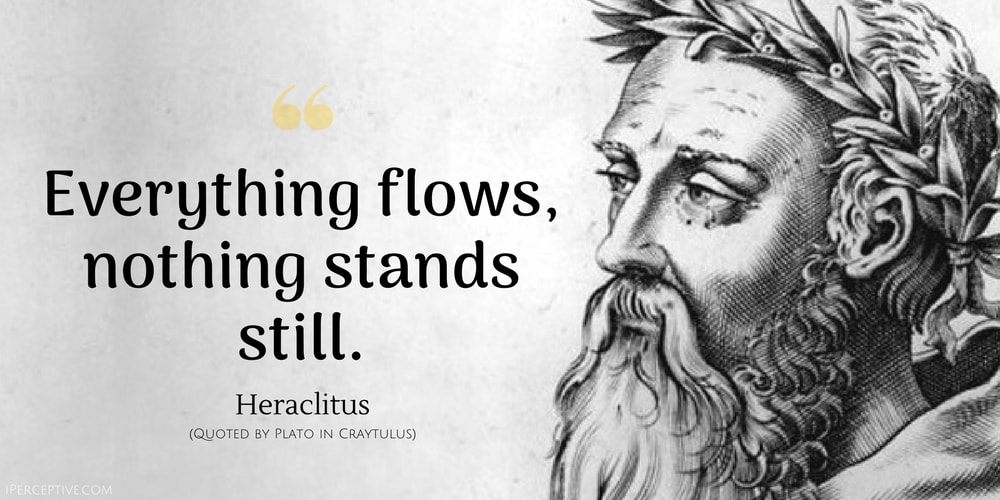
Heraclitus was born in circa 500 BC in a city Called Ephesus, this is roughly the same time as the Historical Buddha Shakyamuni was born in Lumbini Nepal.
Both the Buddha and Heraclitus were influential figures in the history of philosophy, and while they emerged from very different cultural contexts and traditions, there are some interesting philosophical similarities between their teachings.
The Buddha’s concept of “Anicca” (impermanence) and Heraclitus’s famous quotes “Everything flows (Panta rhei) or nothing stands still” and “No man steps in the same river twice” reflect this shared perspective. I always love any comparison between mind and water. Here Heraclitus knows that by the virtue of the flow or flux of the water that impacts one small stone or grain of sand in the river, it has changed since the last time you stepped in it. In fact, one might say that we are this river and our constant state of experience changes our karma and energy that we continue moving forward with.
Both philosophers focused on the importance of wisdom and self-realisation. The Buddha’s teachings centred on attaining enlightenment or nirvana through understanding the nature of suffering and the self. Similarly, Heraclitus believed that wisdom was achieved through understanding the underlying unity and harmony of the cosmos. Since we are a part of the cosmos and so is our mind, it is not difficult to see how this congruency is easily understood in a symmetrical and complimentary way.
The significance of the mind and its role in shaping perception and understanding is also an area of agreement. The Buddha’s teachings on mindfulness and meditation and Heraclitus’s belief in the logos (universal reason) point to this shared emphasis.
Non-Attachment was also emphasised by the Buddha and Heraclitus to achieve a state of inner peace and harmony. The Buddha taught about detachment from desires and cravings, while Heraclitus believed in finding unity with the universal flow by not clinging to specific outcomes. Heraclitus’ flow or flux theory is echoed in much of the Buddha Dharma.
In these ways both teachers reject materialism and suggest that an inward focus can lead to happiness and contentment in life. I find it wonderfully interesting how conscious mind and ideas can exist in more than one place at the same time. This really points to a co-emergence of awakening for people all over the world. Maybe these teachers and their ideas are not as separated as we might have thought. Are there more examples of this that are more recent or contemporary that you can think of? Drop a comment down below, I would love to hear from you.
Well there you have it it’s finally been proven that it’s good to be kind to others. Not that we really doubted it 😉
“What studies have shown is that when we are either thinking about kind acts or witnessing kind acts or engaging in acts of kindness to other people, there are several biochemical changes that happen in our brain,” says Dr. Bhawani Ballamudi, SSM Health child psychiatrist. “One of the most important things that happens is that it releases oxytocin, a neurotransmitter that’s been studied extensively for its role in promoting a sense of bonding.”
Oxytocin is associated with empathy, trust, sexual activity, and relationship-building. It is sometimes referred to as the “love hormone,” because levels of oxytocin increase during hugging and orgasm. And all I have to do is be kind to get this natural high, so how do I do that?
“Physiologically, kindness can positively change your brain. Being kind boosts serotonin and dopamine, which are neurotransmitters in the brain that give you feelings of satisfaction and well-being, and cause the pleasure/reward centers in your brain to light up. Endorphins, which are your body’s natural pain killer, also can be released.”
Have you ever wondered how or where consciousness arises? I have and “Pan what?” was my first question when a good friend mentioned to me in conversation that what I was actually describing to him had already been theorised hundreds of years ago. “Phew, I am not the first idiot to think this” was my second thought and then “wait a second it would have been cool to come up with something new” was the third though. After the discussion, I read up on the subject I could not have been more amazed, as the inherent beauty and wisdom slowly sank deeply into my being.
Panpsychism postulates that consciousness is everywhere and in everything and that this non-local or cosmic-wide phenomenon is also without cause. In short, Consciousness is Fundamental in the universe. Even stones and elementary particles have consciousness, not just people, bugs, or plants. Even for me, this sounds a little far-fetched until you delve into the subject a bit more. The earliest known references to panpsychism are likely attributed to early religions like Shintoism, Taoism, Paganism, and Shamanism. Even Aristotle is quoted as saying “that everything is full of gods.” Plato argued in his Sophist that all things participate in the form of being and that it must have a psychic aspect of mind and soul. “This world is indeed a living being endowed with a soul and intelligence … a single visible living entity containing all other living entities, which by their nature are all related.” Wow, that is a big idea and not so easy for an individual to wrap his mind around it. That is probably the problem, the idea of panpsychism takes us from the comfort of our strongly held idea of an individual or ego and even the religious idea of a soul or atman to the understanding that not only are all beings one being but that all things are united in a blissful unity or beingness.
This is illustrated in Robert Fludd’s depiction of the world soul. I thought it might illustrate the idea of Panpsychism in an interesting way.
Panpsychism has some competition it is not the only theory about the origin of mind, the emergence theory has many followers as well. Emergence Theory postulates that consciousness has emerged from some as yet unknown evolutionary chemical process. Philosopher Professor Galen Strawson articulates the relationship between panpsychism and emergence quite acutely: “The issue of emergence of mind is important because it is the mutually exclusive counterpart to Panpsychism: either you are a Panpsychist, or you are an Emergentist. Either mind was present in things from the very beginning, or it appeared (emerged) at some point in the history of evolution. If, however, emergence is inexplicable or is less viable, then one option is left with the panpsychist alternative. This line of reasoning … is the (panpsychist) ‘argument from Non-Emergence.”
Interestingly there is no proof anywhere of consciousness or mind emerging from any process but neither is there any proof of panpsychism. Panpsychism is, however, in my opinion, far more elegant and takes mind or consciousness a few steps further than the emergence of mind as an evolutionary or purely materialistic process. Even with a rather superficial level of understanding of panpsychism, one might find some comfort in this theory that we are never alone and connected to everything in every way or coemergent with the universe. However, this may also strike fear into the hearts of those who are so deeply attached to their own individuality or egos. Regardless of one finds comfort or fear let’s discover some more of how Panpsychism, Quantum Physics, and Buddhism might be related.
When we analyse subatomic particles, one might say that there is no difference between the protons, neutrons, electrons, quarks, quarks, and leptons and bosons in my body, and the protons, quarks, and leptons in the desk in front of me except that I am conscious and the desk is not. Or is it but at a dramatically reduced level? David Bohm theoretical physicist and philosopher said, “That which we experience as mind … will, in a natural way, ultimately reach the level of the wave function and of the ‘dance’ of the particles. There is no unbridgeable gap or barrier between any of these levels. … … in some sense, a rudimentary consciousness is present even at the level of particle physics” Just look at the observer effect with the double slit experiment. So here we can surmise that there is no barrier between me and the desk if even the electrons decide if they are a wave or a particle.
To this day we do not understand where or how consciousness arises and the role the brain plays in its formation if it plays a role at all. It could be just a receiver or radio, receiving information on several channels of perception that we would call our senses. Panpsychism skips this need to discover the relationship between the brain and the rise of conscious awareness completely, its simplicity is simply profound. No matter how shocking or strange panpsychism sounds I am reminded of what Sherlock Holmes said, that when you have eliminated the impossible, whatever remains, however improbable, must be the truth. Can science accept this deduction and if not how do we prove that which we have not been able to prove, other than keep trying even though the truth is already in front of us?
Buddhism teaches us that all beings have mind and or what we call Buddha nature, which is the ability to realize one’s full potential. Many teachers, when asked if plants have mind, would deny it and say that simply if it moves like an ant or something, then it has mind. As we know, plants only sort of move in their relationship to water and sunlight and the various degrees to which they require their nutrients. Some studies are even now suggesting that trees in the forest share nutrients and water with sick or old trees. This is not only consciousness but intelligence as well. This could be a very basic version of attraction and aversion, which is looking less and less attractive. This rather narrow view is at the outset, not as encompassing as panpsychism. However, Buddhism requires us to break down any borders or boundaries between us and other things, this even applies to all concepts and ideas so why not to all phenomena as well. At an ultimate understanding of mind, where nothing has any true or independent existence in and of itself, all things would seem to have all the same qualities; conscious and otherwise. I would like to quote David Bohm once more here: “The notion of a separate organism is clearly an abstraction, as is also its boundary. Underlying all this is unbroken wholeness even though our civilization has developed in such a way as to strongly emphasize the separation into parts.” From the Undivided Universe: An Ontological Interpretation of Quantum Theory
This oneness without separation or boundary is exactly what we are talking about when Buddhists say that subject, object and action come together as one. This is known as the state of Mahamudra or complete and full awareness or consciousness. Once we have reduced this ontologically either in meditation, philosophically, or scientifically all that there is left points to just consciousness or mind and nothing else seems to matter, even matter itself. Imagine that, matter doesn’t matter. In this simple state of just being, connected with everything, and aware of all that there is, a state of great joy and bliss arises. Total freedom of mind, no more running from or reaching for, just complete happiness and wisdom resting in the suchness of everything. Here is where we can be really effective in this confused and angry world. Here is where we can really be the change that we wish to see in the world.
So is consciousness everywhere and in all things? I think so. Its simple beauty is both profound and inspiring, especially to the Buddhist ear. Modern science seems to agree more and more with this conclusion and I can only ask when or will modern society see the light as well? Perhaps Panpsychism is even the solution to the hard problem of consciousness. Which is to question how and why sentient organisms have qualia or phenomenal experiences.
This is one of my most successful posts ever and I am editing it today to include this wonderful video from a favourite Youtuber ASTRUM:
For my German-speaking audience, I found two very interesting videos that discuss Panpsychism. The first one is from Professor Harald Lesch a wonderful physicist, astronomer, and philosopher who explores panpsychism from a purely astrophysical perspective with quite an open mind even though he does not agree with the idea.
The second video from Gerd Scobel actually a friend of Professor Lesch explores the topic from a philosophical perspective.
Personally, I think the Buddha Dharma has already answered this question, but that’s a topic for another post. This for me is just another way in which we see that consciousness is the vehicle in which the universe is becoming aware of itself. Why else would it be so beautiful and blissful to experience it either in meditation or by scientific discovery? Let us take this and use it as a tool to better the world and our fellow beings in every imaginable way. Whatever your view is on this topic I would love to hear from you, please feel free to comment below.
As part of the scientific process, we ask a question, formulate a hypothesis design the experiment and carry it out and measure the result as objectively as possible. It’s the same in meditation. In the science of mind, the laboratory of traditional Buddhist meditation we look within ourselves as objectively as we can and observe our mind and inner being while listening for the wisdom and answers that are already there deep within our personal inner universe. We then apply this new found wisdom found in our meditation and look for and measure results in our daily lives we are often surprised to see how wonderfully we have changed and developed during our life experience.
So let’s begin our meditation experiment:
A traditional well thought out Buddhist meditation can be comprised of two main parts. In the first part called shine (shyiné), shamatha, or calming and abiding we find ourselves learning to hold our attention using our body, speech, and mind, in fact, we can use our entire totality here and calmly stay on one point of beautiful focus. When distracted we calmly accept and return without any À deieu . After sufficient time, we can be flexible here, we relax our calm focus and allow our full being to either become one with the object of the focus or to dissolve the object of the focus from its state of energy and light into wide-open awareness. After a few moments of open suchness, called laktong (lhagthong), insight, or vipassana we gently return to our normal state of awareness and wish that all beings can find a state of equanimity free from attachment and aversion.
So thankfully much of the preparation for the experiment has already been done during the 1000’s of years of yogis meditating and teaching others in the many traditions passed down from teacher to student in the far east. This is an important clue here, as with science every student needs a qualified professor to question and keep one on track, meditation requires a good teacher, one who understands western life and can communicate and direct the student at all points in the process of inner development is indispensable.
Once we understand the process and have our clearly stated hypothesis such as “meditation is a healthy way to increase my quality of life”, we begin. And sit and sit and sit……..
Are you still sitting?
What are the results? Well, they vary as much as individuals are individual, and while we should not try to grade or evaluate the meditation too much, but generally hindsight of a few weeks to many years shows some profound results. What are the more general results?:
1. Calm and relaxed behaviour.
2. Quiet acceptance of our situation.
3. Stress reduction
4. Space in mind to choose between tragedy or comedy within the challenges in life.
5. Ubiquitous love for all beings.
6. Compassion.
7. Timeless wisdom.
8. Unbounded joy and bliss.
The open laktong, space, or suchness phase of the meditation is where I have many of my best ideas and inspirations. The calm breathing and focusing follows me throughout the day and helps me complete my tasks at hand with love and sometimes creativity as well.
As with any experiment, unexpected results may arise. It is best to chat with your trusted professor or Lama as to how or why the results have occurred. Allow yourself to incorporate their advice into your personal experience and grow. Just like Quantum Physics is not for everyone and you might be better suited for some sort of Biology or Chemical studies, meditation is not for everyone. A good teacher will know if you are in the right place and may recommend yoga or even just mundane like running if meditation is not for you.
There may be challenges and hindrances that arise and a good teacher can guide you through them. One common one is “I just cannot quieten my mind or the hamster never stops running in his wheel” This “condition” is commonly called “monkey brain” and everyone suffers from it especially in the beginning. When we begin to look inside we start to see just how distracted we are all the time it’s not more or less than normal we just notice it for the first time, and it will subside.
It is also worthwhile mentioning that some individuals who suffer from deep depression or any type of psychosis should likely not meditate or do so only under the supervision of their therapist.
Thank you, have an amazing meditative and joyful day
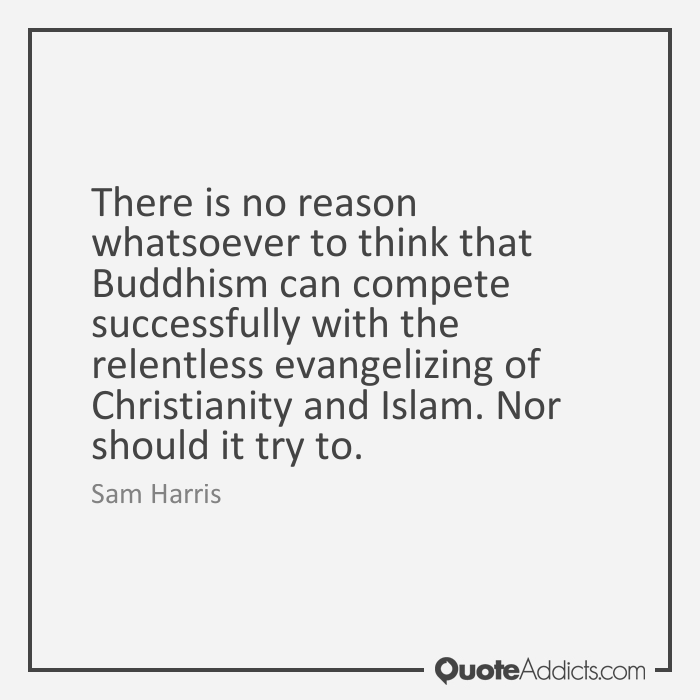
Science, Jesus and the Buddha why can’t we just get along. I love WordPress immensely and the real sense of community that one with a little work can find here. Unfortunately, some of us are not so community orientated and like to bash others a bit, so what I would like to explore a bit is why it seems that Christians seem to want to single out and demonise Buddhists. Strangely enough, Christians do not seem to bash Islam or Hinduism hardly at all. Personally, I think this is strange because generally, Christians are great people they develop amazing Christ-like compassion and love. So why would they spread false information, call us idol worshipers and often even worse?
So why can’t we get along and respect each other and move forward with the things we agree on? Certainly what we agree on is more important than what divides us. Can we learn something from science in this area?
It seems to me that science stays out of the mess likely because you cannot prove dogma and we the religious ones simply cannot get along without our dogma. I would want to stay out as well if I was a scientist. So this asks the question what is dogma? A quick google search says“a principle or set of principles laid down by an authority as incontrovertibly true. “the Christian dogma of the Trinity” synonyms: teaching, belief, tenet, principle, precept, maxim, article of faith, canon;”
Wikipedia goes a little further to say: “Dogma is an official system of principles or tenets of a church, such as Roman Catholicism,[1] or a philosophy such as Stoicism.
Dogma is transliterated in the 17th century from Latin (Latin dogma) meaning “philosophical tenet”, derived from the Greek ‘dogma’ (Greek δόγμα) meaning literally “that which one thinks is true” and ‘dokein’ (Greek dokeo) “to seem good.”[2][3]
Dogma refers to positions such as those of a philosopher or of a philosophical school, or in a pejorative sense referring to enforced decisions, such as those of aggressive political interests or authorities.[4][5] More generally it is applied to some strong belief that the ones adhering to it are not willing to rationally discuss. This attitude is named as a dogmatic one, or as dogmatism, and is often used to refer to matters related to religion, but is not limited to theistic attitudes alone. In Pyrrhonist philosophy “dogma” refers to assent to a proposition about a non-evident matter.”
Or paraphrased “a dogma is a strong belief, principle, or set of principles laid down by an authority as incontrovertibly true that the ones adhering to it are not willing to rationally discuss.” This is quite telling for me as many of the discussions I have had online with Christians were not rational, logical, or at the very least objective. Many also do not even engage in dialogue. Commonly what one gets is that the Bible says this or that and that the Bible is the unquestionable word of the Christian god no matter how it may contradict itself and all reason it is the source of absolute truth. Circular logic and non-sequiturs are commonplace as there is no thought process behind the seemingly blind belief or faith. And to be honest I have like any other human my own beliefs. But I understand that beliefs or faiths do not need to rational or logical as long as one recognizes it as such and keeps it to oneself and does not force them on others or use them to discredit others.
How does science deal with dogma? Science’s job is to ask meaningful questions, formulate hypotheses, and test them to the best of our ability with objective clarity and non-bias. This is not an easy challenge to stay rational and it simply demands logic and objectivity, the very opposite of what this system of religious dogma gives us. While scientific dogma does exist in the hearts of men and their favourite theories the very basis of science requires that when a new discovery is made and found to contradict a previously recognized truth the new discovery is subject to peer review and when warranted it is accepted by the review and the general community as a whole accepts it. But this can take time as the minds of men can become hard to change, but it can and does happen. Just think how long it took us to understand that the earth was not flat since the ancient Greeks theorised in the 6th century BC.
This is completely different from what we see in the three Abrahamic faiths all originating in the Middle East. Proponents of these “ideas” seem perpetually stuck in the idea that their version of the “truth” is the only one and the others are going to hell if they do not subscribe, swallow, or accept it. Worse yet many wars have been fought and will continue to be fought on the basis of irrational dogma and people who are incapable of rationally discussing and analysing their strongly held beliefs within and out from their respective communities. This downward spiral continues as long as those sacred beliefs are held to be true. This holding on to beliefs in spite of knowing rationally that there is no evidence to support them not only creates divisions where no divisions need to be but it suppresses any other new ideas from coming forth and to be developed for our society. This intolerance blossoms into anger, jealousy, and finally hate. The results of which the world knows all to well today when a terrorist expecting 72 virgins on his death walks into a crowded area and blows himself up along with all those around him. And why do we ask? Dogma. We see the same effects mirrored when a community of Palestinians is bulldozed to make way for Zionist condominiums and when Coptic Christians are beheaded by the fanatical ISIL in front of their place of worship in Egypt. Why can we not see the connection between stone thrower in one life and missile launcher in the next life. No matter how you look at it, it’s a simple textbook case of my book is more correct than yours when all the while they are worshipping the same god.
How does the Buddha Dharma and those who truly practice it deal with dogma and strongly held beliefs? Well for starters Buddhists do not proselytise, or witness to others, so to speak in a Sunday Term. Instead of commandments, we have advice. And the beliefs Buddhists do hold are not forced upon those who practice and there are no good or bad ideas just the impartial results that these good or bad deeds develop into, in our lives. The entire system of the eightfold path, four noble truths and all the sutras and tantras are designed to help us on the way and then once we have arrived they are to be discarded, every last one of them, everything is seen as impermanent. It would be like if you were climbing a mountain for example. Imagine that there is a river in the way between you and the top, you need a boat to cross the river to get to the other side but you do not carry the boat to the peak of the mountain, now do you? In fact, the Buddha himself was only a man and he taught that none of his teachings should be taken as the truth just because he is the Buddha, and further said that they should be tested for ourselves against our own experiences for truth. This sounds a lot like the scientific process to me. If there ever was a dogma in Buddhism it is that there is not supposed to be any dogma whatsoever. In fact, it is entirely possible to be a Christian and a Buddhist from the Buddhist perspective.
So what is it that Christians see in Buddhism that seems to be so threatening that in spite of other more deserving opportunities for them to fight against like violence, crime, and war? Could it be that what they see in the Buddha Dharma is the very same message that Jesus brought to the church in his reformation of the old Pharisees and the Scribes into a religion of forgiveness, compassion, non-violence, wisdom, and love for all? Are they reacting the same way that the Pharisees and Scribes did? When we minus all the violent genocidal baggage of the old testament most of the new testament is quite acceptable, maybe there is room for perhaps a third testament, after all the teachings of the Buddha and Jesus were not so different in their purest essence when all the hellfire and brimstone are left aside. The recent rise of curiosity to the eastern religions or wisdom traditions as of late for me represents a very humanistic/religious revival of sorts. Yoga schools, Buddhist centres and mindfulness teachers are popping up left right and centre. One can, of course, thank the well-laid foundation of freedom that we have from our Christian forefathers for this wondrous gift, maybe they feel threatened by Buddhism. As they see the positive growth and lasting change in Buddhist friends and even perhaps in other lands. The growth of the Buddha Dharma in the west is sure to keep on getting stronger and stronger as the critically thinking, well educated, and spiritually minded keep searching for lasting joy and wisdom in an ever more violent world of dogma and discourse. It seems to me that if science can help us it could only happen through education supported by the non-dogmatic discovery of meaningful scientific truth for the benefit of all living beings.
Thanks for reading, please share your thoughts
QP
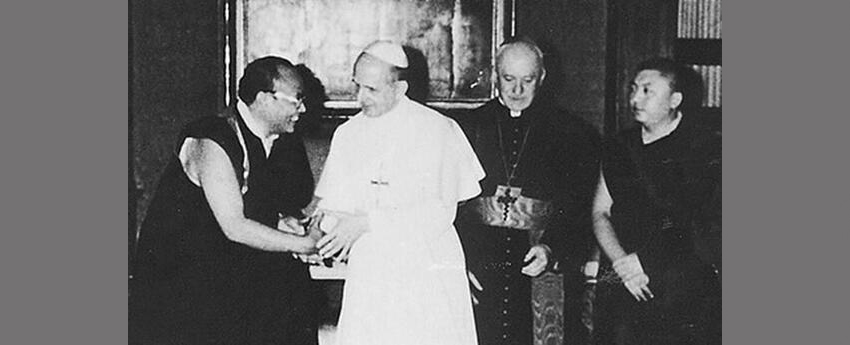
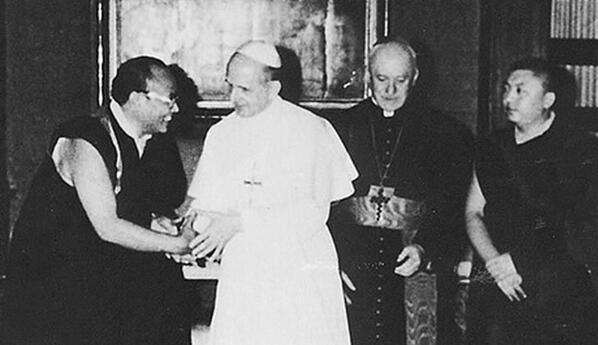
Feature image shows the 16th Karmapa with Pope Paul VI and attendant Jigmala Rimpoche in 1975
Adhyatma Vidya (skt.) is traditionally known as the knowledge of mind or true self or in a more modern sense the Science of Mind. The rich and fantastically elaborate culture of the ancient Indians were perhaps the first civilization to study, theorise, and test mind. And since the time of the historical Buddha, followers of the Buddha Dharma have been studying it ever since within the ever modern laboratory of meditation.
“Remember that there are many religions in the world. They can not be put under one heading since not all of them presuppose faith in an immaterial and immortal soul. Some of them – for example, Buddhism – may appear to be quite close to the concepts of modern science.” Francis H.C Crick
What is the laboratory of meditation? And what experiments are we doing when we meditate? Quite simply we are looking for the self or the observer. We are looking for that through which hears through our ears and sees through our eyes. We are looking for that part of us that has been with us since beginningless time that which has no colour, shape, or form, the part of us that never dies and was never born, but that part of us that we just seem to know or understand to always have been there.
“For a parallel to the lesson of atomic Theory regarding the limited applicability of such customary idealisations, we must, in fact, turn to the other branches of science, such as psychology, or even to that kind of epistemological problems with which already thinkers like Buddha and Lao Tsu have been confronted, when trying to harmonize our position as spectators and actors in the great drama of existence.“ Niels Bohr
Many great treatises have been written about Buddhist Epistemology (theory of perception), Nagarjuna’s Prajnaparamitas, and the processes that take place when we experience and interact with phenomena. It is understood that when we thoroughly examine all the relationships and dependencies (theory of dependent origination) we can find no thing that is truly independent or exists in and of itself. This could be a good way to explain the Buddhist idea of emptiness; empty of its own existence. In Sanskrit the word used is Shunyata. It is extremely important to note here that Emptiness or Shunyata is not “Nothing or nothingness” the root “Su” denotes a great swelling of possibilities. Wow, that sounds very exciting to me how about you? We live in a world of limitless possibilities and endless joy that arises from it. Space is rich and beautiful beyond our wildest imaginations.
Are Buddhists, Neuroscientists, and Quantum Physicists saying the same thing in different languages? Let's finally bring the three together and have an enlightening discussion.



















 QUANTUM AWARENESS Where Science and the Buddha Meet