
Tag Archives: mahamudra

Illuminating the Grand Luminosity: Exploring Dzogchen,Mahamudra, Quantum Physics, and the Nature of Light

Dzogchen and Mahamudra: Insights from Meditation Masters

Dzogchen and Mahamudra are profound meditation practices rooted in
Tibetan Buddhism offers insights into the nature of mind and reality.
Similarly, quantum physics, a branch of modern science, explores the
fundamental principles governing the universe. In this blog entry, we
delve into the intriguing parallels between these disciplines, drawing
upon quotes from meditation masters and physicists alike to illuminate
shared insights and perspectives, particularly focusing on the concept
of light. Can we shine some light on light itself?

In Dzogchen, practitioners seek to realize the grand luminosity of
primordial awareness, which is described as an unbounded expanse of
light beyond conceptual elaboration. The Dzogchen master Longchenpa
elucidates:

“In the unborn expanse, the nature of phenomena, there is neither
object nor subject, neither confusion nor enlightenment. The grand
luminosity of primordial awareness illuminates all, like the radiant
light of the sun.”

Mahamudra teachings similarly emphasize the nature of mind as light,
transcending dualistic concepts of darkness and illumination. As the
Mahamudra master Gampopa advises:

“When mind recognizes mind, the train of discursive and conceptual
thought comes to a halt, and the space-like nature of mind dawns. This
luminous clarity is the essence of Mahamudra.”

Also the 3rd Karmapa Rangjung Dorje wrote “Observing phenomena none is found, one sees mind. Looking at mind no mind is seen, it is empty in essence. Through looking at both, one’s clinging to duality naturally dissolves. May we realize minds nature, which is clear light.”

Quantum Physics: Insights from Physicists

Quantum physics offers insights into the nature of light as both a
particle and a wave, revealing its dual nature. Einstein’s famous
equation, E=mc^2, illustrates the equivalence of mass and energy,
highlighting the profound relationship between matter and light. In
the words of Einstein:

“Mass and energy are two sides of the same coin, interconnected by the
speed of light squared. In the realm of quantum physics, matter
dissolves into pure energy, and light emerges as the fundamental
essence of existence.”
In our essence as material beings, we are light, inseparable from the particles that make up our bodies and the light that makes up our mind and consciousness.

Furthermore, quantum theory describes photons, the particles of light,
as carriers of electromagnetic force and information. The
wave-particle duality of light
challenges our classical understanding
of reality, suggesting that light exists simultaneously as both a wave
and a particle.

Nikola Tesla is quoted as saying “I am part of a light, and it is the music. The Light fills my six senses: I see it, hear, feel, smell, touch and think. Thinking of it means my sixth sense. Particles of Light are written note. A bolt of lightning can be an entire sonata. A thousand balls of lightening is a concert.. For this concert I have created a Ball Lightning, which can be heard on the icy peaks of the Himalayas.”

In exploring the convergence of Dzogchen, Mahamudra, and quantum
physics, we uncover profound insights into the nature of light and
consciousness. Both contemplative traditions and scientific inquiry
point to the luminous nature of mind and the interconnectedness of all
phenomena. As we navigate the mysteries of existence, may we draw upon
the wisdom of meditation masters and physicists alike, illuminating
the path to deeper understanding and awakening in the radiant light of
the grand luminosity.

Once again I would revise Einstein’s famous equation to be C=E=mc^2

QP
Hermetic Philosophy and the Great Seal Mahamudra, is there a Universal Wisdom?

Hermetic philosophy and the Great Seal, Mahamudra, may originate from different traditions, but they converge on universal truths about the nature of reality and the path to self-realization. Both systems offer profound insights, not only into the cosmos but also into the mind as a mirror of the infinite. Each path offers a way to transcend illusions and recognise the deeper truths that connect all things everywhere.

Hermeticism, grounded in the ancient teachings of Hermes Trismegistus, asserts that the universe is a unified whole governed by immutable principles. The Emerald Tablet, one of Hermeticism’s foundational texts, proclaims:

“That which is Below corresponds to that which is Above, and that which is Above corresponds to that which is Below, to accomplish the miracle of the One Thing.”

This principle of correspondence emphasizes the interconnectedness of all things. The inner world of the mind reflects the outer world of the cosmos, and understanding one allows access to the other. Hermeticism teaches that the transformation of the self is a key to unlocking universal truths, blending the mystical and the practical into a single path of self-discovery.

Mahamudra, a cornerstone of Vajrayana Buddhism, also delves into the nature of reality but approaches it through direct experience. Known as the “Great Seal,” Mahamudra reveals the inseparability of subject, object, and action, inviting practitioners to rest in the uncontrived awareness of the present moment. It teaches simplicity, pointing directly to the luminous, empty essence of mind. The seal it refers to symbolizes the inherent truth of reality, present in all beings, waiting to be recognized.

“Stop all physical activity: sit naturally at ease. Do not talk or speak: let sound be empty as an echo. Do not think about anything: look at experience beyond thought.”

Tilopa’s teachings echo the Hermetic focus on simplicity and direct experience. Just as Hermeticism calls for aligning with the natural order of the universe, Mahamudra invites practitioners to rest in the effortless awareness of the present moment, uncontrived and free from conceptual grasping.

Both traditions aim to transcend the illusions of duality. The Emerald Tablet declares:

“It ascends from the earth to the heaven, and again it descends to the earth, and receives the power of the superior and inferior things.”

This reflects Mahamudra’s recognition that samsara and nirvana are not separate realms but two aspects of the same reality. As the 3rd Karmapa Rangjung Dorje stated in his Aspiration Prayer of Mahamudra:

“Observing phenomena, none is found. One mind Looking at mind, no mind is seen, it is empty in essence. Through looking at both, one’s clinging to duality naturally dissolves. May we realize mind’s nature, which is clear light.”

These teachings align with Hermeticism’s view of the universe as a mental construct, where dualities like above and below, inner and outer, dissolve into the oneness of creation or pure light.

Perhaps most strikingly, both traditions guide practitioners toward liberation by turning inward Hermetic tools such as meditation, visualization, and alchemical transformation parallel Mahamudra’s focus on resting in the natural state of awareness. Both traditions emphasize simplicity, urging practitioners to move beyond complexity and directly experience the truth. Simplicity over dogma.

By bringing Hermetic philosophy and Mahamudra together, we find complementary paths to understanding the nature of reality. Hermeticism provides the structure of universal principles, while Mahamudra points to the direct experience of those principles through non-dual awareness.

Ultimately, both traditions lead to the same realization: the infinite is not something external to be sought—it is already within us. Whether approached through the mystical reflections of Hermeticism or the meditative clarity of Mahamudra, the journey unveils the truth of existence as boundless, interconnected, and ever-present. As Tilopa reminds us:

“What joy! Samsaric ways are senseless: they are seeds of suffering. Conventional ways are pointless. Focus on what is sound and true. Majestic outlook is beyond all fixation. Majestic practice is no distraction. Majestic behaviour is no action or effort. The fruition is there when you are free from hope and fear.”

Both the Emerald Tablet and the Tibetan Mahamudra Texts remind us that the Great Seal is not out there in the heavens or in some distant plane. It resides in the simple, open truth of the here and now. The challenge and invitation of both traditions is to awaken to this reality and embody it fully. The seal of the infinite is not outside us—it is, and always has been, within.

QP

Carl Jung’s Mahamudra

Jung’s *Unus Mundus* and Vajrayana Mahamudra

Carl Jung, a pioneering figure in depth psychology, introduced the concept of *unus mundus*, or “one world,” as a fundamental idea that suggests the underlying unity of all existence and experience. On the other side of the spiritual spectrum, Vajrayana Buddhism presents the profound practice of *mahamudra*, which translates to the “great seal,” as a direct method to realize the ultimate nature of mind and our true potential. Despite their origins in vastly different cultural and philosophical traditions, Jung’s *unus mundus* and the concept of *mahamudra* in Vajrayana Buddhism share profound similarities in their exploration of the interconnectedness and unity of existence. This blog post delves into these two concepts, exploring how they converge and what they offer to the understanding of reality and our human expierence.

Carl Jung’s *Unus Mundus*: The Unified Reality

*Unus mundus* is a term Carl Jung adopted from alchemical traditions of old to describe a primordial, unified reality from which all dualities—such as mind and matter, consciousness and unconsciousness—emerge. According to Jung, this concept represents a foundational state of oneness where all distinctions of phenomenon dissolve, revealing deep interconnectedness.

Jung used the idea of *unus mundus* to explain synchronicity, those meaningful coincidences where inner psychological states and outer physical events align in a way that defies our rational explanation. He believed that these synchronicities provided glimpses into the underlying unity of existence, where the psyche and the physical world are not separate but are manifestations of the same underlying reality.

Jung’s *unus mundus* suggests that all phenomena, whether psychological or physical, arise from and return to this unified source. This idea challenges the conventional, dualistic worldview by proposing that the distinctions we perceive between different aspects of reality are illusory at best and that, at the deepest level, everything really everything is interconnected.

Vajrayana Mahamudra: The Ultimate Nature of Mind

In Vajrayana Buddhism, *mahamudra* represents the Buddha’s highest teachings and this practice, aiming to directly realize the ultimate nature of mind. The term “mahamudra” literally means “great seal,” signifying that everything—Subject, Object, and Action or our thoughts, emotions, and experiences—bears the “seal” of ultimate truth, which is emptiness or *shunyata*. This practice involves recognizing the mind’s true nature, which is empty of inherent existence yet full of blissful luminous clarity and deep awareness.

The practice of *mahamudra* is considered a direct path to enlightenment because it bypasses conceptual understanding, instead leading practitioners to a direct, experiential realization of the non-dual nature of reality. In *mahamudra*, all phenomena are seen as expressions of the mind’s intrinsic luminosity and emptiness, and practitioners learn to rest in the natural state of awareness, free from attachment and aversion to our incessant dualistic thinking.

The realization of *mahamudra* brings a profound understanding that the distinctions between subject and object, self and other, and our actions are mere illusions. This realization leads to a state of non-dual awareness, where one sees the interconnectedness of all phenomena and experiences the world as a seamless whole.

   – Jung’s exploration of *unus mundus* suggests that reality is a unified whole where the psyche and the material world are not separate entities but are deeply interconnected. This idea resonates with the *mahamudra* view that all phenomena, including thoughts and emotions, are expressions of the same fundamental reality—emptiness and luminosity. Both concepts challenge the conventional understanding of reality as composed of separate, independent entities and instead propose a view of reality as an interconnected web of relationships. Carl Jung’s concept of *unus mundus* and the Vajrayana Buddhist practice of *mahamudra* both offer profound insights into the nature of reality and the human experience. While *unus mundus* provides a framework for understanding the interconnectedness of mind and matter, *mahamudra* offers a practical method for directly realizing the non-dual nature of mind and reality.

By comparing these two concepts, we see that both Jung and the Vajrayana tradition point toward a deeper, unified reality or mind that transcends ordinary, dualistic perceptions. Whether through the lens of Western psychology or Eastern spirituality, the journey to understanding this unity involves moving beyond conceptual thinking and experiencing reality directly as it is—a seamless, interconnected whole. In this sense, both *unus mundus* and *mahamudra* remind us that the distinctions we perceive in the world are, at their core, illusory, and that true wisdom lies in realizing the fundamental oneness of all phenomena.

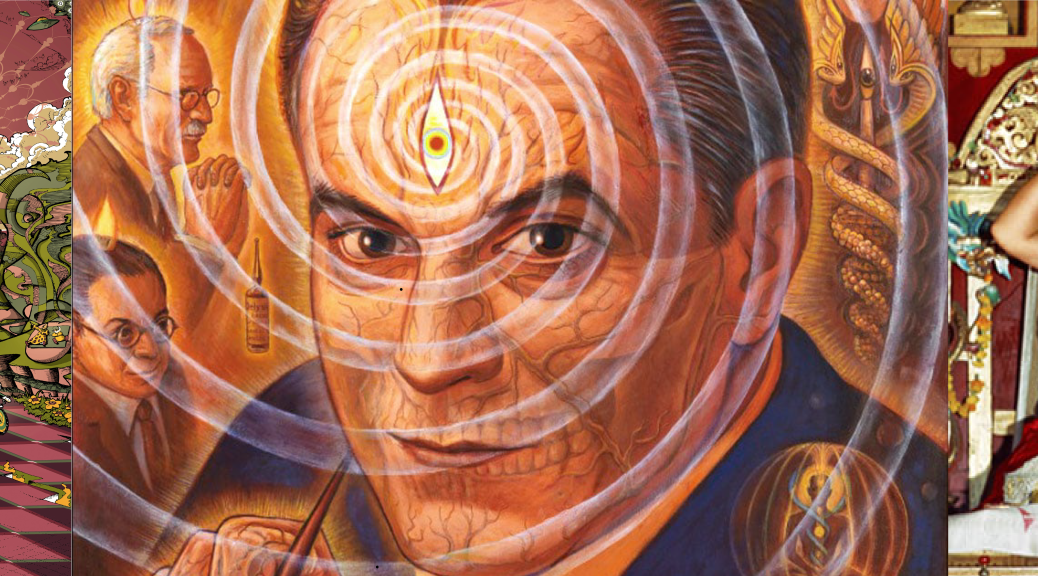
Exploring the Mind: Enlightenment Through LSD or Meditation?

In a rare form of transpersonal experience, consciousness expands to include the Earth in its totality. People who have these experiences are deeply moved by the notion of our planet as a cosmic unity. ~Stan Grof[^1]

When we stop seeing ourselves as separate entities in the universe and we become more and more connected with culture, language, art, love, and people, we begin to notice all the other beings around us. Our pets, wild animals, even insects; simply all creatures big and small on land and sea. We look further and see that even the plant life and environment around us are so filled with life and vibrant beauty that we no longer see any division amongst the diversity of the species we share our earth with. And maybe, if we have just a little more openness, we see this earth as not just the source of life or the place we live but as life itself, a living Gaia if you will.

We struggle with the idea that there might be life on other planets in other solar systems and in other universes. How big of a jump is it to include a living universe that our earth is a small part of? Think of the sun without which most if not all life on Earth would cease. Can something that gives us life be life as well? How can you give what you do not have? If we include our sun then we include all other suns. If we include all suns then all planets in the infinite universe as well. All the energy in the universe is conscious, C=E=mc2.

If you think this sounds a lot like panpsychism, you are completely correct. Please read more about that here.

This transpersonal connection we all share is not unique, it’s not a one-off, not by a long shot. It’s all the energy we all have and share with the space around us. It points us towards the possibility that we are not our bodies, that we have more in common with each other and with all living things than is commonly thought and taught in the West.

The real beauty here is that when it comes to how we understand the conscious energy that we share with others and our environment, we begin to change the quality of our experience in beautiful and profound ways. It is hard to imagine how one could hurt another or damage something in anger when we are so intrinsically connected with all that is. It would simply hurt too much to hurt another and ourselves at the same time. Professor Grof gives us the solution to our problems old and new, whether it’s poverty, the polluted environment, or the wars that have plagued our earth for millennia. We simply cannot afford to be so destructive any longer as the danger of irreparable harm to our planet or complete annihilation grows.

To become a transpersonal initiate we have several options. As anyone who knows Professor Stan Grof and his studies and experience with LSD, it’s not surprising that he has this view, as he has in the quote above. He took Albert Hofmann’s experiment to a whole new level. “If I am the father of LSD, Stan is the godfather. Nobody has contributed as much as Stan for the development of my problem child.”[^2] Professor Grof is however not the only one who has posited such a transpersonal idea. The Buddha taught that all living beings have the Buddha nature and that even subject, object, and actions are one and the same. This view that we all share the same qualities and that even the physical and subjective worlds are one is mind altering. He then prescribed different forms of meditation to his followers and in doing so founded the world’s most peaceful and fun way of life.

So what is it about the LSD experience and a meditation practice that can change us so profoundly?

Professor Grof says, “If integrated wisely into society, psychedelics could play a crucial role in addressing some of our most pressing issues by promoting mental health, fostering creativity, and encouraging a deeper sense of ecological and social responsibility.”[^3] If you want to know more about his personal research on this matter, I highly recommend reading “Gateway to the Numinous” for a more comprehensive and detailed account. Actually, it’s mind-blowing. It seems that an LSD expiernce can connect us to the numinous that is within us all as it is outside as well. This powerful tool shows us that we are one with everything, I know it sounds a little 60’s and flower power but it really does have this effect most who have used it.

I, however, believe that meditation is far superior to the experiences that LSD can give. Primarily because we need to be productive and functional in everyday life all the time and meditation supports this on a daily basis and in every part of the world without breaking any laws. “Turn on, tune in, and drop out” as Timothy Leary suggests is not the way to a better world.

A good friend who had lots of experience with both meditation and LSD once told me, “LSD can show you the door to mind if you don’t know where it is. But only meditation and the dharma can take you through the door to a more meaningful and fulfilling life.” The effects of LSD can be temporary but meditation and the dharma is lasting. An altruistic lifestyle needn’t be obtained in a synthetic or artificial way; a natural way is always better. Meditation requires only a small amount of daily time and our awareness in and of our experiences. Working for others as a Bhodisattva is the real key here. They are many and I am one.

In the laboratory of meditation, we apply the science of mind to our inner experience. We begin to see how karma and impermanence affect our interpersonal experiences. We learn to see that we create our world with our thoughts, then our intentions, and finally our actions. The impressions or memories we have in our mind leave lasting connections between ourselves and everything we interact with. Because of this, we need to live more in touch with others and the environment around us. In short, if our life is full of weeds it’s because we planted them and we need to take responsibility for them before they overtake the garden. Let’s plant beautiful flowers and edible healing plants for all to enjoy instead.

The Buddha Dharma offers us a simple and holistic approach to everyone no matter our age or situation. Let’s not just be individuals going about our own lives, let’s be inclusive and compassionate with all life around us big and small, simple and complex. Let’s reacquaint ourselves with our inborn cosmic unity. Above all let’s bring meaningful behavior back into style.

QP

[^1]: Stanislav Grof, A Holotropic Mind.
[^2]: Stanislav Grof, Realms of the Human Unconscious: Observations from LSD Research.
[^3]: Stanislav Grof, Psychology of the Future: Lessons from Modern Consciousness Research.

Ego = 0

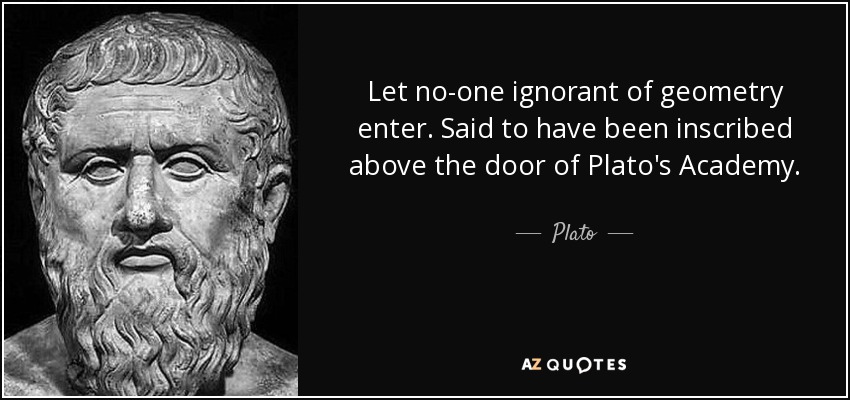
Much to the chagrin of many Roman/Greko philosophers the idea of zero as a number was born in India. To quote Russel Peters, a Canadian comedian the concept was first used in the well-known technique of bargaining by an individual who wanted something but did not want to pay. There are stories and proof of zero concepts in several cultures, not just in Europe and Asia. Even the ancient South Americans seem to have some idea what zero is.  There is, however, a Buddhist link expressed by my favorite philosopher Nagarjuna. Nagarjuna is famous for his groundbreaking treatises on sunyata Sanskrit for emptiness. What could be more empty than zero? Even in the cardinal script, the shape of the zero says “hey man there is nothing here look into the circle it’s empty.” One thing for certain even if the zero was not first conceptualized in India, Indians were with certainty the first people to take the concept out of the mathematical arena and into a philosophical debate. Philosophy and mathematics have always had an interesting coexistence. It is said that above the entrance to Plato’s Academy “let no one ignorant of Geometry enter” was inscribed.

The idea of emptiness is not an easy concept to understand in fact it is more often misunderstood that any other buddhist teaching. This is in part due to many translations of buddhist texts compiled by Christian scholars who had the intention of belittling and demonizing the Buddha Dharma therefore calling it Buddhism.

Nagarjuna’s premise is that things or objects in our world have no independent existence in and of themselves, this is emptiness.

The idea is that we as individuals project our own meaning, concepts, and ideas onto everything that we perceive. We label everything good or bad and so begins the constant samsaric battle of attachment and aversion. This step of labeling is a mistake of our egos as we see ourselves as separate from that object of perception. This separation or act of creating a border between that which we truly are and that which we perceive is the original mistake. Mind or our consciousness is compared to an eye. An eye cannot see itself it only sees outwards. This is why we must turn our mind’s eye inwards in the practice of meditation. Only then do we truly see that Ego = 0

QP

The Mahamudra of Max Plank

images

As a man who has devoted his whole life to the most clearheaded science, to the study of matter, I can tell you as a result of my research about the atoms this much: There is no matter as such! All matter originates and exists only by virtue of a force which brings the particles of an atom to vibration and holds this most minute solar system of the atom together. . . . We must assume behind this force the existence of a conscious and intelligent Mind. This Mind is the matrix of all matter.

Das Wesen der Materie (The Nature of Matter), a 1944 speech in Florence, Italy.

“I regard consciousness as fundamental. I regard matter as derivative from consciousness. We cannot get behind consciousness. Everything that we talk about, everything that we regard as existing, postulates consciousness.”

As quoted in The Observer (25 January 1931)

We have been ignoring modern science for more than 100 years now in the struggle against impermanence of all things composite. We glorify everything material and honour those who can amass the most. We could not be moving in a such a completely wrong direction as a species, how could we misunderstand or even ignore such a clear and concise description of the material world, from one of the most preeminent minds ever, as this? What did Max see on his blackboard filled with equations erased and scratched over once again that could lead him to such a profound observation such as this? After his years of study experimentation and research and this is how he sums it all up in the final years before the end of his life by saying consciousness is the root of all there is, there is no thing behind it.

Let us compare his summary to that of another scientist, not a normal scientist but a scientist of the mind, the third Karmapa. Rangjung Dorje born in Tingri Tibet in 1284. He studied mind within the laboratory of meditation. His professors were highly respected monks from a very long tradition of mind exploration dating back more than two thousand years earlier to old India, the birthplace of modern science. Well, we haven’t recognized it as such yet but one day we must, the Greeks as great as their minds were, only recycled what they had learned in the east, and claimed much of it as their own. Anyway, I digress. Karmapa wrote a song of Mahamudra, I put forward two verses for our comparison of these two masters of intellect.

Verse 9: All phenomena are projections of the mind. Mind is not “a” mind; the mind is empty in essence. Although empty, everything constantly arises in it. May precise examination sever mistaken views of the ground.

And

Verse 18: Through the examination of external objects we see the mind, not the objects. Through the examination of the mind we see its empty essence, but not the mind. Through the examination of both, attachment to duality disappears by itself. May the clear light, the true essence of mind, be recognized.

So we can surmise from both Max and the Third Karmapa that everything comes from mind. Max did not say where things go when they cease to exist but today we can logically infer that they must go back to where they have come from, as the Karmapa said.

Don’t you find this comparison interesting, from two totally different times and sources that are saying almost the same thing. It begs us to look deeper and just outside but within as well.


Superposition

Quantum Superposition

Superposition may be defined as The quantum mechanical property of a particle to occupy all of its possible states simultaneously. This property of multiple coexisting states of existence persists until the superposition is measured, observed, or interacted with. Superposition is classically explained by Schrödinger’s Cat. A cat is imagined as being enclosed in a box with a radioactive source and a poison that will be released when the source (unpredictably) emits radiation, the cat being considered (according to quantum mechanics) to be simultaneously both dead and alive until the box is opened and the cat observed. Its kind of a funny thing to think about, but it begs a few important questions.

  1. What role does the observer play not only in science but in perception in general?
  2. What roles do subject, object, and action, the three subparts of observation, really play in our awareness in meditation?
  3. What are Buddhists attempting to observe in meditation, is this all the same thing?

The Buddhist perspective might be that everything in the universe is constantly in superposition until mind perceives it or consciousness collapses the wavefront and all the possibilities condense into one. One might even say that to a Buddhist all possibilities exist in every situation we experience.

We can say that all possibilities exist within mind, and mind being no thing, is beyond our normal observation but not beyond meditation. When subject, object, and action come together within the meditation we witness the inseparability of ourselves and others. We attempt or practice to do this in the meditation and to then bring it forth in our daily lives. This is commonly called being in the moment or mindfulness. We use these phrases daily almost flippantly while ignoring their much deeper meaning.

The Sanskrit word Mahamudra is a state reached by meditation. Mahamudra could be defined in two parts; as Maha or super and mudra or position. If there are any Sanskrit experts out there, I am curious as to your thoughts on this. Please understand that my Sanskrit is often coloured by my understanding of Tibetan and a very good Indian friend.  Mahamudra has been the subject of many beautiful and cryptic songs or prose in Tibet since 1000 ad. The realization of Mahamudra is enlightenment. Our goal in Buddhism is to discover our true potential. This true potential is Enlightenment.

Do you agree, or feel otherwise? Or perhaps you have something to add?