
Tag Archives: mindfulness

Illuminating the Grand Luminosity: Exploring Dzogchen,Mahamudra, Quantum Physics, and the Nature of Light

Dzogchen and Mahamudra: Insights from Meditation Masters

Dzogchen and Mahamudra are profound meditation practices rooted in
Tibetan Buddhism offers insights into the nature of mind and reality.
Similarly, quantum physics, a branch of modern science, explores the
fundamental principles governing the universe. In this blog entry, we
delve into the intriguing parallels between these disciplines, drawing
upon quotes from meditation masters and physicists alike to illuminate
shared insights and perspectives, particularly focusing on the concept
of light. Can we shine some light on light itself?

In Dzogchen, practitioners seek to realize the grand luminosity of
primordial awareness, which is described as an unbounded expanse of
light beyond conceptual elaboration. The Dzogchen master Longchenpa
elucidates:

“In the unborn expanse, the nature of phenomena, there is neither
object nor subject, neither confusion nor enlightenment. The grand
luminosity of primordial awareness illuminates all, like the radiant
light of the sun.”

Mahamudra teachings similarly emphasize the nature of mind as light,
transcending dualistic concepts of darkness and illumination. As the
Mahamudra master Gampopa advises:

“When mind recognizes mind, the train of discursive and conceptual
thought comes to a halt, and the space-like nature of mind dawns. This
luminous clarity is the essence of Mahamudra.”

Also the 3rd Karmapa Rangjung Dorje wrote “Observing phenomena none is found, one sees mind. Looking at mind no mind is seen, it is empty in essence. Through looking at both, one’s clinging to duality naturally dissolves. May we realize minds nature, which is clear light.”

Quantum Physics: Insights from Physicists

Quantum physics offers insights into the nature of light as both a
particle and a wave, revealing its dual nature. Einstein’s famous
equation, E=mc^2, illustrates the equivalence of mass and energy,
highlighting the profound relationship between matter and light. In
the words of Einstein:

“Mass and energy are two sides of the same coin, interconnected by the
speed of light squared. In the realm of quantum physics, matter
dissolves into pure energy, and light emerges as the fundamental
essence of existence.”
In our essence as material beings, we are light, inseparable from the particles that make up our bodies and the light that makes up our mind and consciousness.

Furthermore, quantum theory describes photons, the particles of light,
as carriers of electromagnetic force and information. The
wave-particle duality of light
challenges our classical understanding
of reality, suggesting that light exists simultaneously as both a wave
and a particle.

Nikola Tesla is quoted as saying “I am part of a light, and it is the music. The Light fills my six senses: I see it, hear, feel, smell, touch and think. Thinking of it means my sixth sense. Particles of Light are written note. A bolt of lightning can be an entire sonata. A thousand balls of lightening is a concert.. For this concert I have created a Ball Lightning, which can be heard on the icy peaks of the Himalayas.”

In exploring the convergence of Dzogchen, Mahamudra, and quantum
physics, we uncover profound insights into the nature of light and
consciousness. Both contemplative traditions and scientific inquiry
point to the luminous nature of mind and the interconnectedness of all
phenomena. As we navigate the mysteries of existence, may we draw upon
the wisdom of meditation masters and physicists alike, illuminating
the path to deeper understanding and awakening in the radiant light of
the grand luminosity.

Once again I would revise Einstein’s famous equation to be C=E=mc^2

QP

Carl Jung’s Mahamudra

Jung’s *Unus Mundus* and Vajrayana Mahamudra

Carl Jung, a pioneering figure in depth psychology, introduced the concept of *unus mundus*, or “one world,” as a fundamental idea that suggests the underlying unity of all existence and experience. On the other side of the spiritual spectrum, Vajrayana Buddhism presents the profound practice of *mahamudra*, which translates to the “great seal,” as a direct method to realize the ultimate nature of mind and our true potential. Despite their origins in vastly different cultural and philosophical traditions, Jung’s *unus mundus* and the concept of *mahamudra* in Vajrayana Buddhism share profound similarities in their exploration of the interconnectedness and unity of existence. This blog post delves into these two concepts, exploring how they converge and what they offer to the understanding of reality and our human expierence.

Carl Jung’s *Unus Mundus*: The Unified Reality

*Unus mundus* is a term Carl Jung adopted from alchemical traditions of old to describe a primordial, unified reality from which all dualities—such as mind and matter, consciousness and unconsciousness—emerge. According to Jung, this concept represents a foundational state of oneness where all distinctions of phenomenon dissolve, revealing deep interconnectedness.

Jung used the idea of *unus mundus* to explain synchronicity, those meaningful coincidences where inner psychological states and outer physical events align in a way that defies our rational explanation. He believed that these synchronicities provided glimpses into the underlying unity of existence, where the psyche and the physical world are not separate but are manifestations of the same underlying reality.

Jung’s *unus mundus* suggests that all phenomena, whether psychological or physical, arise from and return to this unified source. This idea challenges the conventional, dualistic worldview by proposing that the distinctions we perceive between different aspects of reality are illusory at best and that, at the deepest level, everything really everything is interconnected.

Vajrayana Mahamudra: The Ultimate Nature of Mind

In Vajrayana Buddhism, *mahamudra* represents the Buddha’s highest teachings and this practice, aiming to directly realize the ultimate nature of mind. The term “mahamudra” literally means “great seal,” signifying that everything—Subject, Object, and Action or our thoughts, emotions, and experiences—bears the “seal” of ultimate truth, which is emptiness or *shunyata*. This practice involves recognizing the mind’s true nature, which is empty of inherent existence yet full of blissful luminous clarity and deep awareness.

The practice of *mahamudra* is considered a direct path to enlightenment because it bypasses conceptual understanding, instead leading practitioners to a direct, experiential realization of the non-dual nature of reality. In *mahamudra*, all phenomena are seen as expressions of the mind’s intrinsic luminosity and emptiness, and practitioners learn to rest in the natural state of awareness, free from attachment and aversion to our incessant dualistic thinking.

The realization of *mahamudra* brings a profound understanding that the distinctions between subject and object, self and other, and our actions are mere illusions. This realization leads to a state of non-dual awareness, where one sees the interconnectedness of all phenomena and experiences the world as a seamless whole.

   – Jung’s exploration of *unus mundus* suggests that reality is a unified whole where the psyche and the material world are not separate entities but are deeply interconnected. This idea resonates with the *mahamudra* view that all phenomena, including thoughts and emotions, are expressions of the same fundamental reality—emptiness and luminosity. Both concepts challenge the conventional understanding of reality as composed of separate, independent entities and instead propose a view of reality as an interconnected web of relationships. Carl Jung’s concept of *unus mundus* and the Vajrayana Buddhist practice of *mahamudra* both offer profound insights into the nature of reality and the human experience. While *unus mundus* provides a framework for understanding the interconnectedness of mind and matter, *mahamudra* offers a practical method for directly realizing the non-dual nature of mind and reality.

By comparing these two concepts, we see that both Jung and the Vajrayana tradition point toward a deeper, unified reality or mind that transcends ordinary, dualistic perceptions. Whether through the lens of Western psychology or Eastern spirituality, the journey to understanding this unity involves moving beyond conceptual thinking and experiencing reality directly as it is—a seamless, interconnected whole. In this sense, both *unus mundus* and *mahamudra* remind us that the distinctions we perceive in the world are, at their core, illusory, and that true wisdom lies in realizing the fundamental oneness of all phenomena.

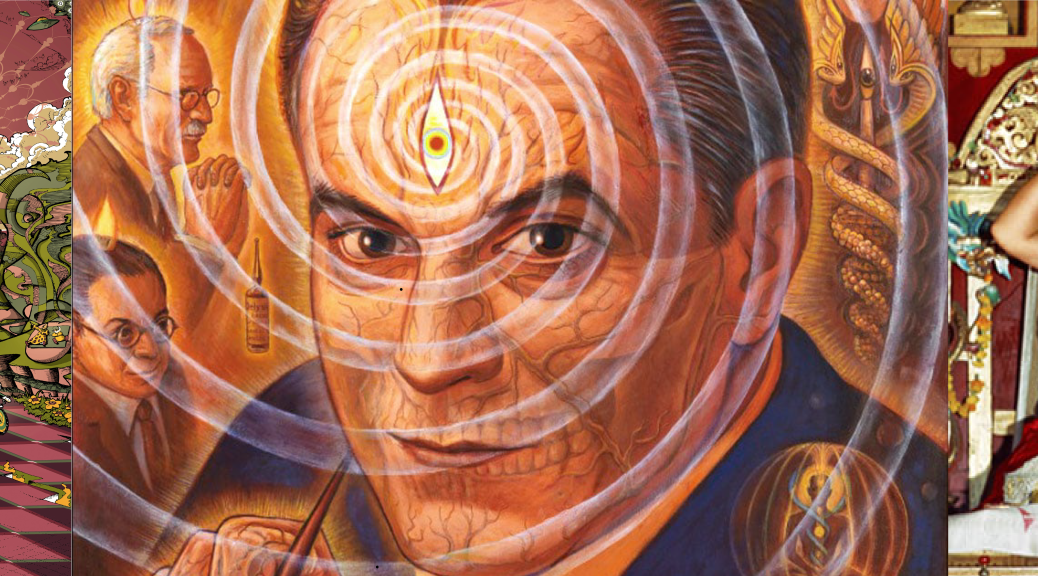
Exploring the Mind: Enlightenment Through LSD or Meditation?

In a rare form of transpersonal experience, consciousness expands to include the Earth in its totality. People who have these experiences are deeply moved by the notion of our planet as a cosmic unity. ~Stan Grof[^1]

When we stop seeing ourselves as separate entities in the universe and we become more and more connected with culture, language, art, love, and people, we begin to notice all the other beings around us. Our pets, wild animals, even insects; simply all creatures big and small on land and sea. We look further and see that even the plant life and environment around us are so filled with life and vibrant beauty that we no longer see any division amongst the diversity of the species we share our earth with. And maybe, if we have just a little more openness, we see this earth as not just the source of life or the place we live but as life itself, a living Gaia if you will.

We struggle with the idea that there might be life on other planets in other solar systems and in other universes. How big of a jump is it to include a living universe that our earth is a small part of? Think of the sun without which most if not all life on Earth would cease. Can something that gives us life be life as well? How can you give what you do not have? If we include our sun then we include all other suns. If we include all suns then all planets in the infinite universe as well. All the energy in the universe is conscious, C=E=mc2.

If you think this sounds a lot like panpsychism, you are completely correct. Please read more about that here.

This transpersonal connection we all share is not unique, it’s not a one-off, not by a long shot. It’s all the energy we all have and share with the space around us. It points us towards the possibility that we are not our bodies, that we have more in common with each other and with all living things than is commonly thought and taught in the West.

The real beauty here is that when it comes to how we understand the conscious energy that we share with others and our environment, we begin to change the quality of our experience in beautiful and profound ways. It is hard to imagine how one could hurt another or damage something in anger when we are so intrinsically connected with all that is. It would simply hurt too much to hurt another and ourselves at the same time. Professor Grof gives us the solution to our problems old and new, whether it’s poverty, the polluted environment, or the wars that have plagued our earth for millennia. We simply cannot afford to be so destructive any longer as the danger of irreparable harm to our planet or complete annihilation grows.

To become a transpersonal initiate we have several options. As anyone who knows Professor Stan Grof and his studies and experience with LSD, it’s not surprising that he has this view, as he has in the quote above. He took Albert Hofmann’s experiment to a whole new level. “If I am the father of LSD, Stan is the godfather. Nobody has contributed as much as Stan for the development of my problem child.”[^2] Professor Grof is however not the only one who has posited such a transpersonal idea. The Buddha taught that all living beings have the Buddha nature and that even subject, object, and actions are one and the same. This view that we all share the same qualities and that even the physical and subjective worlds are one is mind altering. He then prescribed different forms of meditation to his followers and in doing so founded the world’s most peaceful and fun way of life.

So what is it about the LSD experience and a meditation practice that can change us so profoundly?

Professor Grof says, “If integrated wisely into society, psychedelics could play a crucial role in addressing some of our most pressing issues by promoting mental health, fostering creativity, and encouraging a deeper sense of ecological and social responsibility.”[^3] If you want to know more about his personal research on this matter, I highly recommend reading “Gateway to the Numinous” for a more comprehensive and detailed account. Actually, it’s mind-blowing. It seems that an LSD expiernce can connect us to the numinous that is within us all as it is outside as well. This powerful tool shows us that we are one with everything, I know it sounds a little 60’s and flower power but it really does have this effect most who have used it.

I, however, believe that meditation is far superior to the experiences that LSD can give. Primarily because we need to be productive and functional in everyday life all the time and meditation supports this on a daily basis and in every part of the world without breaking any laws. “Turn on, tune in, and drop out” as Timothy Leary suggests is not the way to a better world.

A good friend who had lots of experience with both meditation and LSD once told me, “LSD can show you the door to mind if you don’t know where it is. But only meditation and the dharma can take you through the door to a more meaningful and fulfilling life.” The effects of LSD can be temporary but meditation and the dharma is lasting. An altruistic lifestyle needn’t be obtained in a synthetic or artificial way; a natural way is always better. Meditation requires only a small amount of daily time and our awareness in and of our experiences. Working for others as a Bhodisattva is the real key here. They are many and I am one.

In the laboratory of meditation, we apply the science of mind to our inner experience. We begin to see how karma and impermanence affect our interpersonal experiences. We learn to see that we create our world with our thoughts, then our intentions, and finally our actions. The impressions or memories we have in our mind leave lasting connections between ourselves and everything we interact with. Because of this, we need to live more in touch with others and the environment around us. In short, if our life is full of weeds it’s because we planted them and we need to take responsibility for them before they overtake the garden. Let’s plant beautiful flowers and edible healing plants for all to enjoy instead.

The Buddha Dharma offers us a simple and holistic approach to everyone no matter our age or situation. Let’s not just be individuals going about our own lives, let’s be inclusive and compassionate with all life around us big and small, simple and complex. Let’s reacquaint ourselves with our inborn cosmic unity. Above all let’s bring meaningful behavior back into style.

QP

[^1]: Stanislav Grof, A Holotropic Mind.
[^2]: Stanislav Grof, Realms of the Human Unconscious: Observations from LSD Research.
[^3]: Stanislav Grof, Psychology of the Future: Lessons from Modern Consciousness Research.

Jung vs Buddha Exploring Inner Wisdom

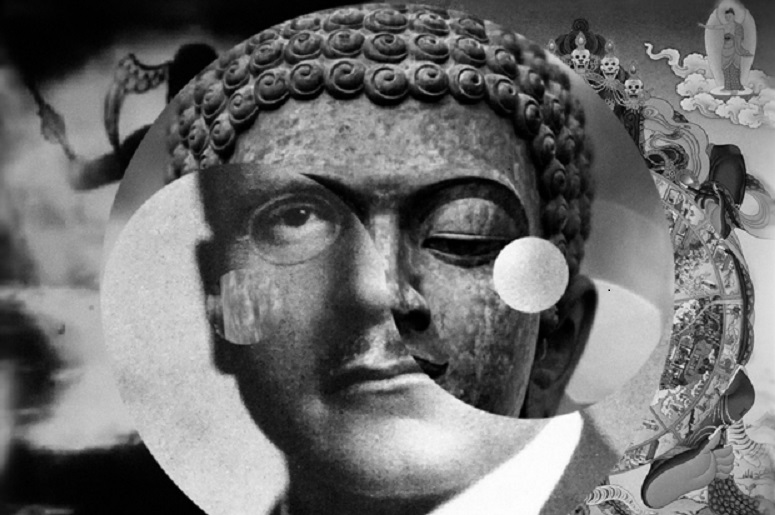
In the vast landscape of psychological, philosophical, and spiritual thought, the teachings of Carl Jung and the Buddha stand out as beacons of wisdom, offering profound insights into the human condition. While their backgrounds and contexts may differ, there are striking similarities in their messages, particularly when it comes to the exploration of the inner self and the pursuit of inner peace.

Carl Jung, a pioneering figure in psychology, emphasized the importance of delving into the depths of one’s own consciousness. Jung is quoted, “Your vision will become clear only when you look into your heart. Who looks outside, dreams, who looks inside, awakes,” encapsulates the idea that true clarity and understanding can only be found through introspection and meditation. By turning our attention inward, we awaken to the truths that lie beneath the surface of our everyday existence. Jung believed that by confronting our innermost thoughts, feelings, and fears, we can achieve a deeper sense of self-awareness and ultimately, a more meaningful life. I can certainly agree with him completely.

Jung surpassed Freuds work on ego and surmised that looking within would be the best path to inner strength and freedom.  Freud choose to look outwards for the cause of psychological problems, as Jung chose to engage man’s darkest shadow.

Similarly, the teachings of the Buddha resonate with the importance of inner exploration and self-discovery. The Buddha’s timeless wisdom, encapsulated in the quote “Peace comes from within. Do not seek it without,” emphasizes the inherent capacity for peace that resides within everyone. Albeit at different depths. Instead of seeking external sources of happiness or fulfillment, the Buddha’s teachings encourage us to turn inward and cultivate a sense of inner tranquility as we learn to touch our mind our innate or timeless source. True peace, according to the Buddha, is not dependent on external circumstances, but rather, it arises from a deep sense of acceptance and contentment with the present moment. This can only be achieved through meditation and complete awareness in every moment and situation we experience. Here one learns
to balance or surf on the waters of aversion and attraction.

Both Jung and Buddha recognize the transformative power of inner work. Jung’s insight that “Until you make the unconscious conscious, it will direct your life and you will call it fate,” mirrors the Buddha’s teachings on the importance of mindfulness and self-awareness. By shining a light on the unconscious aspects of our psyche, we gain greater control over our thoughts, emotions, and actions. Instead of being at the mercy of unconscious patterns and impulses, we become active participants in our own lives, capable of consciously steering our own destiny. We learn to create good Karma and cease the cycle of pain and suffering we know as samsara.

The simple essence of the teachings of Carl Jung and the Buddha converge on the fundamental truth that true wisdom and peace are found within. Whether through introspective analysis or mindfull meditation practice, both paths lead to a deeper understanding of the self and the world around us. By embracing the journey of inner exploration, we unlock the potential for profound transformation and lasting fulfillment in our lives. We become the owners of the cinema instead of just a patron, we identify with the light of the projector instead of the projector or the screen. Or more simply said we bring our shadow into the light.

QP

Super Symmetry dualism and the four immeasurables

The exploration of profound philosophical concepts spans across diverse traditions, from ancient spiritual practices to modern scientific theories. In this paper, we delve into the intriguing parallels between Vajrayana Buddhism’s Four Immeasurables and quantum theory’s concept of super symmetry dualism.

By examining these seemingly disparate frameworks, we aim to uncover common threads that illuminate the nature of reality and consciousness.

Vajrayana Buddhism and the Four Immeasurables:

Vajrayana Buddhism, a wisdom tradition, emphasizes the cultivation of compassion and wisdom as a path to enlightenment. Central to Vajrayana practice are the Four Immeasurables.

These are:

1. Loving-kindness (Metta): The wish for all beings to experience happiness and well-being.
2. Compassion (Karuna): The empathetic desire to alleviate the suffering of others.
3. Sympathetic joy (Mudita): Rejoicing in the happiness and success of others.
4. Equanimity (Upekkha): Maintaining a balanced and non-reactive mind in the face of both joy and suffering.

These Four Immeasurables form the foundation of Vajrayana ethical conduct and meditation practices, fostering the development of boundless love, compassion, joy, and equanimity towards all beings.

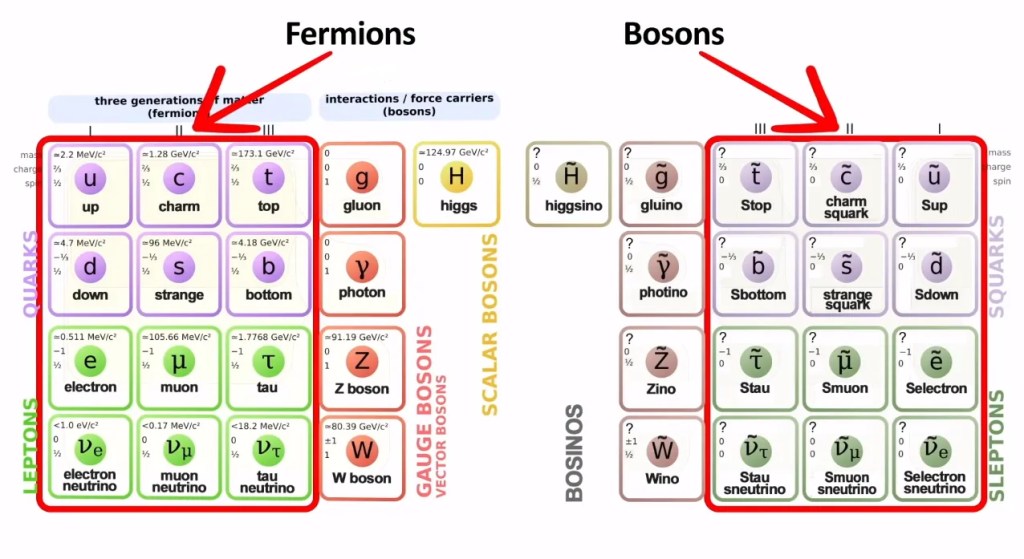
In quantum theory, super symmetry is a proposed fundamental symmetry between elementary particles and their corresponding superpartners. Super symmetry posits that for every known particle, there exists a superpartner particle with similar properties but differing by half a unit of spin. This symmetry suggests a deep underlying unity in the fabric of reality, transcending the apparent duality between matter and energy.

The concept of super symmetry dualism in quantum theory challenges conventional notions of materialism and underscores the interconnectedness of all phenomena at the quantum level. Just as Vajrayana Buddhism teaches the interdependence of all beings and phenomena, super symmetry dualism suggests a profound unity underlying the diversity of the universe.

When we account for their apparent differences in language and methodology, Vajrayana Buddhism’s Four Immeasurables and quantum theory’s super symmetry dualism share several intriguing parallels:

1. Unity and Interconnectedness: Both frameworks emphasize the fundamental unity and interconnectedness of all phenomena, transcending conventional distinctions between self and other, particle and wave.

2. Boundless Compassion: The cultivation of boundless love and compassion towards all beings in Vajrayana Buddhism resonates with the inclusive nature of super symmetry dualism, which acknowledges the inherent value and interconnectedness of all particles and fields.

3. Equanimity and Balance: Just as equanimity in Vajrayana Buddhism promotes a balanced and non-reactive mind, super symmetry dualism suggests a dynamic equilibrium underlying the fluctuations of the quantum world.

In exploring the parallels between Vajrayana Buddhism’s Four Immeasurables and quantum theory’s super symmetry dualism, we gain insight into the profound interconnectedness of consciousness and the cosmos. Both frameworks offer valuable perspectives on the nature of reality, challenging us to transcend dualistic thinking and cultivate compassion, wisdom, and equanimity in our lives. As we continue to probe the mysteries of existence, may these diverse paths of inquiry converge, illuminating the path to deeper understanding and harmony.

QP