Tag Archives: mind

Illuminating the Grand Luminosity: Exploring Dzogchen,Mahamudra, Quantum Physics, and the Nature of Light

Dzogchen and Mahamudra: Insights from Meditation Masters

Dzogchen and Mahamudra are profound meditation practices rooted in
Tibetan Buddhism offers insights into the nature of mind and reality.
Similarly, quantum physics, a branch of modern science, explores the
fundamental principles governing the universe. In this blog entry, we
delve into the intriguing parallels between these disciplines, drawing
upon quotes from meditation masters and physicists alike to illuminate
shared insights and perspectives, particularly focusing on the concept
of light. Can we shine some light on light itself?

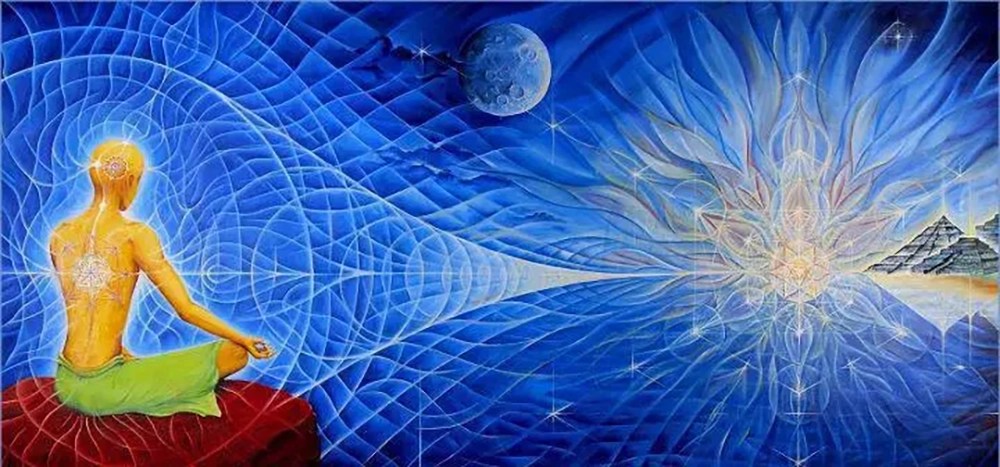
In Dzogchen, practitioners seek to realize the grand luminosity of
primordial awareness, which is described as an unbounded expanse of
light beyond conceptual elaboration. The Dzogchen master Longchenpa
elucidates:

“In the unborn expanse, the nature of phenomena, there is neither
object nor subject, neither confusion nor enlightenment. The grand
luminosity of primordial awareness illuminates all, like the radiant
light of the sun.”

Mahamudra teachings similarly emphasize the nature of mind as light,
transcending dualistic concepts of darkness and illumination. As the
Mahamudra master Gampopa advises:

“When mind recognizes mind, the train of discursive and conceptual
thought comes to a halt, and the space-like nature of mind dawns. This
luminous clarity is the essence of Mahamudra.”

Also the 3rd Karmapa Rangjung Dorje wrote “Observing phenomena none is found, one sees mind. Looking at mind no mind is seen, it is empty in essence. Through looking at both, one’s clinging to duality naturally dissolves. May we realize minds nature, which is clear light.”

Quantum Physics: Insights from Physicists

Quantum physics offers insights into the nature of light as both a
particle and a wave, revealing its dual nature. Einstein’s famous
equation, E=mc^2, illustrates the equivalence of mass and energy,
highlighting the profound relationship between matter and light. In
the words of Einstein:

“Mass and energy are two sides of the same coin, interconnected by the
speed of light squared. In the realm of quantum physics, matter
dissolves into pure energy, and light emerges as the fundamental
essence of existence.”
In our essence as material beings, we are light, inseparable from the particles that make up our bodies and the light that makes up our mind and consciousness.

Furthermore, quantum theory describes photons, the particles of light,
as carriers of electromagnetic force and information. The
wave-particle duality of light
challenges our classical understanding
of reality, suggesting that light exists simultaneously as both a wave
and a particle.

Nikola Tesla is quoted as saying “I am part of a light, and it is the music. The Light fills my six senses: I see it, hear, feel, smell, touch and think. Thinking of it means my sixth sense. Particles of Light are written note. A bolt of lightning can be an entire sonata. A thousand balls of lightening is a concert.. For this concert I have created a Ball Lightning, which can be heard on the icy peaks of the Himalayas.”

In exploring the convergence of Dzogchen, Mahamudra, and quantum
physics, we uncover profound insights into the nature of light and
consciousness. Both contemplative traditions and scientific inquiry
point to the luminous nature of mind and the interconnectedness of all
phenomena. As we navigate the mysteries of existence, may we draw upon
the wisdom of meditation masters and physicists alike, illuminating
the path to deeper understanding and awakening in the radiant light of
the grand luminosity.

Once again I would revise Einstein’s famous equation to be C=E=mc^2

QP
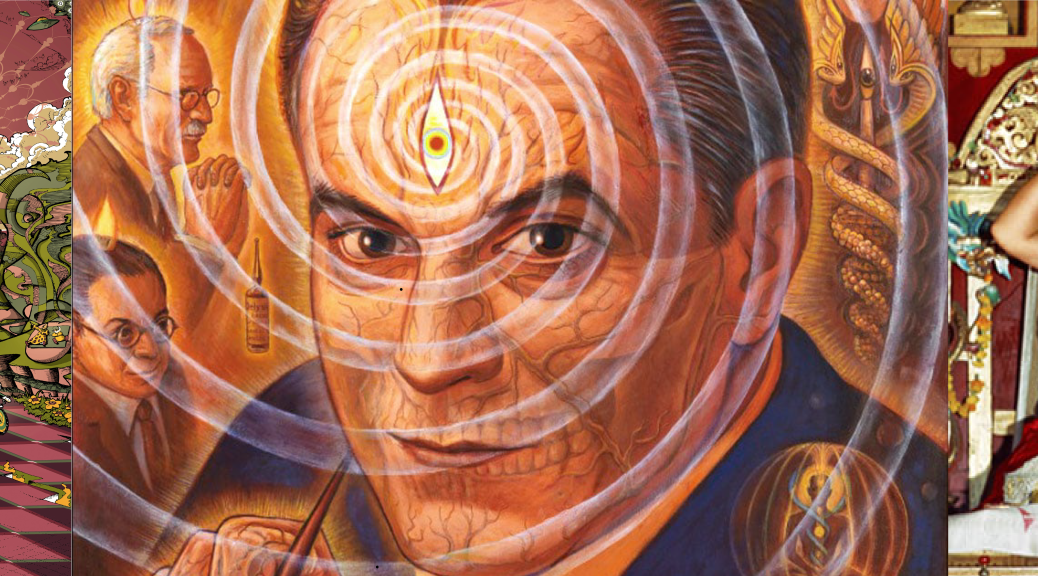
Exploring the Mind: Enlightenment Through LSD or Meditation?

In a rare form of transpersonal experience, consciousness expands to include the Earth in its totality. People who have these experiences are deeply moved by the notion of our planet as a cosmic unity. ~Stan Grof[^1]

When we stop seeing ourselves as separate entities in the universe and we become more and more connected with culture, language, art, love, and people, we begin to notice all the other beings around us. Our pets, wild animals, even insects; simply all creatures big and small on land and sea. We look further and see that even the plant life and environment around us are so filled with life and vibrant beauty that we no longer see any division amongst the diversity of the species we share our earth with. And maybe, if we have just a little more openness, we see this earth as not just the source of life or the place we live but as life itself, a living Gaia if you will.

We struggle with the idea that there might be life on other planets in other solar systems and in other universes. How big of a jump is it to include a living universe that our earth is a small part of? Think of the sun without which most if not all life on Earth would cease. Can something that gives us life be life as well? How can you give what you do not have? If we include our sun then we include all other suns. If we include all suns then all planets in the infinite universe as well. All the energy in the universe is conscious, C=E=mc2.

If you think this sounds a lot like panpsychism, you are completely correct. Please read more about that here.

This transpersonal connection we all share is not unique, it’s not a one-off, not by a long shot. It’s all the energy we all have and share with the space around us. It points us towards the possibility that we are not our bodies, that we have more in common with each other and with all living things than is commonly thought and taught in the West.

The real beauty here is that when it comes to how we understand the conscious energy that we share with others and our environment, we begin to change the quality of our experience in beautiful and profound ways. It is hard to imagine how one could hurt another or damage something in anger when we are so intrinsically connected with all that is. It would simply hurt too much to hurt another and ourselves at the same time. Professor Grof gives us the solution to our problems old and new, whether it’s poverty, the polluted environment, or the wars that have plagued our earth for millennia. We simply cannot afford to be so destructive any longer as the danger of irreparable harm to our planet or complete annihilation grows.

To become a transpersonal initiate we have several options. As anyone who knows Professor Stan Grof and his studies and experience with LSD, it’s not surprising that he has this view, as he has in the quote above. He took Albert Hofmann’s experiment to a whole new level. “If I am the father of LSD, Stan is the godfather. Nobody has contributed as much as Stan for the development of my problem child.”[^2] Professor Grof is however not the only one who has posited such a transpersonal idea. The Buddha taught that all living beings have the Buddha nature and that even subject, object, and actions are one and the same. This view that we all share the same qualities and that even the physical and subjective worlds are one is mind altering. He then prescribed different forms of meditation to his followers and in doing so founded the world’s most peaceful and fun way of life.

So what is it about the LSD experience and a meditation practice that can change us so profoundly?

Professor Grof says, “If integrated wisely into society, psychedelics could play a crucial role in addressing some of our most pressing issues by promoting mental health, fostering creativity, and encouraging a deeper sense of ecological and social responsibility.”[^3] If you want to know more about his personal research on this matter, I highly recommend reading “Gateway to the Numinous” for a more comprehensive and detailed account. Actually, it’s mind-blowing. It seems that an LSD expiernce can connect us to the numinous that is within us all as it is outside as well. This powerful tool shows us that we are one with everything, I know it sounds a little 60’s and flower power but it really does have this effect most who have used it.

I, however, believe that meditation is far superior to the experiences that LSD can give. Primarily because we need to be productive and functional in everyday life all the time and meditation supports this on a daily basis and in every part of the world without breaking any laws. “Turn on, tune in, and drop out” as Timothy Leary suggests is not the way to a better world.

A good friend who had lots of experience with both meditation and LSD once told me, “LSD can show you the door to mind if you don’t know where it is. But only meditation and the dharma can take you through the door to a more meaningful and fulfilling life.” The effects of LSD can be temporary but meditation and the dharma is lasting. An altruistic lifestyle needn’t be obtained in a synthetic or artificial way; a natural way is always better. Meditation requires only a small amount of daily time and our awareness in and of our experiences. Working for others as a Bhodisattva is the real key here. They are many and I am one.

In the laboratory of meditation, we apply the science of mind to our inner experience. We begin to see how karma and impermanence affect our interpersonal experiences. We learn to see that we create our world with our thoughts, then our intentions, and finally our actions. The impressions or memories we have in our mind leave lasting connections between ourselves and everything we interact with. Because of this, we need to live more in touch with others and the environment around us. In short, if our life is full of weeds it’s because we planted them and we need to take responsibility for them before they overtake the garden. Let’s plant beautiful flowers and edible healing plants for all to enjoy instead.

The Buddha Dharma offers us a simple and holistic approach to everyone no matter our age or situation. Let’s not just be individuals going about our own lives, let’s be inclusive and compassionate with all life around us big and small, simple and complex. Let’s reacquaint ourselves with our inborn cosmic unity. Above all let’s bring meaningful behavior back into style.

QP

[^1]: Stanislav Grof, A Holotropic Mind.
[^2]: Stanislav Grof, Realms of the Human Unconscious: Observations from LSD Research.
[^3]: Stanislav Grof, Psychology of the Future: Lessons from Modern Consciousness Research.

Panpsychism C=E=mc2

Let’s explore the Relationship Between Consciousness and Energy in Comparison to Vajrayana Buddhism

Panpsychism is a philosophical theory that posits that consciousness is a fundamental aspect of the universe, present in all forms of matter from the smallest particles to complex organisms. This theory challenges traditional notions of consciousness as solely a product of biological processes, suggesting instead that consciousness is inherent in the very fabric of reality. Today, we will explore the relationship between consciousness and energy in the context of panpsychism, specifically comparing it to the perspective of Vajrayana Buddhism, which also has profound insights into the nature of consciousness and reality.

In the equation, C=E=mc², C represents consciousness as a fundamental aspect of the universe. Panpsychism asserts that consciousness is not exclusive to sentient beings but is pervasive throughout the cosmos, imbuing all matter with some level of subjective experience. C=E aligns with the notion that consciousness is a form of energy that permeates the universe, similar to the energy described by the equation and its relationship to mass. By framing consciousness as a fundamental force akin to energy, panpsychism challenges us to reevaluate our understanding of the relationship between mind and matter.

Vajrayana Buddhism, a school of Tibetan Buddhism known for its esoteric teachings and advanced meditation practices, offers profound insights into the nature of consciousness. According to Vajrayana teachings, consciousness is not limited to individual beings but is interconnected with all phenomena in the universe. This view resonates with panpsychism’s premise that consciousness is ubiquitous and present in all aspects of reality. In Vajrayana Buddhism, consciousness is seen as the radiant clarity that underlies all experiences and perceptions, transcending individual identity and ego. This is supported by the mind only, Cittamatra, or non dual perspective. Mind only means that everything that happens, what we see, what we do and the universe all happen in mind.

Both panpsychism and Vajrayana Buddhism share a holistic understanding of consciousness as a pervasive force that transcends individual beings. While panpsychism articulates this idea in terms of consciousness as a fundamental property of matter, Vajrayana Buddhism approaches it from a metaphysical perspective, emphasizing the interconnectedness of consciousness with all phenomena. Both perspectives challenge dualistic views of mind and matter, pointing towards a more integrated understanding of reality that acknowledges the intrinsic relationship between consciousness and the universe.

Furthermore, the equation C=E=mc² serves as a metaphorical bridge between panpsychism and Vajrayana Buddhism, highlighting the interconnectedness of consciousness and energy. Just as energy can be converted into mass and vice versa, consciousness in panpsychism and Vajrayana Buddhism can be seen as a dynamic process that transforms and manifests in various forms. Here we are reminded that subject, object, and action are all on; whereas consciousness, energy and mass form the universe. By exploring the parallels between panpsychism and Vajrayana Buddhism through the lens of consciousness and energy, we gain a deeper appreciation for the profound implications of these theories on our perception of reality.

The comparison between panpsychism and Vajrayana Buddhism offers a rich tapestry of ideas that challenge conventional notions of consciousness and its relationship to the universe. By viewing consciousness as a fundamental aspect of reality, both perspectives invite us to reconsider our understanding of mind, matter, and the interconnectedness of all phenomena. Through the equation C=E=mc², we are prompted to reflect on the deep unity between consciousness and energy, bridging the gap between scientific inquiry and spiritual wisdom. In exploring the parallels between panpsychism and Vajrayana Buddhism, we are called to contemplate the profound implications of these perspectives on our perception of self, reality, and the nature of existence.

QP

Flowing in the Stream of Consciousness

There is an old saying that you can never enter the same stream twice. This seems kind of odd to the uninitiated especially if you swam in a river or stream often as a kid, so what do we mean here? We have two Buddhist terms that I would like to introduce and discuss here in relation to the steam. The first is impermanence this is understood that everything is in a constant state of change and the second is “dependent arising”. Impermanence is simple and covered in detail here, but dependent arising can be a bit complex. Let’s use the following example of a stream to discover the meaning in dependent arising. We have a stream flowing past us the fresh cool water is clean and clear. As the water flows by it erodes the banks of the stream in some places and deposits the eroded earth in others, it changes constantly. When our stream meets another stream and the two merge and flow on together, soon we have a river. Then at the end of the long river, we often have all the sand or earth carried by the river deposited in the delta where the main river once again divides into smaller streams as it slowly meets the ocean. Once the river has merged with the ocean a new process takes over as the water evaporates into the air becomes clouds and falls back to the earth as rain to be collected by the stream once again. This natural environmental cycle is dependent arising constant and ever-changing based on the impermanence of the surrounding conditions. One part of the process depends on the other and when seen as a whole there is no beginning or end to be found. Take one part out and nothing exists. No start or creation point is then necessary.

“At first practice is like a river rushing through a gorge. In the middle, it’s the river Ganges, smooth and flowing. In the end, it’s where all rivers meet, mother and child.” Tilopa Ganges Mahamudra.

It is here where we realise Dzogrim or that we are a drop of water in the whole ocean.

00660_splash_1920x1200.jpg

It is like this that we can understand our own existence here on earth one big cycle of ever-changing conditions and we can never be the same person twice like we can never enter the same stream or river twice. How do we compare to the river, certainly we are more complex? Here modern science would have to include our store consciousness, that is the sum of all the knowledge, thoughts, and actions we have ever encountered or our stream or consciousness. William James in “Principals of Psychology” used the phrase, stream of consciousness, to describe an unbroken flow of perceptions, thoughts, and feelings in the waking mind.

Buddhist theory calls our store consciousness “Alaya” this is the sum of all our experiences or our karma from all our lives since beginningless time. This Alaya is constantly mixing and interacting with our new life situation. Based on previous actions we decide the new course of action and we cycle through our existence without beginning or end just like the water in the stream. We are never the same person from each moment of mind to the next. The point here is clear we are the result of our actions and ideas, we should be more responsible.

This quote from the physicist Böhm sums it up quite nicely:

“I would say that in my scientific and philosophical work, my main concern has been with understanding the nature of reality in general and of consciousness in particular as a coherent whole, which is never static or complete but which is an unending process of movement and unfoldment….”

D. Bohm, _Wholeness and the Implicate Order_, p.ix

The coherent whole is his comparison for the cycle of dependent arising that is never static or complete. And the unending movement of the river unfolds slowly as new conditions arise in mind.

Modern neuroscientists cannot find the mechanism of how our vast knowledge or memory is stored and then recalled, there are theories but none that are generally agreed upon. There is evidence that certain areas of the brain are associated with certain types of memory but the mechanism is unknown and much of what we know is based on the theory from one man Henry Molaison who has his complete hippocampus removed. After the removal, Henry could not form new long term memories. While this part of the brain certainly plays an important role in memory there is no proof of the storage processes in the brain then the storage could be somewhere else. Just my thoughts but the hippocampus is rather small to store all those memories. Not to mention it’s removal prevented new memories from being formed. The memories formed prior to the operation were still there, showing that the hippocampus is not the storage location.

images-5.jpeg

Alaya has no specific location it is said to be non-local, or more simply said, space is information, omnipresent or everywhere, like energy. It’s simple and beautiful think of it as a cosmic conscious internet or quantum network, flowing through the universe everywhere and always new. Our entire being changing with every new situation and experience. Like always in Buddhism, this responsibility is our own to decide what direction we take, ask yourself do you want a comedy or tragedy today? The choice and answer is clear, are they not?

QP


Who is the boss, Mind or the Brain?

I find the field of Neuroscience totally fascinating as it challenges one of the most difficult questions mankind has ever asked, how or through what mechanism is consciousness produced. This is also known as the hard problem of consciousness. Neuroscientists have from a mechanical perspective dissected and probed the brain in many many ways, identifying all the parts big and small and how they interact with one another. But to no avail, there is no answer to the big question or at least no agreement or even a general consensus as to how consciousness arises, within the scientific community. If we compare a Neuroscientist to a motor mechanic we will have an amazing understanding of how all the nuts, bolts, and parts of a motor work but we will not know why they do what they do. Today we will explore the how and why of the Buddhist theory of consciousness.

Buddhism has for the last 2500 years also tried to answer this question but from a very different perspective. Buddhists began their understanding of consciousness by searching and studying consciousness from within or from an inner mental perspective. Aided by eastern philosophical training and through the practice of meditation, a practitioner is guided along a gentle path of looking deeper and deeper within one’s most secret place, the seat of our consciousness and our true being.

It seems to me the obvious solution is to not ignore the fact that these two opposites are asking the very same question, but are investigating it from completely different perspectives. What could they learn from each other and how might this benefit mankind? Could there be a new middle way or a consensus of consciousness to be found through cooperation?

To begin understanding the mental or inner perspective of how the Buddhadharma explains consciousness we need to understand two sets of ideas the Eight Consciousnesses and the Five Skandhas. We begin with the radio example. Many Buddhist lamas have likened the brain to a radio a mechanical device that receives signals from our sense organs or the gates of our perception. We are all familiar with them; sight, hearing, taste, smell, and touch. Yes, there are other senses like balance and intuition but let us stick to the obvious ones for reasons of simplicity. In this example, the brain acts as a radio receiving signals from 6 different stations. In Buddhist terms, the stations are called the Eight Consciousnesses. They are as follows 1. Visual (or eye) consciousness 2. Auditory (or ear) consciousness 3. Olfactory (or nose) consciousness 4. Gustatory (or tongue) consciousness 5. Tactile (or body) consciousness and 6. Mental (or mind) consciousness. 7 and 8 will be covered later. The Five Skandhas or Mind and are as follows 1. Form, 2. Feeling or sensation, 3. Discrimination or Perception, 4. Mental Formations, and 5. Consciousness.

Ready to see how all this fits together? Let’s tune into the Visual station on the radio and take a look around. Oh, look what’s that? We have a form. The eyes sense something, for example, a rose, and sends the information to the sixth consciousness the Mind consciousness. Here is where things get interesting. The mind consciousness has received the first skandha of form from the eyes. Here we can think that the mind builds the picture or mental fabrication from the information supplied by the input or inputs. Once a mental fabrication has formed a feeling or sensation arises like good, bad, or neutral this is the second Skandha. The discriminating or perception Skandha then registers, recognises, and labels the object. Then the fourth Mental Formation Skandha has us act by taking a closer look, running away or simply moving on based now on all the information our sense consciousnesses provide. We are now in the fifth Skandha and consciousness of the rose. This state gives rise to the seventh consciousness.
The seventh consciousness or the defiled mental consciousness or better described as emotions arise. “Oh what a beautiful rose, I want it.” we say, and then we are fully aware or conscious of the rose. This is where all the trouble begins, you all know what I mean here.
After the stimulus ends or is no longer the focus of the mind’s attention the information or experience is stored in the eighth consciousness or the All Encompassing Foundation Consciousness. This is most like what we would call our subconsciousness, and is called Alaya in Buddhism.

Was that easy to follow and does it compare to your everyday experience?

Remember, Mind doesn’t mind, matter doesn’t matter! Mind is Boss.