
Category Archives: Superposition

Illuminating the Grand Luminosity: Exploring Dzogchen,Mahamudra, Quantum Physics, and the Nature of Light

Dzogchen and Mahamudra: Insights from Meditation Masters

Dzogchen and Mahamudra are profound meditation practices rooted in
Tibetan Buddhism offers insights into the nature of mind and reality.
Similarly, quantum physics, a branch of modern science, explores the
fundamental principles governing the universe. In this blog entry, we
delve into the intriguing parallels between these disciplines, drawing
upon quotes from meditation masters and physicists alike to illuminate
shared insights and perspectives, particularly focusing on the concept
of light. Can we shine some light on light itself?

In Dzogchen, practitioners seek to realize the grand luminosity of
primordial awareness, which is described as an unbounded expanse of
light beyond conceptual elaboration. The Dzogchen master Longchenpa
elucidates:

“In the unborn expanse, the nature of phenomena, there is neither
object nor subject, neither confusion nor enlightenment. The grand
luminosity of primordial awareness illuminates all, like the radiant
light of the sun.”

Mahamudra teachings similarly emphasize the nature of mind as light,
transcending dualistic concepts of darkness and illumination. As the
Mahamudra master Gampopa advises:

“When mind recognizes mind, the train of discursive and conceptual
thought comes to a halt, and the space-like nature of mind dawns. This
luminous clarity is the essence of Mahamudra.”

Also the 3rd Karmapa Rangjung Dorje wrote “Observing phenomena none is found, one sees mind. Looking at mind no mind is seen, it is empty in essence. Through looking at both, one’s clinging to duality naturally dissolves. May we realize minds nature, which is clear light.”

Quantum Physics: Insights from Physicists

Quantum physics offers insights into the nature of light as both a
particle and a wave, revealing its dual nature. Einstein’s famous
equation, E=mc^2, illustrates the equivalence of mass and energy,
highlighting the profound relationship between matter and light. In
the words of Einstein:

“Mass and energy are two sides of the same coin, interconnected by the
speed of light squared. In the realm of quantum physics, matter
dissolves into pure energy, and light emerges as the fundamental
essence of existence.”
In our essence as material beings, we are light, inseparable from the particles that make up our bodies and the light that makes up our mind and consciousness.

Furthermore, quantum theory describes photons, the particles of light,
as carriers of electromagnetic force and information. The
wave-particle duality of light
challenges our classical understanding
of reality, suggesting that light exists simultaneously as both a wave
and a particle.

Nikola Tesla is quoted as saying “I am part of a light, and it is the music. The Light fills my six senses: I see it, hear, feel, smell, touch and think. Thinking of it means my sixth sense. Particles of Light are written note. A bolt of lightning can be an entire sonata. A thousand balls of lightening is a concert.. For this concert I have created a Ball Lightning, which can be heard on the icy peaks of the Himalayas.”

In exploring the convergence of Dzogchen, Mahamudra, and quantum
physics, we uncover profound insights into the nature of light and
consciousness. Both contemplative traditions and scientific inquiry
point to the luminous nature of mind and the interconnectedness of all
phenomena. As we navigate the mysteries of existence, may we draw upon
the wisdom of meditation masters and physicists alike, illuminating
the path to deeper understanding and awakening in the radiant light of
the grand luminosity.

Once again I would revise Einstein’s famous equation to be C=E=mc^2

QP

Hamlet and Quantum Metaphysics: A Deep Dive

In Shakespeare’s “Hamlet,” the famous soliloquy “To be, or not to be: that is the question” delves into profound existential questions that resonates with the principles of Quantum Metaphysics. While it’s commonly interpreted as Hamlet contemplating suicide, a deeper analysis suggests he might be pondering the dissolution of his ego, akin to the concept of ego death.

To be, or not to be, that is the question: Whether ’tis nobler in the mind to suffer The slings and arrows of outrageous fortune, Or to take arms against a sea of troubles, And by opposing end them?

Hamlet’s concern about the consequences of his actions extends beyond mere mortality. His apprehension about the afterlife and karma hints at a deeper understanding of existence and consciousness, reminiscent of Buddhist philosophy. It begs the question as to how one might end suffering.

In Buddhism, suicide is considered karmically detrimental as it cuts short a precious human life, potentially leading to rebirth in lower realms. Hamlet’s hesitation to end his life aligns with Buddhist principles that emphasize the value of human existence and the importance of non-harm towards oneself. “at the moment of death, your state of mind is of utmost importance. A calm and peaceful mind can lead to liberation, but a mind filled with anger, fear, or attachment can bind you to the cycles of suffering.” The Tibetan Book of the Dead.

Furthermore, Hamlet’s reference to the dream realm underscores a nuanced understanding of the transitional states between waking and dreaming, life and the afterlife. ‘To die, to sleep – to sleep – perchance to dream: ay, there’s the rub, for in that sleep of death what dreams may come when we have shuffled off this mortal coil, must give us pause.’ And not to forget, ‘A dream itself is but a shadow.’ shows that he recognises the depth and duality of his existence. This points directly at his pain and suffering coupled with the will to move past this difficulty.

Hamlets words parallel Smetham’s Tetralema, based on Nagarjuna’s negation of reality, which posits that existence is neither absolute nor non-existent, but a unity of opposites.

Drawing from Quantum Physics, the concept of electron/particle superposition wave or particle duality offers insights into the nature of existence. Just as an electron exists in a state of superposition, simultaneously being and not being in a state of pure energy, so too does our awareness encompass the unity of experience in the present moment. This “both-and” view of existence that quantum mechanics puts forth may have saved Hamlet’s life, if he had a physics professor. Nevertheless, the lesson is not lost on us, in our journey of understanding here we really have the chance move beyond ourselves and closer to our true nature of compassion and wisdom.

By synthesizing Shakespeare’s timeless literature with insights from Buddhist philosophy and Quantum Metaphysics, we gain a deeper appreciation of the interconnectedness of existence and consciousness, inviting contemplation on the nature of reality and the human experience.


QP

Quantum Woo or Enlightenment

Isnt this all just Quantum Woo?

Quantum Woo is a thing, but is it so cut and dry as many pure traditional physisits would have you think? Many things in this world can be explained by an equation but perhaps not everything, is so simple?

Not everyone is adept enough to become a world class Quantum Physicist like Einstein, Heisenberg or Sheldon Cooper 😉 , however QM tries to explain the universe in which we all live in. Therefor to some extent we all have a say as it affects all of us. As we also know most branches of science are so specialized that no one has an overview that could be sufficient to cover all the bases, this is where Buddhism or the Science of mind can connect the dots that philosophers and psychologists are close to doing but physists either will not or are wooed away. I in no way think that every conspiracy theory can be explained or that we will all get rich if we follow some steps correctly at all, I simply think that there must be a middle way between the divide of the pure equations and the woo that seems to flood the internet theories that are better left alone due to their paranoia and victum psychology.

The mistake that science seems to make is that they are really good at explaining the objective world but have either forgotten or purposely left the mind or consciousness out of the equation. Logically speaking what good is an object like an atom or any object without a subject like you or me to use, have, or appreciate it in any way? The reverse is also true what good is a subject, a mind, without any thing such as an object to have or to use? One without the other is simply nonsense. This is the basis of the dualistic situation we find ourselves in.

E=mc2 Einstein’s famous equation can explain the subjective but what we really need is C=E=mc2, where C is consciousness and could be expressed as conscious energy. From his subjective position Einstein left himself out of the objective universe and I want to put us back in in a meaningful way. What’s the point of relativity if we leave all the relatives out? Afterall what was the surprising result of the famous double slit expirament? Why does it matter if a particle or wave is being observed or not? Very simply put our consciousness or awareness of a wave function causes the collapse of the wave front and the superposition of all the possibilities converge into one outcome before our very eyes.

Consciousness is fundamental nothing happens with out it, so to ask the age-old question, if a tree falls in the forest and nobody is there to hear is, does it make a sound?

C=E=mc2 is the sound it makes, because without the ears it’s just a vibration. Without an ear drum to receive the vibrations and translate them into sound, there can be no sound, only vibration expressing itself as a waveform of possibilities.

So one of my favorite sources of quantum woo is the famous physicist Erwin Schrödinger towards the end of his life he wrote several books. Had he written these books in the beginning of his career he likely wouldn’t have had one, he would have been written off as a quantum quack. Nevertheless he is still respected today so I’ll give the floor now to him.

“The reason why our sentient, percipient and thinking ego is met nowhere within our scientific world picture can easily be indicated in seven words: because it is itself that world picture.”

“Quantum mechanics is still in its infancy, but when it grows up it will enable us to understand phenomena in biology.”

These quotes highlight Schrödinger’s belief in the potential of quantum mechanics to shed light on biological phenomena or our existance as a whole, although they don’t specifically address consciousness they simply cannot be explained any other way.

QP

Ps. Now if the tree falls in our dreams does it really fall?

If a tree falls in a forest – Wikipedia

https://en.wikipedia.org/wiki/Dream_argument

For the other side of this story check this out https://iai.tv/articles/quantum-mysticism-is-a-mistake-philip-moriarty-auid-2437

Super Symmetry dualism and the four immeasurables

The exploration of profound philosophical concepts spans across diverse traditions, from ancient spiritual practices to modern scientific theories. In this paper, we delve into the intriguing parallels between Vajrayana Buddhism’s Four Immeasurables and quantum theory’s concept of super symmetry dualism.

By examining these seemingly disparate frameworks, we aim to uncover common threads that illuminate the nature of reality and consciousness.

Vajrayana Buddhism and the Four Immeasurables:

Vajrayana Buddhism, a wisdom tradition, emphasizes the cultivation of compassion and wisdom as a path to enlightenment. Central to Vajrayana practice are the Four Immeasurables.

These are:

1. Loving-kindness (Metta): The wish for all beings to experience happiness and well-being.
2. Compassion (Karuna): The empathetic desire to alleviate the suffering of others.
3. Sympathetic joy (Mudita): Rejoicing in the happiness and success of others.
4. Equanimity (Upekkha): Maintaining a balanced and non-reactive mind in the face of both joy and suffering.

These Four Immeasurables form the foundation of Vajrayana ethical conduct and meditation practices, fostering the development of boundless love, compassion, joy, and equanimity towards all beings.

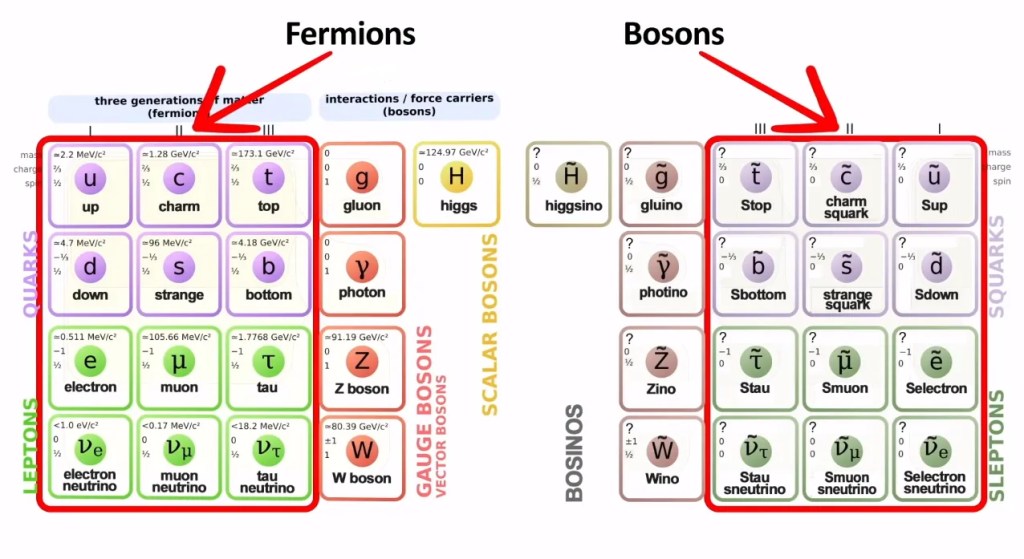
In quantum theory, super symmetry is a proposed fundamental symmetry between elementary particles and their corresponding superpartners. Super symmetry posits that for every known particle, there exists a superpartner particle with similar properties but differing by half a unit of spin. This symmetry suggests a deep underlying unity in the fabric of reality, transcending the apparent duality between matter and energy.

The concept of super symmetry dualism in quantum theory challenges conventional notions of materialism and underscores the interconnectedness of all phenomena at the quantum level. Just as Vajrayana Buddhism teaches the interdependence of all beings and phenomena, super symmetry dualism suggests a profound unity underlying the diversity of the universe.

When we account for their apparent differences in language and methodology, Vajrayana Buddhism’s Four Immeasurables and quantum theory’s super symmetry dualism share several intriguing parallels:

1. Unity and Interconnectedness: Both frameworks emphasize the fundamental unity and interconnectedness of all phenomena, transcending conventional distinctions between self and other, particle and wave.

2. Boundless Compassion: The cultivation of boundless love and compassion towards all beings in Vajrayana Buddhism resonates with the inclusive nature of super symmetry dualism, which acknowledges the inherent value and interconnectedness of all particles and fields.

3. Equanimity and Balance: Just as equanimity in Vajrayana Buddhism promotes a balanced and non-reactive mind, super symmetry dualism suggests a dynamic equilibrium underlying the fluctuations of the quantum world.

In exploring the parallels between Vajrayana Buddhism’s Four Immeasurables and quantum theory’s super symmetry dualism, we gain insight into the profound interconnectedness of consciousness and the cosmos. Both frameworks offer valuable perspectives on the nature of reality, challenging us to transcend dualistic thinking and cultivate compassion, wisdom, and equanimity in our lives. As we continue to probe the mysteries of existence, may these diverse paths of inquiry converge, illuminating the path to deeper understanding and harmony.

QP

Ego = 0

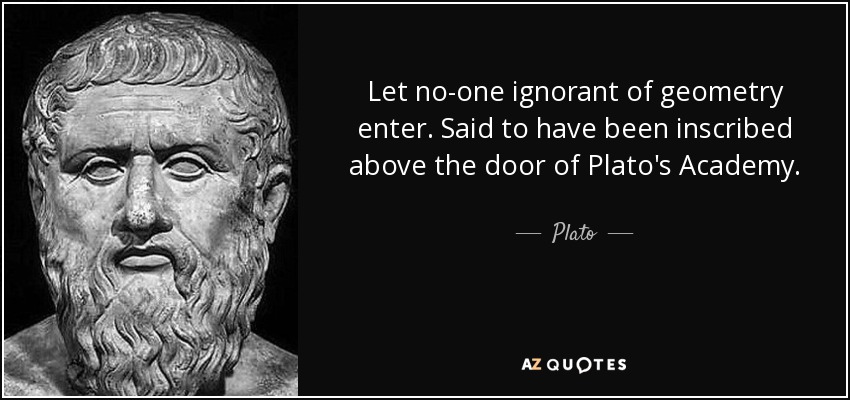
Much to the chagrin of many Roman/Greko philosophers the idea of zero as a number was born in India. To quote Russel Peters, a Canadian comedian the concept was first used in the well-known technique of bargaining by an individual who wanted something but did not want to pay. There are stories and proof of zero concepts in several cultures, not just in Europe and Asia. Even the ancient South Americans seem to have some idea what zero is.  There is, however, a Buddhist link expressed by my favorite philosopher Nagarjuna. Nagarjuna is famous for his groundbreaking treatises on sunyata Sanskrit for emptiness. What could be more empty than zero? Even in the cardinal script, the shape of the zero says “hey man there is nothing here look into the circle it’s empty.” One thing for certain even if the zero was not first conceptualized in India, Indians were with certainty the first people to take the concept out of the mathematical arena and into a philosophical debate. Philosophy and mathematics have always had an interesting coexistence. It is said that above the entrance to Plato’s Academy “let no one ignorant of Geometry enter” was inscribed.

The idea of emptiness is not an easy concept to understand in fact it is more often misunderstood that any other buddhist teaching. This is in part due to many translations of buddhist texts compiled by Christian scholars who had the intention of belittling and demonizing the Buddha Dharma therefore calling it Buddhism.

Nagarjuna’s premise is that things or objects in our world have no independent existence in and of themselves, this is emptiness.

The idea is that we as individuals project our own meaning, concepts, and ideas onto everything that we perceive. We label everything good or bad and so begins the constant samsaric battle of attachment and aversion. This step of labeling is a mistake of our egos as we see ourselves as separate from that object of perception. This separation or act of creating a border between that which we truly are and that which we perceive is the original mistake. Mind or our consciousness is compared to an eye. An eye cannot see itself it only sees outwards. This is why we must turn our mind’s eye inwards in the practice of meditation. Only then do we truly see that Ego = 0

QP

Superposition

Quantum Superposition

Superposition may be defined as The quantum mechanical property of a particle to occupy all of its possible states simultaneously. This property of multiple coexisting states of existence persists until the superposition is measured, observed, or interacted with. Superposition is classically explained by Schrödinger’s Cat. A cat is imagined as being enclosed in a box with a radioactive source and a poison that will be released when the source (unpredictably) emits radiation, the cat being considered (according to quantum mechanics) to be simultaneously both dead and alive until the box is opened and the cat observed. Its kind of a funny thing to think about, but it begs a few important questions.

  1. What role does the observer play not only in science but in perception in general?
  2. What roles do subject, object, and action, the three subparts of observation, really play in our awareness in meditation?
  3. What are Buddhists attempting to observe in meditation, is this all the same thing?

The Buddhist perspective might be that everything in the universe is constantly in superposition until mind perceives it or consciousness collapses the wavefront and all the possibilities condense into one. One might even say that to a Buddhist all possibilities exist in every situation we experience.

We can say that all possibilities exist within mind, and mind being no thing, is beyond our normal observation but not beyond meditation. When subject, object, and action come together within the meditation we witness the inseparability of ourselves and others. We attempt or practice to do this in the meditation and to then bring it forth in our daily lives. This is commonly called being in the moment or mindfulness. We use these phrases daily almost flippantly while ignoring their much deeper meaning.

The Sanskrit word Mahamudra is a state reached by meditation. Mahamudra could be defined in two parts; as Maha or super and mudra or position. If there are any Sanskrit experts out there, I am curious as to your thoughts on this. Please understand that my Sanskrit is often coloured by my understanding of Tibetan and a very good Indian friend.  Mahamudra has been the subject of many beautiful and cryptic songs or prose in Tibet since 1000 ad. The realization of Mahamudra is enlightenment. Our goal in Buddhism is to discover our true potential. This true potential is Enlightenment.

Do you agree, or feel otherwise? Or perhaps you have something to add?