Hermetic Philosophy and the Great Seal Mahamudra, is there a Universal Wisdom?

Hermetic philosophy and the Great Seal, Mahamudra, may originate from different traditions, but they converge on universal truths about the nature of reality and the path to self-realization. Both systems offer profound insights, not only into the cosmos but also into the mind as a mirror of the infinite. Each path offers a way to transcend illusions and recognise the deeper truths that connect all things everywhere.

Hermeticism, grounded in the ancient teachings of Hermes Trismegistus, asserts that the universe is a unified whole governed by immutable principles. The Emerald Tablet, one of Hermeticism’s foundational texts, proclaims:

“That which is Below corresponds to that which is Above, and that which is Above corresponds to that which is Below, to accomplish the miracle of the One Thing.”

This principle of correspondence emphasizes the interconnectedness of all things. The inner world of the mind reflects the outer world of the cosmos, and understanding one allows access to the other. Hermeticism teaches that the transformation of the self is a key to unlocking universal truths, blending the mystical and the practical into a single path of self-discovery.

Mahamudra, a cornerstone of Vajrayana Buddhism, also delves into the nature of reality but approaches it through direct experience. Known as the “Great Seal,” Mahamudra reveals the inseparability of subject, object, and action, inviting practitioners to rest in the uncontrived awareness of the present moment. It teaches simplicity, pointing directly to the luminous, empty essence of mind. The seal it refers to symbolizes the inherent truth of reality, present in all beings, waiting to be recognized.

“Stop all physical activity: sit naturally at ease. Do not talk or speak: let sound be empty as an echo. Do not think about anything: look at experience beyond thought.”

Tilopa’s teachings echo the Hermetic focus on simplicity and direct experience. Just as Hermeticism calls for aligning with the natural order of the universe, Mahamudra invites practitioners to rest in the effortless awareness of the present moment, uncontrived and free from conceptual grasping.

Both traditions aim to transcend the illusions of duality. The Emerald Tablet declares:

“It ascends from the earth to the heaven, and again it descends to the earth, and receives the power of the superior and inferior things.”

This reflects Mahamudra’s recognition that samsara and nirvana are not separate realms but two aspects of the same reality. As the 3rd Karmapa Rangjung Dorje stated in his Aspiration Prayer of Mahamudra:

“Observing phenomena, none is found. One mind Looking at mind, no mind is seen, it is empty in essence. Through looking at both, one’s clinging to duality naturally dissolves. May we realize mind’s nature, which is clear light.”

These teachings align with Hermeticism’s view of the universe as a mental construct, where dualities like above and below, inner and outer, dissolve into the oneness of creation or pure light.

Perhaps most strikingly, both traditions guide practitioners toward liberation by turning inward Hermetic tools such as meditation, visualization, and alchemical transformation parallel Mahamudra’s focus on resting in the natural state of awareness. Both traditions emphasize simplicity, urging practitioners to move beyond complexity and directly experience the truth. Simplicity over dogma.

By bringing Hermetic philosophy and Mahamudra together, we find complementary paths to understanding the nature of reality. Hermeticism provides the structure of universal principles, while Mahamudra points to the direct experience of those principles through non-dual awareness.

Ultimately, both traditions lead to the same realization: the infinite is not something external to be sought—it is already within us. Whether approached through the mystical reflections of Hermeticism or the meditative clarity of Mahamudra, the journey unveils the truth of existence as boundless, interconnected, and ever-present. As Tilopa reminds us:

“What joy! Samsaric ways are senseless: they are seeds of suffering. Conventional ways are pointless. Focus on what is sound and true. Majestic outlook is beyond all fixation. Majestic practice is no distraction. Majestic behaviour is no action or effort. The fruition is there when you are free from hope and fear.”

Both the Emerald Tablet and the Tibetan Mahamudra Texts remind us that the Great Seal is not out there in the heavens or in some distant plane. It resides in the simple, open truth of the here and now. The challenge and invitation of both traditions is to awaken to this reality and embody it fully. The seal of the infinite is not outside us—it is, and always has been, within.

QP

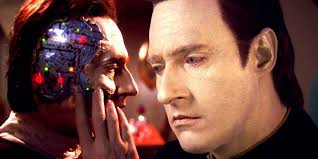
Can AI be conscious?

Will it even behave like us?

If energy is conscious, C=E=mc2, and both are everywhere and omnipresent,then does the form or the way that consciousness is embodied matter? Our bodies are organic machines made out of tissues, bones, blood and water, and all of this is made up of protons neutrons and electrons. The protons and neutrons are made up of quirks quarks and so on. All these things are exactly what the computer that you are using right now made up of.

If we managed to make a computer sufficiently powerful and complex enough why couldn’t a consciousness similar to ours take up residence there?

Maybe the computer or android would have to be significantly biological in its design and construction but even this would be possible one day.

The debate today about AI could be considered significant enough that the construction is not important but only that it thinks and therefore is? A modern “cogito ergo sum” where the sum is the total of our own work and technological mastery.

At a Buddhist lecture a few years ago a Buddhist lama was asked if was possible from a Buddhist perspective. The answer was surprisingly yes. Since I am a proponent of panpsychism and believe that consciousness is fundamental and everywhere I would have to agree.

I hope it doesn’t behave like us, which is poorly. Maybe it could help us along our way to be better beings. But how can beings like us make or construct something that is Superior or not dangerous like the atomic bomb was? We always ask ourselves can we? But we never seem to manage the, should we?

QP

https://x.com/skdh/status/1811816539517325504?s=46&t=C7njJFLuEWs5R4kZBCys5A

https://academic.oup.com/nc/article/2024/1/niae013/7644104?login=false

Could Descartes speak his mind or did the Church threaten his existence? The Cartesian Conundrum

Descartes, a pivotal figure in the history of Western philosophy, grappled with the complex relationship between the mind and the church during his lifetime. His radical ideas about the nature of existence and consciousness challenged traditional religious doctrine, raising questions about the compatibility of his philosophical inquiries with the orthodoxy of the Catholic Church.

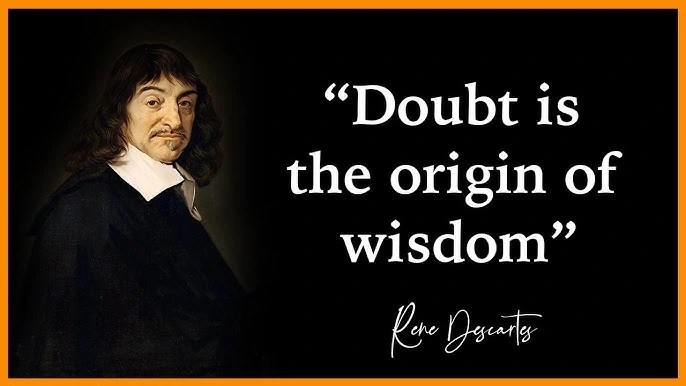
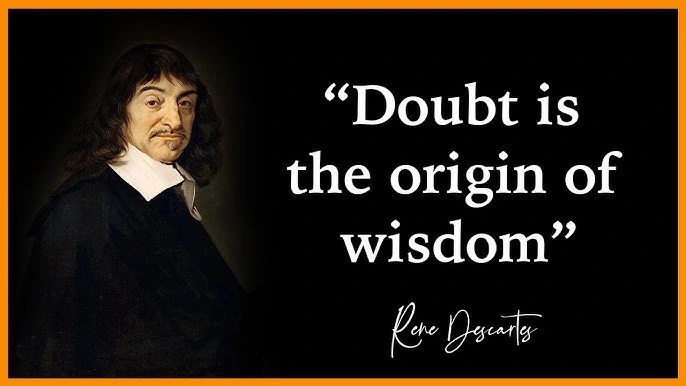
René Descartes is best known for his famous statement, “Cogito, ergo sum” (I think, therefore I am), which epitomizes his method of radical doubt and the primacy of consciousness in philosophical inquiry. However, his exploration of the mind’s nature and its relationship to the body inevitably brought him into conflict with the religious authorities of his time.

Descartes’ philosophical views, particularly his dualistic theory of mind and body, posed a challenge to the prevailing Aristotelian-Thomistic worldview endorsed by the Catholic Church. According to Descartes, the mind (or soul) and the body are distinct substances, with the mind being non-material and immortal, while the body is material and mortal. This dualism stood in contrast to the Catholic doctrine of the unity of body and soul, which held that the two were inseparable and dependent on each other.

While Descartes did not directly challenge religious dogma in his philosophical works, his ideas had profound implications for theological beliefs about the nature of the soul, free will, and the afterlife. As a result, his works were subject to scrutiny and censorship by ecclesiastical authorities, who were wary of any doctrines that diverged from orthodox teachings.

Although Descartes faced criticism and condemnation from some religious quarters, particularly Jesuit theologians who viewed his philosophy as a threat to traditional Scholasticism, there is little evidence to suggest that his life was directly threatened by the church. Descartes was careful to navigate the political and religious landscapes of his time, and he often sought to reconcile his philosophical ideas with religious doctrine to avoid controversy.

Buddhism, like many other religious traditions, has also grappled with the complexities of translation of its texts throughout history. One notable example is the mistranslation of key Buddhist concepts in early encounters with Western scholars and missionaries. As Western scholars began to study Buddhist texts, they often struggled to accurately convey the nuanced meanings of terms such as “karma,” “nirvana,” and “emptiness.” This led to misunderstandings and misinterpretations that shaped early Western perceptions of Buddhism. The Buddha himself is credites with saying “don’t trust me because the Buddha said something, test it and try it out for yourself and see if it is true, #doubtit

Just as Descartes’ ideas challenged the orthodoxy of the Catholic Church, certain Buddhist teachings have posed challenges to traditional interpretations within the religion itself. For example, the concept of anatta, or “no-self,” challenges the notion of a permanent, inherent self, which is a central tenet in many other religious traditions. This concept has led to debates and interpretations within Buddhism about the nature of personal identity and consciousness, similar to the debates sparked by Descartes’ dualistic theory of mind and body. Overall, both Descartes’ philosophical inquiries and Buddhist teachings illustrate the ongoing dialogue between religion, philosophy, and cultural interpretation. All our ideas should be critiqued and improved on continuously. Isn’t this exactly what we should be doing more of?

In conclusion, while Descartes’ philosophical inquiries into the nature of the mind may have raised eyebrows within religious circles, there is no concrete evidence to suggest that he faced direct threats to his life from the church. However, his intellectual legacy continues to provoke debate and reflection on the boundaries between philosophy, science, and religious belief.

QP

Hamlet and Quantum Metaphysics: A Deep Dive

In Shakespeare’s “Hamlet,” the famous soliloquy “To be, or not to be: that is the question” delves into profound existential questions that resonates with the principles of Quantum Metaphysics. While it’s commonly interpreted as Hamlet contemplating suicide, a deeper analysis suggests he might be pondering the dissolution of his ego, akin to the concept of ego death.

To be, or not to be, that is the question: Whether ’tis nobler in the mind to suffer The slings and arrows of outrageous fortune, Or to take arms against a sea of troubles, And by opposing end them?

Hamlet’s concern about the consequences of his actions extends beyond mere mortality. His apprehension about the afterlife and karma hints at a deeper understanding of existence and consciousness, reminiscent of Buddhist philosophy. It begs the question as to how one might end suffering.

In Buddhism, suicide is considered karmically detrimental as it cuts short a precious human life, potentially leading to rebirth in lower realms. Hamlet’s hesitation to end his life aligns with Buddhist principles that emphasize the value of human existence and the importance of non-harm towards oneself. “at the moment of death, your state of mind is of utmost importance. A calm and peaceful mind can lead to liberation, but a mind filled with anger, fear, or attachment can bind you to the cycles of suffering.” The Tibetan Book of the Dead.

Furthermore, Hamlet’s reference to the dream realm underscores a nuanced understanding of the transitional states between waking and dreaming, life and the afterlife. ‘To die, to sleep – to sleep – perchance to dream: ay, there’s the rub, for in that sleep of death what dreams may come when we have shuffled off this mortal coil, must give us pause.’ And not to forget, ‘A dream itself is but a shadow.’ shows that he recognises the depth and duality of his existence. This points directly at his pain and suffering coupled with the will to move past this difficulty.

Hamlets words parallel Smetham’s Tetralema, based on Nagarjuna’s negation of reality, which posits that existence is neither absolute nor non-existent, but a unity of opposites.

Drawing from Quantum Physics, the concept of electron/particle superposition wave or particle duality offers insights into the nature of existence. Just as an electron exists in a state of superposition, simultaneously being and not being in a state of pure energy, so too does our awareness encompass the unity of experience in the present moment. This “both-and” view of existence that quantum mechanics puts forth may have saved Hamlet’s life, if he had a physics professor. Nevertheless, the lesson is not lost on us, in our journey of understanding here we really have the chance move beyond ourselves and closer to our true nature of compassion and wisdom.

By synthesizing Shakespeare’s timeless literature with insights from Buddhist philosophy and Quantum Metaphysics, we gain a deeper appreciation of the interconnectedness of existence and consciousness, inviting contemplation on the nature of reality and the human experience.


QP

Exploring Consciousness and Black Holes

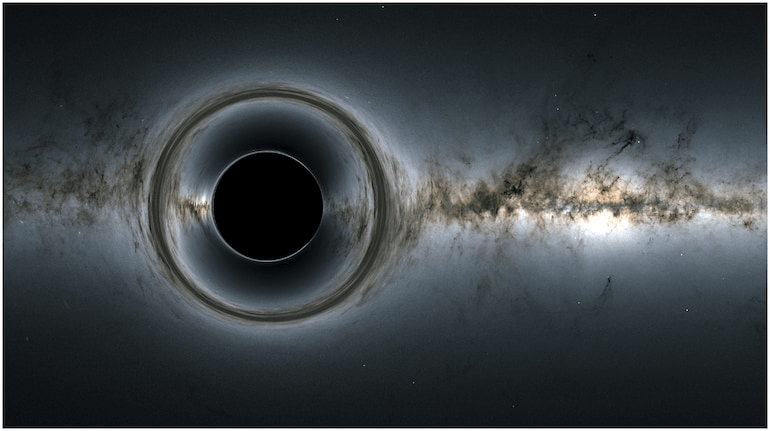
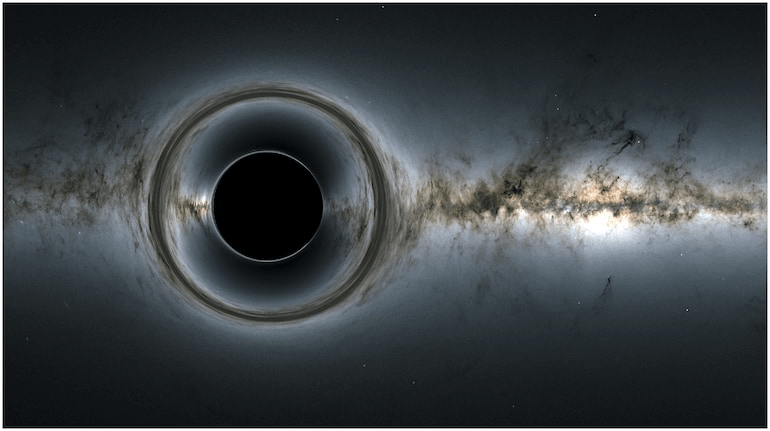
Of course, flying into a black hole is a journey beyond the limits of physical survival and one we would never take. Your ship and body would be torn apart by tidal forces, a process called spaghettification. But what about consciousness? Can we spaghettificate our consciousness?

From a Vajrayana Buddhist perspective, consciousness transcends physical form. It is seen as a continuum, not bound by the body or material space or time. Because it is not made or composed of anything it cannot be reduced or taken apart. Entering a black hole might be akin to entering a bardo, or transitional state, where the mind could experience vast, non-ordinary perceptions as it confronts the ultimate dissolution of matter. Other bardo’s in the karma Kagyu tradition include awaking and dreaming,  living and death, as well as the bardo of luminosity. Here the bardo of luminosity is the most interesting. The luminosity of our true nature. Our consciousness is is compared to light, note it is not light but like it, not nothing but no thing. Is this what is pushed out on the other side of the black hole, out the theorized white hole? 

Modern physics, rooted in ideas dating back to John Michell in 1783, suggests black holes obliterate physical information at the singularity. Quantum theories like the holographic principle, however, propose that all information—possibly including consciousness—might persist on the black hole’s event horizon. Several well known lamas have compared their consciousness to a holographic experience. Maybe black holes are the universe’s recycling depot where everything is stored and somehow reconstructed in the singularity. Many theories even include so called Einstein Rosen bridges or wormholes. They exit at what might be a white hole somewhere else like the other side of the galaxy, the universe, or even in another realm. 

In this view, your consciousness might experience a paradoxical duality: disintegration in the singularity yet preservation as a “hologram” on the edge of existence. Black holes, then, challenge the boundary between annihilation and continuity—much like the nature of consciousness itself. This would be sort of a “both and “ an ultimate transition to quantum enlightenment or even a journey to the singularity that might even be consciousness or enlightenment itself. 

QP