Super Symmetry dualism and the four immeasurables

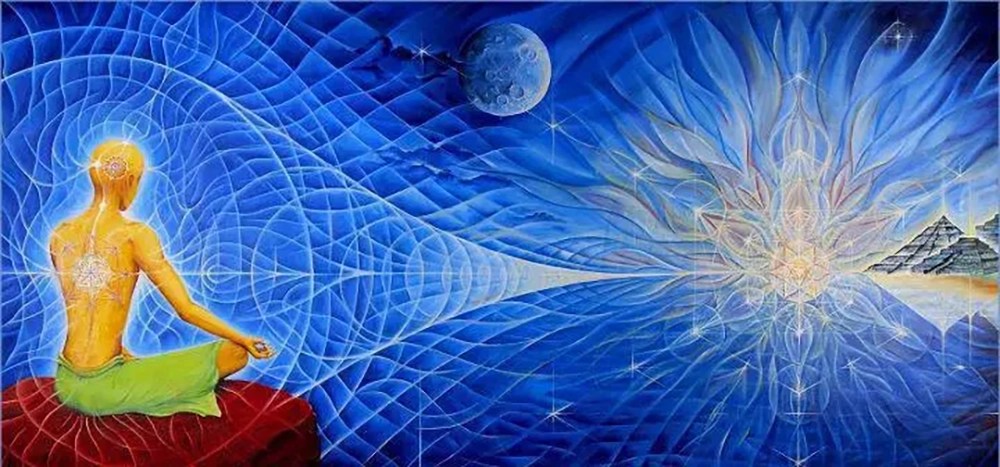
The exploration of profound philosophical concepts spans across diverse traditions, from ancient spiritual practices to modern scientific theories. In this paper, we delve into the intriguing parallels between Vajrayana Buddhism’s Four Immeasurables and quantum theory’s concept of super symmetry dualism.

By examining these seemingly disparate frameworks, we aim to uncover common threads that illuminate the nature of reality and consciousness.

Vajrayana Buddhism and the Four Immeasurables:

Vajrayana Buddhism, a wisdom tradition, emphasizes the cultivation of compassion and wisdom as a path to enlightenment. Central to Vajrayana practice are the Four Immeasurables.

These are:

1. Loving-kindness (Metta): The wish for all beings to experience happiness and well-being.
2. Compassion (Karuna): The empathetic desire to alleviate the suffering of others.
3. Sympathetic joy (Mudita): Rejoicing in the happiness and success of others.
4. Equanimity (Upekkha): Maintaining a balanced and non-reactive mind in the face of both joy and suffering.

These Four Immeasurables form the foundation of Vajrayana ethical conduct and meditation practices, fostering the development of boundless love, compassion, joy, and equanimity towards all beings.

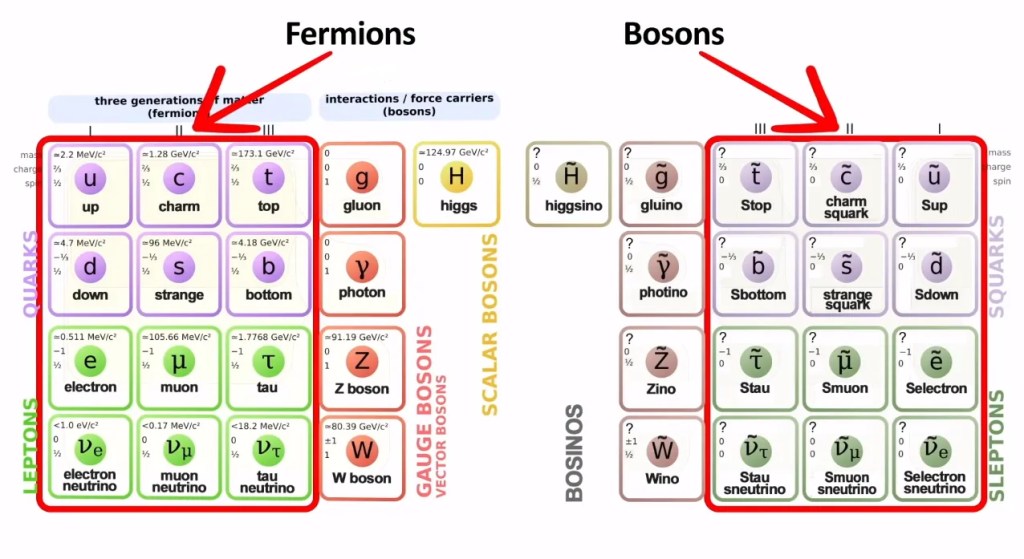
In quantum theory, super symmetry is a proposed fundamental symmetry between elementary particles and their corresponding superpartners. Super symmetry posits that for every known particle, there exists a superpartner particle with similar properties but differing by half a unit of spin. This symmetry suggests a deep underlying unity in the fabric of reality, transcending the apparent duality between matter and energy.

The concept of super symmetry dualism in quantum theory challenges conventional notions of materialism and underscores the interconnectedness of all phenomena at the quantum level. Just as Vajrayana Buddhism teaches the interdependence of all beings and phenomena, super symmetry dualism suggests a profound unity underlying the diversity of the universe.

When we account for their apparent differences in language and methodology, Vajrayana Buddhism’s Four Immeasurables and quantum theory’s super symmetry dualism share several intriguing parallels:

1. Unity and Interconnectedness: Both frameworks emphasize the fundamental unity and interconnectedness of all phenomena, transcending conventional distinctions between self and other, particle and wave.

2. Boundless Compassion: The cultivation of boundless love and compassion towards all beings in Vajrayana Buddhism resonates with the inclusive nature of super symmetry dualism, which acknowledges the inherent value and interconnectedness of all particles and fields.

3. Equanimity and Balance: Just as equanimity in Vajrayana Buddhism promotes a balanced and non-reactive mind, super symmetry dualism suggests a dynamic equilibrium underlying the fluctuations of the quantum world.

In exploring the parallels between Vajrayana Buddhism’s Four Immeasurables and quantum theory’s super symmetry dualism, we gain insight into the profound interconnectedness of consciousness and the cosmos. Both frameworks offer valuable perspectives on the nature of reality, challenging us to transcend dualistic thinking and cultivate compassion, wisdom, and equanimity in our lives. As we continue to probe the mysteries of existence, may these diverse paths of inquiry converge, illuminating the path to deeper understanding and harmony.

QP

The Nature of Mind in Descartes’ Are we God? His third Meditation

In his Third Meditation, René Descartes delves into the nature of the mind and its relationship to existence. Descartes’ exploration revolves around the idea that because he, as a thinking being, can be certain of his thoughts, it confirms his existence as a thinking thing. This line of reasoning leads Descartes to assert the inseparable connection between the mind and the self, emphasizing the centrality of consciousness in defining one’s existence.

Through his reflections in the Third Meditation, Descartes puts forth a compelling argument that centers on the certainty of his own thoughts and existence. By contemplating the nature of doubt and the act of thinking, Descartes arrives at the firm conviction that his ability to doubt and think is the hallmark of his existence as a thinking being. This core realization forms the basis of Descartes’ famous dictum from his Discourse on Method, “I think, therefore I am,” underscoring the primacy of consciousness in establishing one’s being.

Building upon this foundational insight, Descartes extends his inquiry to consider the nature of the mind itself. He asks “But what then thinks am I? A thing which thinks. What is that? A thing which doubts, understands, affirms, denies, wills, refuses, and which also imagines and feels.” None of which has a corporeal source. Descartes suggests that the mind is distinct from the body and that its essence or source lies in the act of thinking. This separation of mind and body allows Descartes to affirm the existence of the mind as a thinking substance, independent of material or physical attributes. By emphasizing the mind’s capacity for thought as its defining characteristic, Descartes highlights the intrinsic connection between the mind and self-awareness.

Descartes’ exploration of the mind in the Third Meditation can be seen as a profound investigation into the nature of consciousness and self-knowledge. By focusing on the certainty of his own thoughts as the grounding of his existence, Descartes invites us to contemplate the inherent power of the mind to shape our understanding of reality and ourselves. Through the lens of Descartes’ meditation, the mind emerges as a locus of clarity and certainty, essential for navigating the complexities of existence and establishing the foundation of our identity.

In comparison to Vajrayana Buddhism, Descartes’ emphasis on the mind’s role in defining the self resonates with the Buddhist concept of self-realization and enlightenment. While Descartes’ framework is rooted in a rationalist tradition that emphasizes the power of reason and thought, Vajrayana Buddhism offers a complementary perspective that acknowledges the mind’s potential for transcendence and awakening. Furthermore, in Vajrayana Buddhism purposes that mind is not composite, this means that it not put together of any parts or subpart and therefore not dependant on anything else as its source. In fact, mind is seen as the source of all other things. Both Descartes’ meditation and Buddhist teachings underscore the transformative infinite capacity of the mind to illuminate the nature of existence and lead the individual towards a deeper understanding of self and reality.

In conclusion, Descartes’ Third Meditation presents a rich exploration of the mind and its significance in shaping our perceptions of reality and identity. By foregrounding the certainty of thought as the cornerstone of existence, Descartes invites us to reflect on the profound implications of consciousness in defining the nature of our being. Through Descartes’ meditative inquiry, we are prompted to reconsider the intrinsic connection between the mind and the self, recognizing the mind as a powerful instrument for self-discovery and self-realization.

QP

Panpsychism C=E=mc2

Let’s explore the Relationship Between Consciousness and Energy in Comparison to Vajrayana Buddhism

Panpsychism is a philosophical theory that posits that consciousness is a fundamental aspect of the universe, present in all forms of matter from the smallest particles to complex organisms. This theory challenges traditional notions of consciousness as solely a product of biological processes, suggesting instead that consciousness is inherent in the very fabric of reality. Today, we will explore the relationship between consciousness and energy in the context of panpsychism, specifically comparing it to the perspective of Vajrayana Buddhism, which also has profound insights into the nature of consciousness and reality.

In the equation, C=E=mc², C represents consciousness as a fundamental aspect of the universe. Panpsychism asserts that consciousness is not exclusive to sentient beings but is pervasive throughout the cosmos, imbuing all matter with some level of subjective experience. C=E aligns with the notion that consciousness is a form of energy that permeates the universe, similar to the energy described by the equation and its relationship to mass. By framing consciousness as a fundamental force akin to energy, panpsychism challenges us to reevaluate our understanding of the relationship between mind and matter.

Vajrayana Buddhism, a school of Tibetan Buddhism known for its esoteric teachings and advanced meditation practices, offers profound insights into the nature of consciousness. According to Vajrayana teachings, consciousness is not limited to individual beings but is interconnected with all phenomena in the universe. This view resonates with panpsychism’s premise that consciousness is ubiquitous and present in all aspects of reality. In Vajrayana Buddhism, consciousness is seen as the radiant clarity that underlies all experiences and perceptions, transcending individual identity and ego. This is supported by the mind only, Cittamatra, or non dual perspective. Mind only means that everything that happens, what we see, what we do and the universe all happen in mind.

Both panpsychism and Vajrayana Buddhism share a holistic understanding of consciousness as a pervasive force that transcends individual beings. While panpsychism articulates this idea in terms of consciousness as a fundamental property of matter, Vajrayana Buddhism approaches it from a metaphysical perspective, emphasizing the interconnectedness of consciousness with all phenomena. Both perspectives challenge dualistic views of mind and matter, pointing towards a more integrated understanding of reality that acknowledges the intrinsic relationship between consciousness and the universe.

Furthermore, the equation C=E=mc² serves as a metaphorical bridge between panpsychism and Vajrayana Buddhism, highlighting the interconnectedness of consciousness and energy. Just as energy can be converted into mass and vice versa, consciousness in panpsychism and Vajrayana Buddhism can be seen as a dynamic process that transforms and manifests in various forms. Here we are reminded that subject, object, and action are all on; whereas consciousness, energy and mass form the universe. By exploring the parallels between panpsychism and Vajrayana Buddhism through the lens of consciousness and energy, we gain a deeper appreciation for the profound implications of these theories on our perception of reality.

The comparison between panpsychism and Vajrayana Buddhism offers a rich tapestry of ideas that challenge conventional notions of consciousness and its relationship to the universe. By viewing consciousness as a fundamental aspect of reality, both perspectives invite us to reconsider our understanding of mind, matter, and the interconnectedness of all phenomena. Through the equation C=E=mc², we are prompted to reflect on the deep unity between consciousness and energy, bridging the gap between scientific inquiry and spiritual wisdom. In exploring the parallels between panpsychism and Vajrayana Buddhism, we are called to contemplate the profound implications of these perspectives on our perception of self, reality, and the nature of existence.

QP