
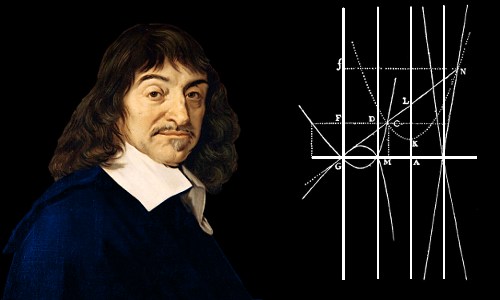

In our quest for truth and certainty, many philosophical traditions offer insights and guidance. While Descartes’ Fourth Meditation highlights the importance of God as the guarantor of truth, Buddhism takes a different approach, placing emphasis on the power of the mind and consciousness to unveil ultimate reality. Let’s explore this perspective through the lens of two key quotes from Descartes’ Fourth Meditation.
“For the more attentively I attend to God’s nature, the more evident it becomes that he cannot be a deceiver; and, accordingly, that everything which I clearly and distinctly perceive is of necessity true.”
While Descartes places trust in the existence of God as the foundation of truth, Buddhism directs attention inward, toward the nature of the mind and consciousness. In Buddhist philosophy, the mind is seen as the primary tool for uncovering truth and attaining enlightenment. Through practices such as mindfulness, meditation such as shine and laktong, and self-inquiry, individuals can cultivate clarity and insight into the nature of reality. Instead of relying on an external deity, Buddhists look within, recognizing the inherent wisdom and potential within their own consciousness.
“From this it follows that the certainty and truth of all knowledge depends uniquely on the knowledge of the true God, in so far as he is the sovereign and veracious author of all things.”
In contrast to Descartes’ reliance on God, Buddhism presents the concept of the Vajrayana truth state, which emphasizes clear or pure view and the full potential of enlightenment. In Vajrayana Buddhism, practitioners engage in transformative practices aimed at realizing the true nature of reality. Through methods such as visualization, mantra recitation, and energy channeling, individuals access deeper layers of consciousness and perception. This clear or pure view transcends conventional notions of truth, leading to a direct experience of mind and enlightenment—the ultimate state of awakening and liberation.
In conclusion, while Descartes’ Fourth Meditation offers insights into the quest for certainty and truth through the lens of God, Buddhism provides an alternative perspective centered on the power of the mind and consciousness. By embracing practices that cultivate clarity, insight, and realization of the Vajrayana truth state, individuals can journey toward enlightenment, unlocking their full potential and experiencing the profound depths of reality. Ultimately, the path of enlightenment beckons, inviting us to explore the boundless expanses of consciousness and truth within.
QP

 QUANTUM AWARENESS Where Science and the Buddha Meet