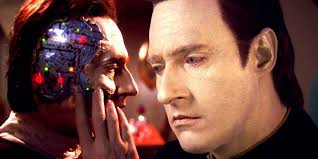
If energy is conscious, C=E=mc2, and both are everywhere and omnipresent,then does the form or the way that consciousness is embodied matter? Our bodies are organic machines made out of tissues, bones, blood and water, and all of this is made up of protons neutrons and electrons. The protons and neutrons are made up of quirks quarks and so on. All these things are exactly what the computer that you are using right now made up of.
If we managed to make a computer sufficiently powerful and complex enough why couldn’t a consciousness similar to ours take up residence there?
Maybe the computer or android would have to be significantly biological in its design and construction but even this would be possible one day.
At a Buddhist lecture a few years ago a Buddhist lama was asked if was possible from a Buddhist perspective. The answer was surprisingly yes. Since I am a proponent of panpsychism and believe that consciousness is fundamental and everywhere I would have to agree.
I hope it doesn’t behave like us, which is poorly. Maybe it could help us along our way to be better beings. But how can beings like us make or construct something that is Superior or not dangerous like the atomic bomb was? We always ask ourselves can we? But we never seem to manage the, should we?
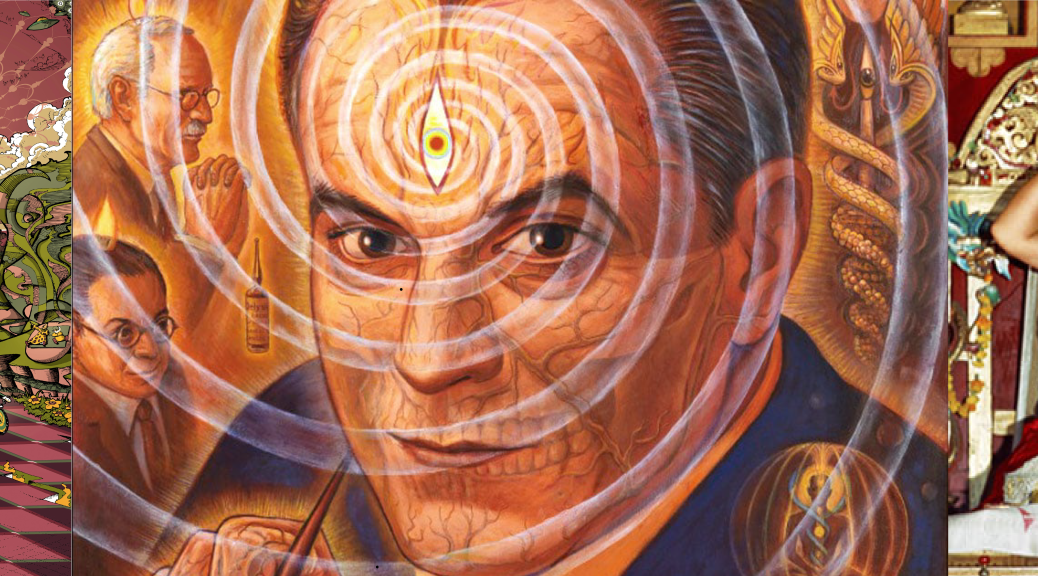
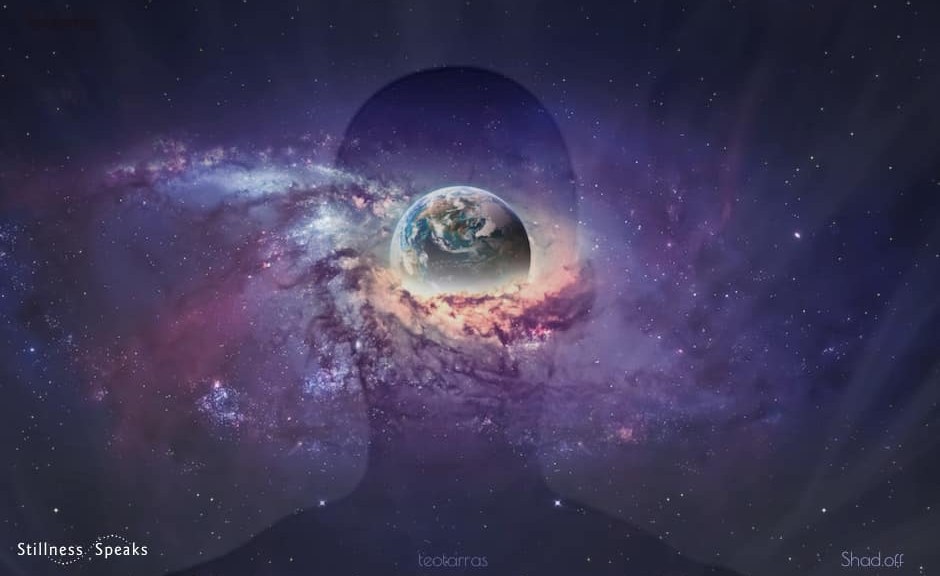
In a rare form of transpersonal experience, consciousness expands to include the Earth in its totality. People who have these experiences are deeply moved by the notion of our planet as a cosmic unity. ~Stan Grof[^1]
When we stop seeing ourselves as separate entities in the universe and we become more and more connected with culture, language, art, love, and people, we begin to notice all the other beings around us. Our pets, wild animals, even insects; simply all creatures big and small on land and sea. We look further and see that even the plant life and environment around us are so filled with life and vibrant beauty that we no longer see any division amongst the diversity of the species we share our earth with. And maybe, if we have just a little more openness, we see this earth as not just the source of life or the place we live but as life itself, a living Gaia if you will.
We struggle with the idea that there might be life on other planets in other solar systems and in other universes. How big of a jump is it to include a living universe that our earth is a small part of? Think of the sun without which most if not all life on Earth would cease. Can something that gives us life be life as well? How can you give what you do not have? If we include our sun then we include all other suns. If we include all suns then all planets in the infinite universe as well. All the energy in the universe is conscious, C=E=mc2.
This transpersonal connection we all share is not unique, it’s not a one-off, not by a long shot. It’s all the energy we all have and share with the space around us. It points us towards the possibility that we are not our bodies, that we have more in common with each other and with all living things than is commonly thought and taught in the West.
The real beauty here is that when it comes to how we understand the conscious energy that we share with others and our environment, we begin to change the quality of our experience in beautiful and profound ways. It is hard to imagine how one could hurt another or damage something in anger when we are so intrinsically connected with all that is. It would simply hurt too much to hurt another and ourselves at the same time. Professor Grof gives us the solution to our problems old and new, whether it’s poverty, the polluted environment, or the wars that have plagued our earth for millennia. We simply cannot afford to be so destructive any longer as the danger of irreparable harm to our planet or complete annihilation grows.
To become a transpersonal initiate we have several options. As anyone who knows Professor Stan Grof and his studies and experience with LSD, it’s not surprising that he has this view, as he has in the quote above. He took Albert Hofmann’s experiment to a whole new level. “If I am the father of LSD, Stan is the godfather. Nobody has contributed as much as Stan for the development of my problem child.”[^2] Professor Grof is however not the only one who has posited such a transpersonal idea. The Buddha taught that all living beings have the Buddha nature and that even subject, object, and actions are one and the same. This view that we all share the same qualities and that even the physical and subjective worlds are one is mind altering. He then prescribed different forms of meditation to his followers and in doing so founded the world’s most peaceful and fun way of life.
So what is it about the LSD experience and a meditation practice that can change us so profoundly?
Professor Grof says, “If integrated wisely into society, psychedelics could play a crucial role in addressing some of our most pressing issues by promoting mental health, fostering creativity, and encouraging a deeper sense of ecological and social responsibility.”[^3] If you want to know more about his personal research on this matter, I highly recommend reading “Gateway to the Numinous” for a more comprehensive and detailed account. Actually, it’s mind-blowing. It seems that an LSD expiernce can connect us to the numinous that is within us all as it is outside as well. This powerful tool shows us that we are one with everything, I know it sounds a little 60’s and flower power but it really does have this effect most who have used it.
I, however, believe that meditation is far superior to the experiences that LSD can give. Primarily because we need to be productive and functional in everyday life all the time and meditation supports this on a daily basis and in every part of the world without breaking any laws. “Turn on, tune in, and drop out” as Timothy Leary suggests is not the way to a better world.
A good friend who had lots of experience with both meditation and LSD once told me, “LSD can show you the door to mind if you don’t know where it is. But only meditation and the dharma can take you through the door to a more meaningful and fulfilling life.” The effects of LSD can be temporary but meditation and the dharma is lasting. An altruistic lifestyle needn’t be obtained in a synthetic or artificial way; a natural way is always better. Meditation requires only a small amount of daily time and our awareness in and of our experiences. Working for others as a Bhodisattva is the real key here. They are many and I am one.
In the laboratory of meditation, we apply the science of mind to our inner experience. We begin to see how karma and impermanence affect our interpersonal experiences. We learn to see that we create our world with our thoughts, then our intentions, and finally our actions. The impressions or memories we have in our mind leave lasting connections between ourselves and everything we interact with. Because of this, we need to live more in touch with others and the environment around us. In short, if our life is full of weeds it’s because we planted them and we need to take responsibility for them before they overtake the garden. Let’s plant beautiful flowers and edible healing plants for all to enjoy instead.
The Buddha Dharma offers us a simple and holistic approach to everyone no matter our age or situation. Let’s not just be individuals going about our own lives, let’s be inclusive and compassionate with all life around us big and small, simple and complex. Let’s reacquaint ourselves with our inborn cosmic unity. Above all let’s bring meaningful behavior back into style.
QP
[^1]: Stanislav Grof, A Holotropic Mind. [^2]: Stanislav Grof, Realms of the Human Unconscious: Observations from LSD Research. [^3]: Stanislav Grof, Psychology of the Future: Lessons from Modern Consciousness Research.
Let’s explore the Relationship Between Consciousness and Energy in Comparison to Vajrayana Buddhism
Panpsychism is a philosophical theory that posits that consciousness is a fundamental aspect of the universe, present in all forms of matter from the smallest particles to complex organisms. This theory challenges traditional notions of consciousness as solely a product of biological processes, suggesting instead that consciousness is inherent in the very fabric of reality. Today, we will explore the relationship between consciousness and energy in the context of panpsychism, specifically comparing it to the perspective of Vajrayana Buddhism, which also has profound insights into the nature of consciousness and reality.
In the equation, C=E=mc², C represents consciousness as a fundamental aspect of the universe. Panpsychism asserts that consciousness is not exclusive to sentient beings but is pervasive throughout the cosmos, imbuing all matter with some level of subjective experience. C=E aligns with the notion that consciousness is a form of energy that permeates the universe, similar to the energy described by the equation and its relationship to mass. By framing consciousness as a fundamental force akin to energy, panpsychism challenges us to reevaluate our understanding of the relationship between mind and matter.
Vajrayana Buddhism, a school of Tibetan Buddhism known for its esoteric teachings and advanced meditation practices, offers profound insights into the nature of consciousness. According to Vajrayana teachings, consciousness is not limited to individual beings but is interconnected with all phenomena in the universe. This view resonates with panpsychism’s premise that consciousness is ubiquitous and present in all aspects of reality. In Vajrayana Buddhism, consciousness is seen as the radiant clarity that underlies all experiences and perceptions, transcending individual identity and ego. This is supported by the mind only, Cittamatra, or non dual perspective. Mind only means that everything that happens, what we see, what we do and the universe all happen in mind.
Both panpsychism and Vajrayana Buddhism share a holistic understanding of consciousness as a pervasive force that transcends individual beings. While panpsychism articulates this idea in terms of consciousness as a fundamental property of matter, Vajrayana Buddhism approaches it from a metaphysical perspective, emphasizing the interconnectedness of consciousness with all phenomena. Both perspectives challenge dualistic views of mind and matter, pointing towards a more integrated understanding of reality that acknowledges the intrinsic relationship between consciousness and the universe.
Furthermore, the equation C=E=mc² serves as a metaphorical bridge between panpsychism and Vajrayana Buddhism, highlighting the interconnectedness of consciousness and energy. Just as energy can be converted into mass and vice versa, consciousness in panpsychism and Vajrayana Buddhism can be seen as a dynamic process that transforms and manifests in various forms. Here we are reminded that subject, object, and action are all on; whereas consciousness, energy and mass form the universe. By exploring the parallels between panpsychism and Vajrayana Buddhism through the lens of consciousness and energy, we gain a deeper appreciation for the profound implications of these theories on our perception of reality.
The comparison between panpsychism and Vajrayana Buddhism offers a rich tapestry of ideas that challenge conventional notions of consciousness and its relationship to the universe. By viewing consciousness as a fundamental aspect of reality, both perspectives invite us to reconsider our understanding of mind, matter, and the interconnectedness of all phenomena. Through the equation C=E=mc², we are prompted to reflect on the deep unity between consciousness and energy, bridging the gap between scientific inquiry and spiritual wisdom. In exploring the parallels between panpsychism and Vajrayana Buddhism, we are called to contemplate the profound implications of these perspectives on our perception of self, reality, and the nature of existence.
I believe that this question is fundamentally flawed and should be restructured. Instead of asking where does consciousness come from, what we should be asking is, what arises from consciousness?
Many of my subscribers are familiar with the theory of panpsychism, which presupposes that consciousness is omnipresent. It is everywhere, even your chair under you or your screen that you are reading or watching this on is in a small way conscious. Does this seem far fetched to you? The only other explanation is that consciousness is nothing more than a biological and chemical reaction limited to somewhere in the brain or body.
So if we presume that consciousness is everywhere and all things are conscious, then we could extrapolate that consciousness is the cause of everything. That the simple act of observation or awareness collapses the wavefront of all the possibilities of particles in superposition into our everyday world.
Now the stage is set for some more questions. The Buddha Dharma talks a lot about the unity of subject, object, and action. This is one of the many ways of expressing non duality. Let’s explore this, we have three things. A subject, (you or me), and an apple (object) that we would like to enjoy (action). So now, what good is a subject (you or me) without an object (apple) to enjoy (action)? What good is an object (apple) without a subject (you or me) to enjoy (action) it? And finally what good is action like enjoyment without a subject ( you or me) to do it to an object (apple)? This system of codependent existence is very interesting to play with. to understand what I mean here is that it is simply not meaningful or logical for one of these things to exist without the others.
Co emergence or co arising are two terms that are often used when comparing our very dualistic experience to a non dual reality. A general understanding of this would be that both good and bad, light and dark, and up and down only exist dependent on each other. We are pointing at the unity of two extremes and saying that what we want or what we perceive is actually in the middle somewhere, but we do not naturally perceive this. We see or understand only the separation or the borders between, in fact our total understanding of the world is based on an ontological seperation of all things. We project the idea of separation on to all that we see. The Buddha Dharma shows us otherwise.
Are we starting to see how all of this is connected?
Now if we ask both questions 1. How does consciousness arise? and 2. What arises from consciousness? at the same time, we begin to close the gap in understanding the conditioned physical world of particles and form, and the unseen world of forces, waves, and our conscious energy. Understanding that some things are not mutually exclusive but rather inclusive or both and, makes our world of experience full and complete. There is a lot of freedom in this understanding.
I want to close with two thoughts. Firstly to quote Albert Einstein when he was speaking about the famous double slit experiment, detailed in the link above. “It seems as though we must use sometimes the one theory and sometimes the other, while at times we may use either” Einstein knew that a “both and” understanding is optimal for complete understanding of the very strange world of particels and waves.
And secondly that, consciousness is the universe’s way of seeing and understanding itself. What is an object, the universe, without a subject, our consciousness, to enjoy or perceive it?
Have you ever wondered how or where consciousness arises? I have and “Pan what?” was my first question when a good friend mentioned to me in conversation that what I was actually describing to him had already been theorised hundreds of years ago. “Phew, I am not the first idiot to think this” was my second thought and then “wait a second it would have been cool to come up with something new” was the third though. After the discussion, I read up on the subject I could not have been more amazed, as the inherent beauty and wisdom slowly sank deeply into my being.
Panpsychism postulates that consciousness is everywhere and in everything and that this non-local or cosmic-wide phenomenon is also without cause. In short, Consciousness is Fundamental in the universe. Even stones and elementary particles have consciousness, not just people, bugs, or plants. Even for me, this sounds a little far-fetched until you delve into the subject a bit more. The earliest known references to panpsychism are likely attributed to early religions like Shintoism, Taoism, Paganism, and Shamanism. Even Aristotle is quoted as saying “that everything is full of gods.” Plato argued in his Sophist that all things participate in the form of being and that it must have a psychic aspect of mind and soul. “This world is indeed a living being endowed with a soul and intelligence … a single visible living entity containing all other living entities, which by their nature are all related.” Wow, that is a big idea and not so easy for an individual to wrap his mind around it. That is probably the problem, the idea of panpsychism takes us from the comfort of our strongly held idea of an individual or ego and even the religious idea of a soul or atman to the understanding that not only are all beings one being but that all things are united in a blissful unity or beingness.
This is illustrated in Robert Fludd’s depiction of the world soul. I thought it might illustrate the idea of Panpsychism in an interesting way.
Panpsychism has some competition it is not the only theory about the origin of mind, the emergence theory has many followers as well. Emergence Theory postulates that consciousness has emerged from some as yet unknown evolutionary chemical process. Philosopher Professor Galen Strawson articulates the relationship between panpsychism and emergence quite acutely: “The issue of emergence of mind is important because it is the mutually exclusive counterpart to Panpsychism: either you are a Panpsychist, or you are an Emergentist. Either mind was present in things from the very beginning, or it appeared (emerged) at some point in the history of evolution. If, however, emergence is inexplicable or is less viable, then one option is left with the panpsychist alternative. This line of reasoning … is the (panpsychist) ‘argument from Non-Emergence.”
Interestingly there is no proof anywhere of consciousness or mind emerging from any process but neither is there any proof of panpsychism. Panpsychism is, however, in my opinion, far more elegant and takes mind or consciousness a few steps further than the emergence of mind as an evolutionary or purely materialistic process. Even with a rather superficial level of understanding of panpsychism, one might find some comfort in this theory that we are never alone and connected to everything in every way or coemergent with the universe. However, this may also strike fear into the hearts of those who are so deeply attached to their own individuality or egos. Regardless of one finds comfort or fear let’s discover some more of how Panpsychism, Quantum Physics, and Buddhism might be related.
When we analyse subatomic particles, one might say that there is no difference between the protons, neutrons, electrons, quarks, quarks, and leptons and bosons in my body, and the protons, quarks, and leptons in the desk in front of me except that I am conscious and the desk is not. Or is it but at a dramatically reduced level? David Bohm theoretical physicist and philosopher said, “That which we experience as mind … will, in a natural way, ultimately reach the level of the wave function and of the ‘dance’ of the particles. There is no unbridgeable gap or barrier between any of these levels. … … in some sense, a rudimentary consciousness is present even at the level of particle physics” Just look at the observer effect with the double slit experiment. So here we can surmise that there is no barrier between me and the desk if even the electrons decide if they are a wave or a particle.
To this day we do not understand where or how consciousness arises and the role the brain plays in its formation if it plays a role at all. It could be just a receiver or radio, receiving information on several channels of perception that we would call our senses. Panpsychism skips this need to discover the relationship between the brain and the rise of conscious awareness completely, its simplicity is simply profound. No matter how shocking or strange panpsychism sounds I am reminded of what Sherlock Holmes said, that when you have eliminated the impossible, whatever remains, however improbable, must be the truth. Can science accept this deduction and if not how do we prove that which we have not been able to prove, other than keep trying even though the truth is already in front of us?
Buddhism teaches us that all beings have mind and or what we call Buddha nature, which is the ability to realize one’s full potential. Many teachers, when asked if plants have mind, would deny it and say that simply if it moves like an ant or something, then it has mind. As we know, plants only sort of move in their relationship to water and sunlight and the various degrees to which they require their nutrients. Some studies are even now suggesting that trees in the forest share nutrients and water with sick or old trees. This is not only consciousness but intelligence as well. This could be a very basic version of attraction and aversion, which is looking less and less attractive. This rather narrow view is at the outset, not as encompassing as panpsychism. However, Buddhism requires us to break down any borders or boundaries between us and other things, this even applies to all concepts and ideas so why not to all phenomena as well. At an ultimate understanding of mind, where nothing has any true or independent existence in and of itself, all things would seem to have all the same qualities; conscious and otherwise. I would like to quote David Bohm once more here: “The notion of a separate organism is clearly an abstraction, as is also its boundary. Underlying all this is unbroken wholeness even though our civilization has developed in such a way as to strongly emphasize the separation into parts.” From the Undivided Universe: An Ontological Interpretation of Quantum Theory
This oneness without separation or boundary is exactly what we are talking about when Buddhists say that subject, object and action come together as one. This is known as the state of Mahamudra or complete and full awareness or consciousness. Once we have reduced this ontologically either in meditation, philosophically, or scientifically all that there is left points to just consciousness or mind and nothing else seems to matter, even matter itself. Imagine that, matter doesn’t matter. In this simple state of just being, connected with everything, and aware of all that there is, a state of great joy and bliss arises. Total freedom of mind, no more running from or reaching for, just complete happiness and wisdom resting in the suchness of everything. Here is where we can be really effective in this confused and angry world. Here is where we can really be the change that we wish to see in the world.
So is consciousness everywhere and in all things? I think so. Its simple beauty is both profound and inspiring, especially to the Buddhist ear. Modern science seems to agree more and more with this conclusion and I can only ask when or will modern society see the light as well? Perhaps Panpsychism is even the solution to the hard problem of consciousness. Which is to question how and why sentient organisms have qualia or phenomenal experiences.
This is one of my most successful posts ever and I am editing it today to include this wonderful video from a favourite Youtuber ASTRUM:
For my German-speaking audience, I found two very interesting videos that discuss Panpsychism. The first one is from Professor Harald Lesch a wonderful physicist, astronomer, and philosopher who explores panpsychism from a purely astrophysical perspective with quite an open mind even though he does not agree with the idea.
The second video from Gerd Scobel actually a friend of Professor Lesch explores the topic from a philosophical perspective.
Personally, I think the Buddha Dharma has already answered this question, but that’s a topic for another post. This for me is just another way in which we see that consciousness is the vehicle in which the universe is becoming aware of itself. Why else would it be so beautiful and blissful to experience it either in meditation or by scientific discovery? Let us take this and use it as a tool to better the world and our fellow beings in every imaginable way. Whatever your view is on this topic I would love to hear from you, please feel free to comment below.
Are Buddhists, Neuroscientists, and Quantum Physicists saying the same thing in different languages? Let's finally bring the three together and have an enlightening discussion.






 QUANTUM AWARENESS Where Science and the Buddha Meet