If energy is conscious, C=E=mc2, and both are everywhere and omnipresent,then does the form or the way that consciousness is embodied matter? Our bodies are organic machines made out of tissues, bones, blood and water, and all of this is made up of protons neutrons and electrons. The protons and neutrons are made up of quirks quarks and so on. All these things are exactly what the computer that you are using right now made up of.
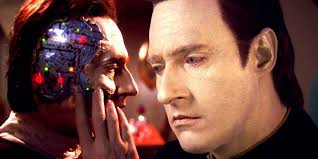
If we managed to make a computer sufficiently powerful and complex enough why couldn’t a consciousness similar to ours take up residence there?
Maybe the computer or android would have to be significantly biological in its design and construction but even this would be possible one day.
At a Buddhist lecture a few years ago a Buddhist lama was asked if was possible from a Buddhist perspective. The answer was surprisingly yes. Since I am a proponent of panpsychism and believe that consciousness is fundamental and everywhere I would have to agree.
I hope it doesn’t behave like us, which is poorly. Maybe it could help us along our way to be better beings. But how can beings like us make or construct something that is Superior or not dangerous like the atomic bomb was? We always ask ourselves can we? But we never seem to manage the, should we?
Let’s explore the Relationship Between Consciousness and Energy in Comparison to Vajrayana Buddhism
Panpsychism is a philosophical theory that posits that consciousness is a fundamental aspect of the universe, present in all forms of matter from the smallest particles to complex organisms. This theory challenges traditional notions of consciousness as solely a product of biological processes, suggesting instead that consciousness is inherent in the very fabric of reality. Today, we will explore the relationship between consciousness and energy in the context of panpsychism, specifically comparing it to the perspective of Vajrayana Buddhism, which also has profound insights into the nature of consciousness and reality.
In the equation, C=E=mc², C represents consciousness as a fundamental aspect of the universe. Panpsychism asserts that consciousness is not exclusive to sentient beings but is pervasive throughout the cosmos, imbuing all matter with some level of subjective experience. C=E aligns with the notion that consciousness is a form of energy that permeates the universe, similar to the energy described by the equation and its relationship to mass. By framing consciousness as a fundamental force akin to energy, panpsychism challenges us to reevaluate our understanding of the relationship between mind and matter.
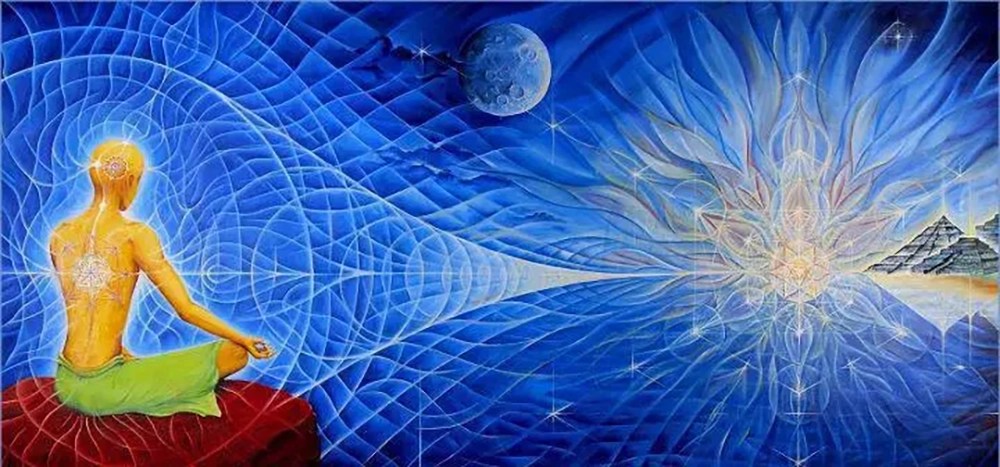
Vajrayana Buddhism, a school of Tibetan Buddhism known for its esoteric teachings and advanced meditation practices, offers profound insights into the nature of consciousness. According to Vajrayana teachings, consciousness is not limited to individual beings but is interconnected with all phenomena in the universe. This view resonates with panpsychism’s premise that consciousness is ubiquitous and present in all aspects of reality. In Vajrayana Buddhism, consciousness is seen as the radiant clarity that underlies all experiences and perceptions, transcending individual identity and ego. This is supported by the mind only, Cittamatra, or non dual perspective. Mind only means that everything that happens, what we see, what we do and the universe all happen in mind.
Both panpsychism and Vajrayana Buddhism share a holistic understanding of consciousness as a pervasive force that transcends individual beings. While panpsychism articulates this idea in terms of consciousness as a fundamental property of matter, Vajrayana Buddhism approaches it from a metaphysical perspective, emphasizing the interconnectedness of consciousness with all phenomena. Both perspectives challenge dualistic views of mind and matter, pointing towards a more integrated understanding of reality that acknowledges the intrinsic relationship between consciousness and the universe.
Furthermore, the equation C=E=mc² serves as a metaphorical bridge between panpsychism and Vajrayana Buddhism, highlighting the interconnectedness of consciousness and energy. Just as energy can be converted into mass and vice versa, consciousness in panpsychism and Vajrayana Buddhism can be seen as a dynamic process that transforms and manifests in various forms. Here we are reminded that subject, object, and action are all on; whereas consciousness, energy and mass form the universe. By exploring the parallels between panpsychism and Vajrayana Buddhism through the lens of consciousness and energy, we gain a deeper appreciation for the profound implications of these theories on our perception of reality.
The comparison between panpsychism and Vajrayana Buddhism offers a rich tapestry of ideas that challenge conventional notions of consciousness and its relationship to the universe. By viewing consciousness as a fundamental aspect of reality, both perspectives invite us to reconsider our understanding of mind, matter, and the interconnectedness of all phenomena. Through the equation C=E=mc², we are prompted to reflect on the deep unity between consciousness and energy, bridging the gap between scientific inquiry and spiritual wisdom. In exploring the parallels between panpsychism and Vajrayana Buddhism, we are called to contemplate the profound implications of these perspectives on our perception of self, reality, and the nature of existence.
Are Buddhists, Neuroscientists, and Quantum Physicists saying the same thing in different languages? Let's finally bring the three together and have an enlightening discussion.



 QUANTUM AWARENESS Where Science and the Buddha Meet