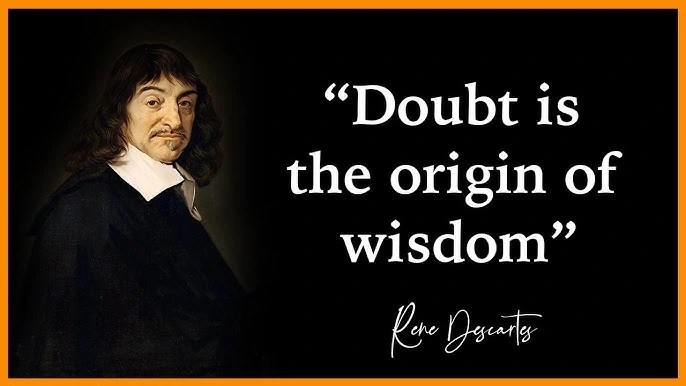
Descartes, a pivotal figure in the history of Western philosophy, grappled with the complex relationship between the mind and the church during his lifetime. His radical ideas about the nature of existence and consciousness challenged traditional religious doctrine, raising questions about the compatibility of his philosophical inquiries with the orthodoxy of the Catholic Church.
René Descartes is best known for his famous statement, “Cogito, ergo sum” (I think, therefore I am), which epitomizes his method of radical doubt and the primacy of consciousness in philosophical inquiry. However, his exploration of the mind’s nature and its relationship to the body inevitably brought him into conflict with the religious authorities of his time.
Descartes’ philosophical views, particularly his dualistic theory of mind and body, posed a challenge to the prevailing Aristotelian-Thomistic worldview endorsed by the Catholic Church. According to Descartes, the mind (or soul) and the body are distinct substances, with the mind being non-material and immortal, while the body is material and mortal. This dualism stood in contrast to the Catholic doctrine of the unity of body and soul, which held that the two were inseparable and dependent on each other.
While Descartes did not directly challenge religious dogma in his philosophical works, his ideas had profound implications for theological beliefs about the nature of the soul, free will, and the afterlife. As a result, his works were subject to scrutiny and censorship by ecclesiastical authorities, who were wary of any doctrines that diverged from orthodox teachings.
Although Descartes faced criticism and condemnation from some religious quarters, particularly Jesuit theologians who viewed his philosophy as a threat to traditional Scholasticism, there is little evidence to suggest that his life was directly threatened by the church. Descartes was careful to navigate the political and religious landscapes of his time, and he often sought to reconcile his philosophical ideas with religious doctrine to avoid controversy.
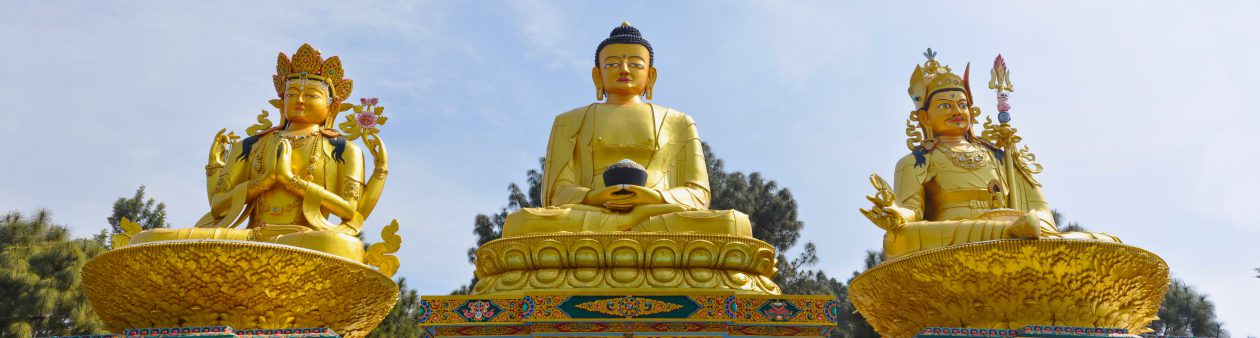
Buddhism, like many other religious traditions, has also grappled with the complexities of translation of its texts throughout history. One notable example is the mistranslation of key Buddhist concepts in early encounters with Western scholars and missionaries. As Western scholars began to study Buddhist texts, they often struggled to accurately convey the nuanced meanings of terms such as “karma,” “nirvana,” and “emptiness.” This led to misunderstandings and misinterpretations that shaped early Western perceptions of Buddhism. The Buddha himself is credites with saying “don’t trust me because the Buddha said something, test it and try it out for yourself and see if it is true, #doubtit
Just as Descartes’ ideas challenged the orthodoxy of the Catholic Church, certain Buddhist teachings have posed challenges to traditional interpretations within the religion itself. For example, the concept of anatta, or “no-self,” challenges the notion of a permanent, inherent self, which is a central tenet in many other religious traditions. This concept has led to debates and interpretations within Buddhism about the nature of personal identity and consciousness, similar to the debates sparked by Descartes’ dualistic theory of mind and body. Overall, both Descartes’ philosophical inquiries and Buddhist teachings illustrate the ongoing dialogue between religion, philosophy, and cultural interpretation. All our ideas should be critiqued and improved on continuously. Isn’t this exactly what we should be doing more of?
In conclusion, while Descartes’ philosophical inquiries into the nature of the mind may have raised eyebrows within religious circles, there is no concrete evidence to suggest that he faced direct threats to his life from the church. However, his intellectual legacy continues to provoke debate and reflection on the boundaries between philosophy, science, and religious belief.
QP
 QUANTUM AWARENESS Where Science and the Buddha Meet