
Did you know that Tummo breathing might actually move and stimulate some parts of your brain? Let’s talk about how this happens. Recent MRI studies show that when you take a sharp, deep breath, the lower part of your brain—including the thalamus, hypothalamus, pineal gland, pituitary gland, and cerebellum—gets gently pressed or shifted by the movement of your sinuses and trachea. This could have some pretty amazing effects on your health, well-being, and even spiritual awareness.
For starters, deep breathing boosts oxygen levels, which helps your brain function better and improves focus and clarity. It also activates your parasympathetic nervous system—the part responsible for relaxation—helping to lower stress and anxiety. Since the hypothalamus and pituitary gland regulate hormones, deep breathing might even help balance things like mood, energy, and metabolism. Plus, better oxygenation and stimulation of the cerebellum can improve coordination, posture, and overall body awareness.
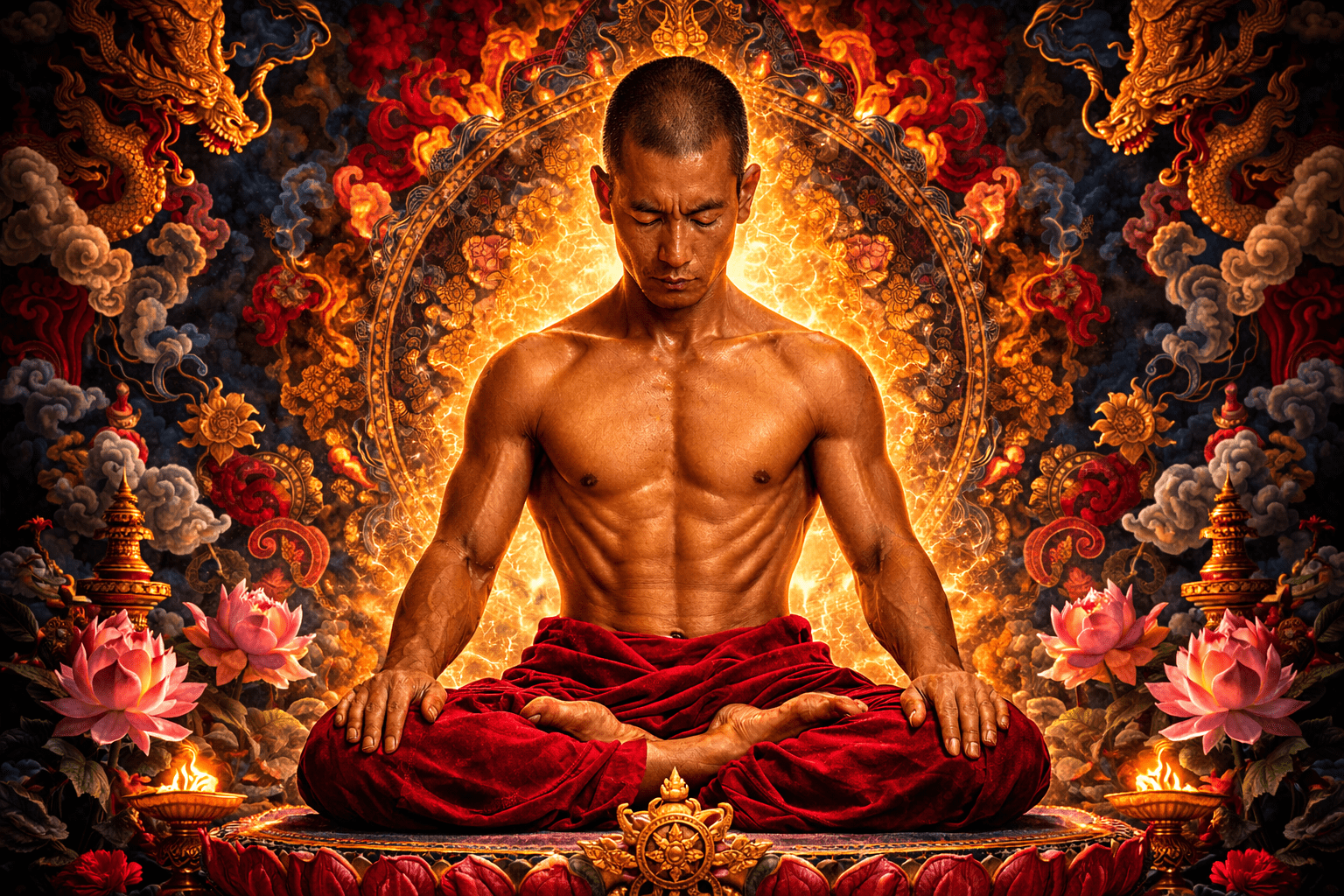
Tummo is an advanced meditation practice within the Tibetan Buddhist tradition, primarily associated with the generation of inner heat to enhance meditation and spiritual awakening, and is part of the way of methods and the 6 yogas of Naropa. . It is most famously practiced by monks in the Himalayan regions, where they use it to withstand extreme cold. Tummo combines breathing techniques, visualization, and meditation. Practitioners learn to generate a warm energy within their bodies by focusing on the navel chakra and utilizing specific breath patterns and visualizations, creating what is often described as a “psychic heat”. This process is connected to controlling the subtle energy channels (nadis) within the body, along with managing the mind’s energies. Through Tummo, practitioners aim to achieve a profound meditative state, increasing both mental clarity and spiritual insight while symbolically burning away impurities and distractions.
Hatha Yoga is known for its holistic approach to physical and mental well-being, where breathing exercises, known as Pranayama, play a vital role. These exercises focus on regulating the breath, which is believed to control life force or vital energy (prana). Techniques like the Ujjayi breath (victorious breath), Kapalabhati (skull-shining breath), and Nadi Shodhana (alternate nostril breathing) are designed to calm the mind, purify the energy channels, and harmonize the body’s energies. Ujjayi breath, for example, involves a rhythmic in-and-out pattern through the nose while creating a gentle constriction at the back of the throat, generating a soothing sound that fosters concentration. Pranayama practices in Hatha Yoga not only enhance physical health and lung capacity but also serve as powerful tools for stress reduction and mental clarity, promoting overall inner equilibrium and preparation for meditation.
In Hatha Yoga, practices that most closely align with the aims and techniques of Tibetan Tummo are those that work with the breath and internal energy to generate heat and stimulate the body’s energy centers. Such practices are the combination of Pranayama techniques, particularly Kapalabhati and Bhastrika.
Kapalabhati Pranayama: Often referred to as “skull shining breath,” Kapalabhati involves rapid, forceful exhalations and passive inhalations. This practice generates internal heat and is believed to cleanse the respiratory system and invigorate the mind. It focuses attention on the abdomen, which helps generate warmth from the core outward, similar to the internal heat generation in Tummo.
Bhastrika Pranayama: Also known as “bellows breath,” Bhastrika involves active inhalations and exhalations that mimic the pumping action of a bellows. This powerful breathing technique is designed to rapidly build heat within the body, energize the practitioner, and enhance the flow of prana throughout the system.
Tummo and the two Hatha practices engage the breath in a way that stimulates and emphasizes the physiological generation of heat, much like Tummo’s focus on creating warmth through breath and visualization. However, while these pranayama techniques share some similarities with Tummo in terms of heat and energy management, they do not typically incorporate the same meditative visualization aspects that are central to Tummo practice. But the do share something very important. Both traditions share what we see here in this video.
This video shows a direct physical stimulation or massaging of the Thalamus, Hypothalamus, Pineal Gland, Pituitary Gland, and Cerebellum as the sinus and traecha move up and down with the breath. The rest of the brain is also affected to a lessor extent.

The practices of Bhastrika, Kapalabhati Pranayama, and Tummo each offer unique approaches to breathwork, providing profound impacts on both mental clarity and physical well-being. Bhastrika Pranayama is characterized by its forceful and rapid inhalations and exhalations. This intense breathing pattern increases oxygenation to the brain, which enhances mental clarity and alertness. The sympathetic nervous system is activated through this practice, energizing the body and mind, with a boost of endorphins contributing to an overall sense of well-being.
Beyond breathwork, the idea of directly stimulating certain brain areas offers fascinating insights into the interplay between neural activity and well-being. The thalamus, a critical relay station for sensory and motor signals, could, when stimulated, enhance sensory perception and improve focus. Engaging the hypothalamus might influence mood regulation, stress reactions, and even fundamental processes like temperature and metabolism management. A direct impact on the pineal gland could alter melatonin production, leading to modulations in sleep patterns and mood stability. Stimulation of the pituitary gland could influence a wide array of hormonal functions affecting growth, stress levels, and metabolism. Lastly, engaging the cerebellum might refine motor coordination and balance, extending into cognitive domains requiring precision.
Collectively, these ancient breath practices and the direct stimulation of specific brain regions each underscore the profound connections between breath, brain function, and overall mental and physical health, inviting deeper exploration of how we can intentionally foster well-being through strategic engagement with both respiratory techniques and neurophysiological pathways.
But the benefits don’t stop at the physical level. Many ancient traditions link deep breathing to higher consciousness and spiritual awareness. The pineal gland, often called the “third eye,” is thought to play a role in intuition and altered states of awareness. If deep breathing physically moves this part of the brain, it might explain why breathwork can lead to deep meditative states, vivid dreams, or even a sense of heightened perception.
The thalamus and hypothalamus, which help regulate emotions and sensory perception, also get stimulated. This could mean better emotional balance, increased self-awareness, and a deeper connection to your body. No wonder so many cultures have used breathwork—like yoga’s pranayama and Tibetan Tummo breathing to enhance meditation and spiritual growth.
So, if you’re looking for an easy way to improve your well-being, a simple deep breath might be more powerful than you think! Have you ever tried breathwork, and if so, what was your experience like?
QP


Leave a Reply